Art Brussels
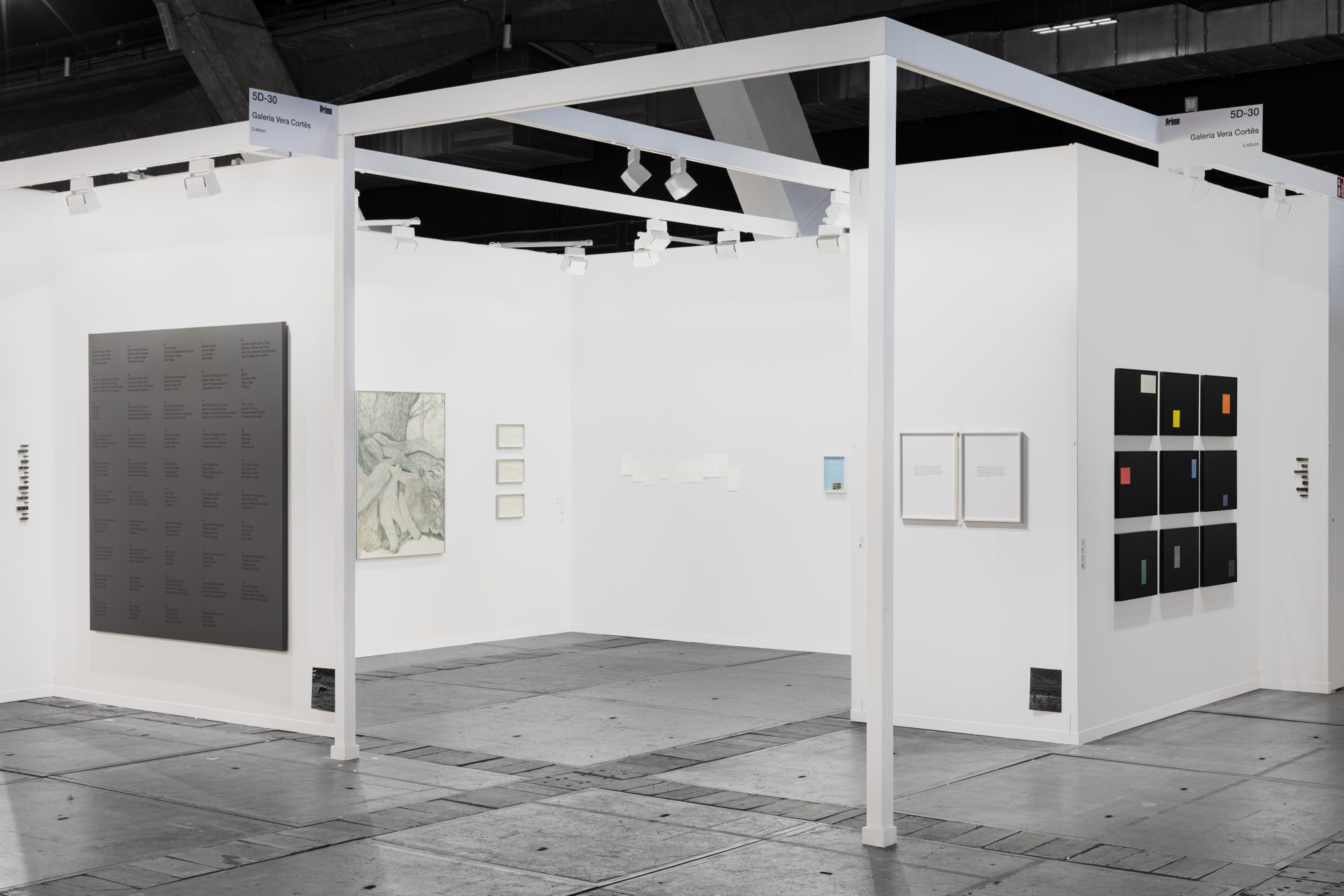
Booth 5D-30
Brussels Expo
23-26 April 2026
Angela Detanico / Rafael Lain
Charbel-joseph H. Boutros
Daniel Blaufuks
Daniel Gustav Cramer
Gabriela Albergaria
Ignasi Aballí
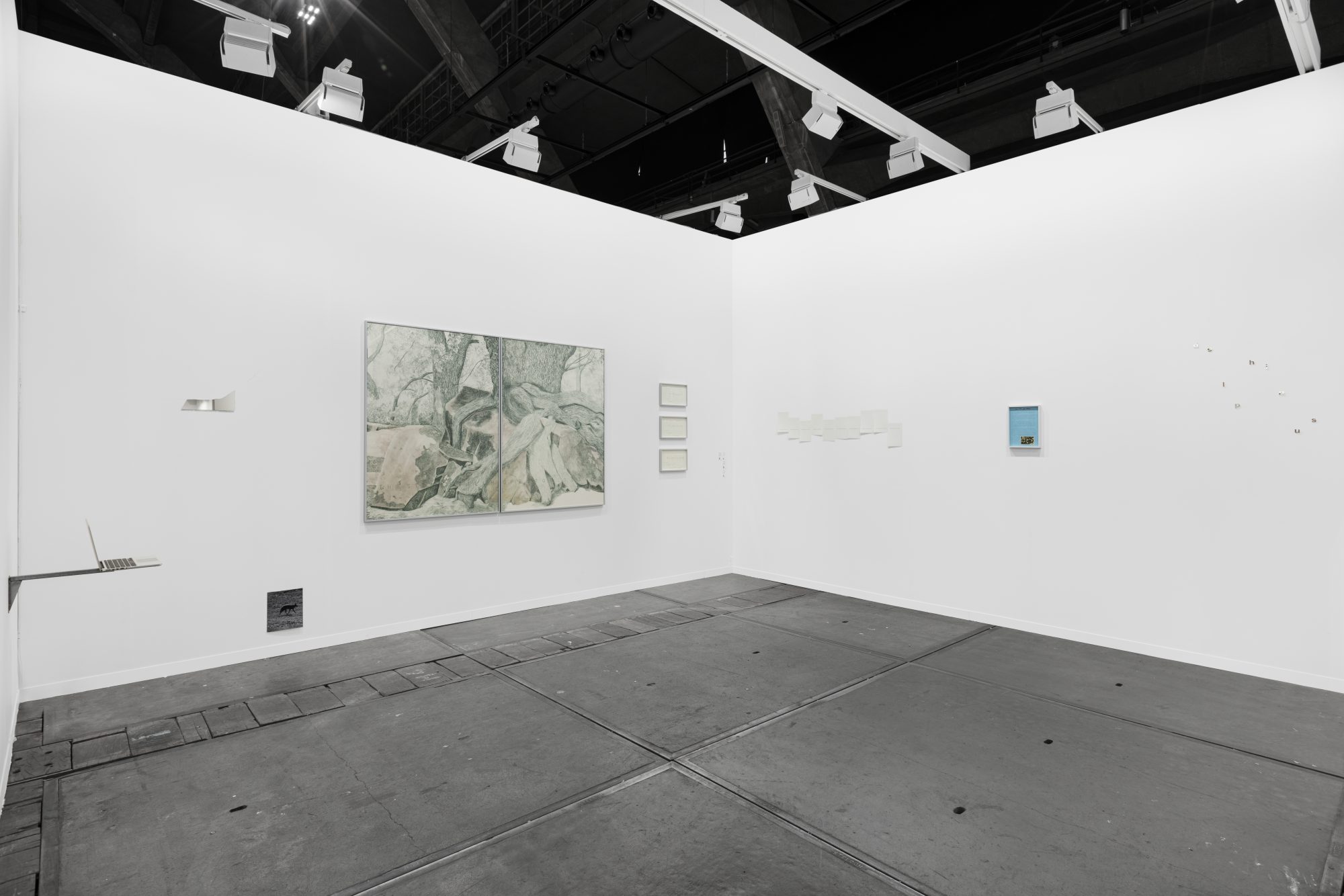
In this edition of Art Brussels, GALERIA VERA CORTÊS brings a selection that explores language beyond its functional role, presenting writing as a visual, physical, and gestural form. Words are no longer confined to meaning alone; they become images, objects, and actions that occupy space and invite interpretation.
ANGELA DETANICO / RAFAEL LAIN
Angela Detanico (1974) and Rafael Lain (1973) are Brazilian artists living and working in Paris.
Angela Detanico and Rafael Lain have been working together for nearly twenty years. They quickly established themselves within the international art scene thanks to their subtle questioning of the modes of conventional representation that surround us. Fascinated by what exceeds man and his understanding of the world, they draw systems of representation and writing of time, space, memory and the infinite from scientific, mathematical and literary research. Inherited from the conceptual statement, established in the use of new mediums of sound, graphic and plastic creation, their thought process appears in a meticulous, uncluttered and poetic formalism. Linguist/semiologist and graphic designer respectively, Angela Detanico and Rafael Lain question the use of graphic signs in society.
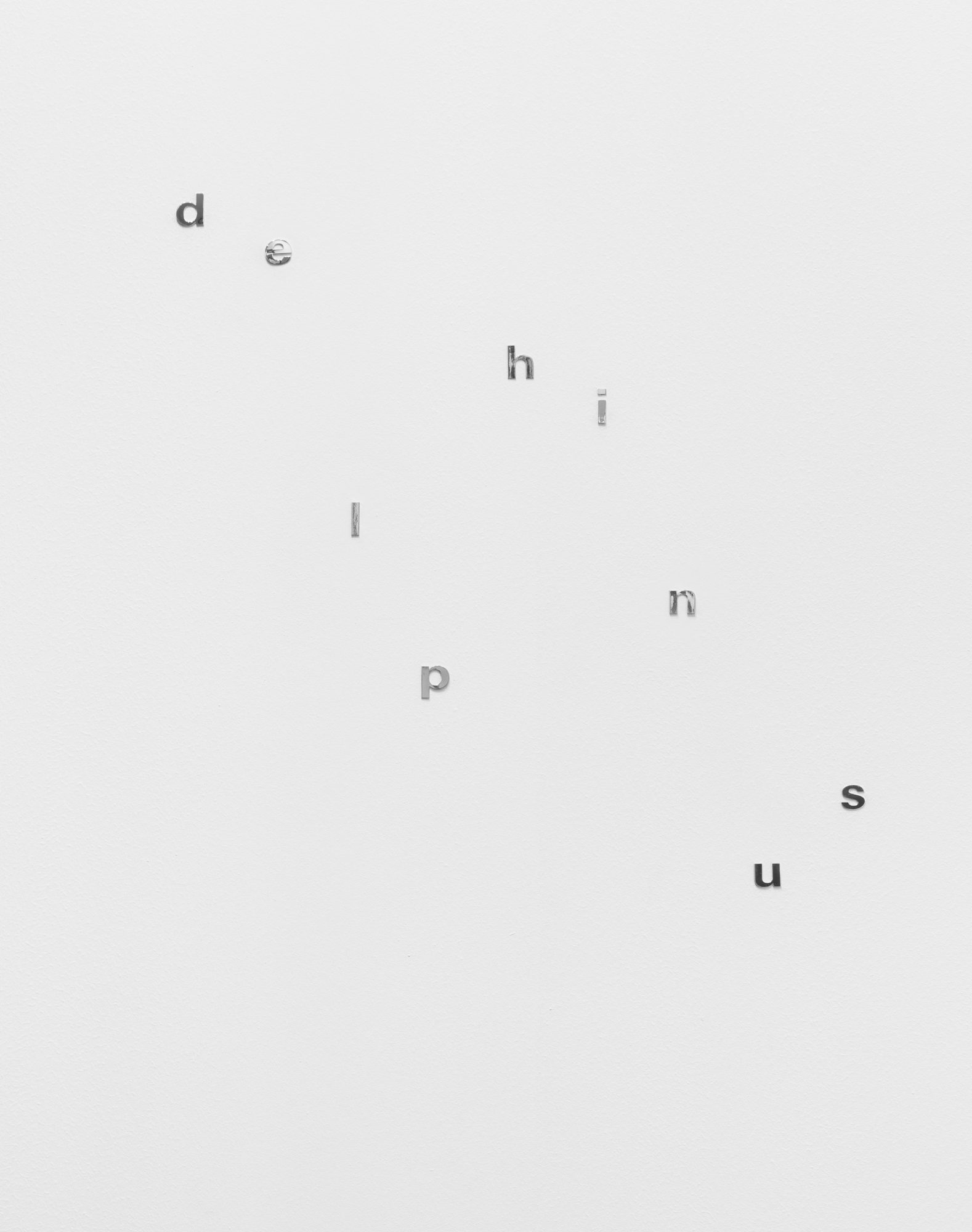
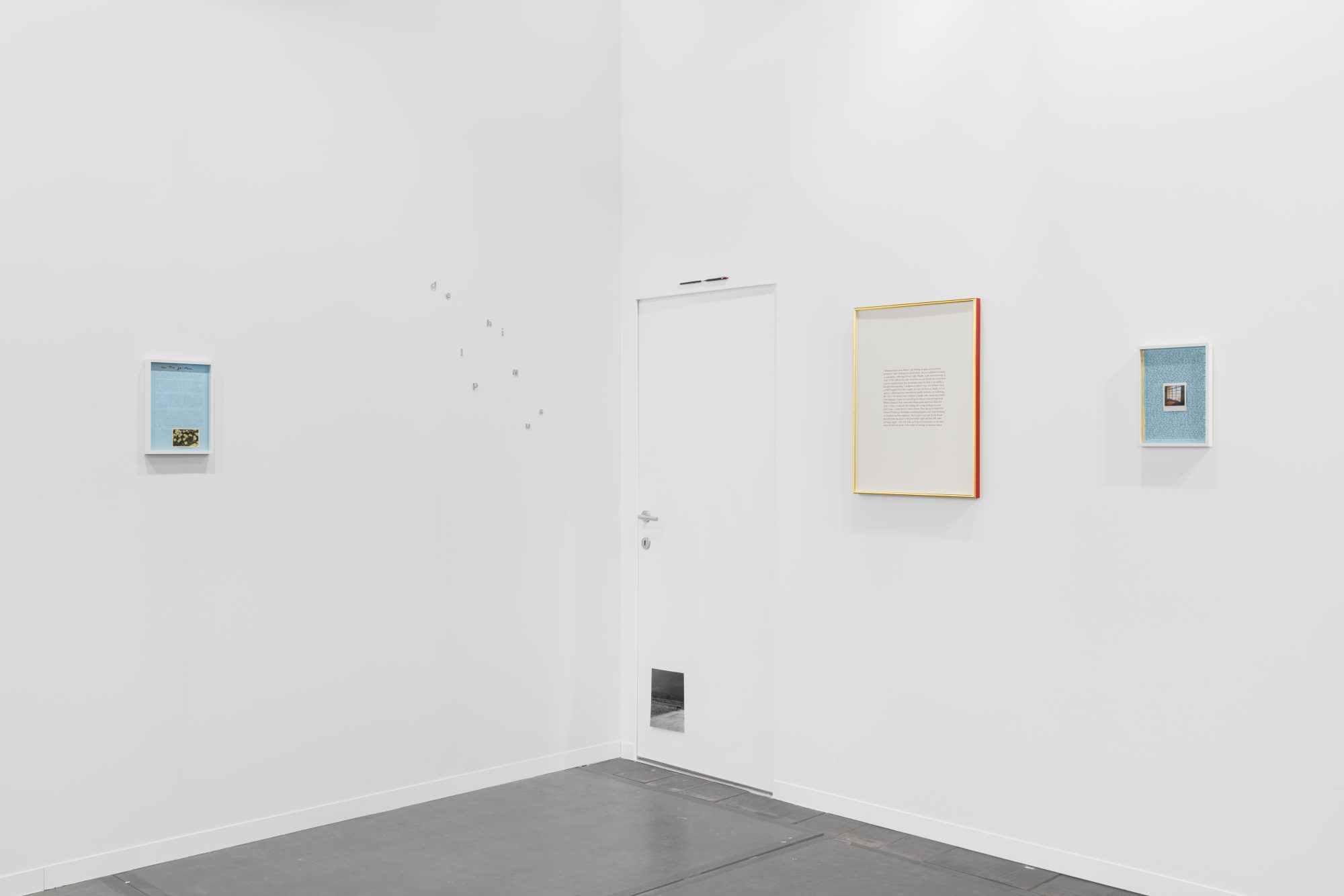
Angela Detanico / Rafael Lain, Delphinus, 2025. Silver. Variable dimensions.
Enquire
Angela Detanico / Rafael Lain
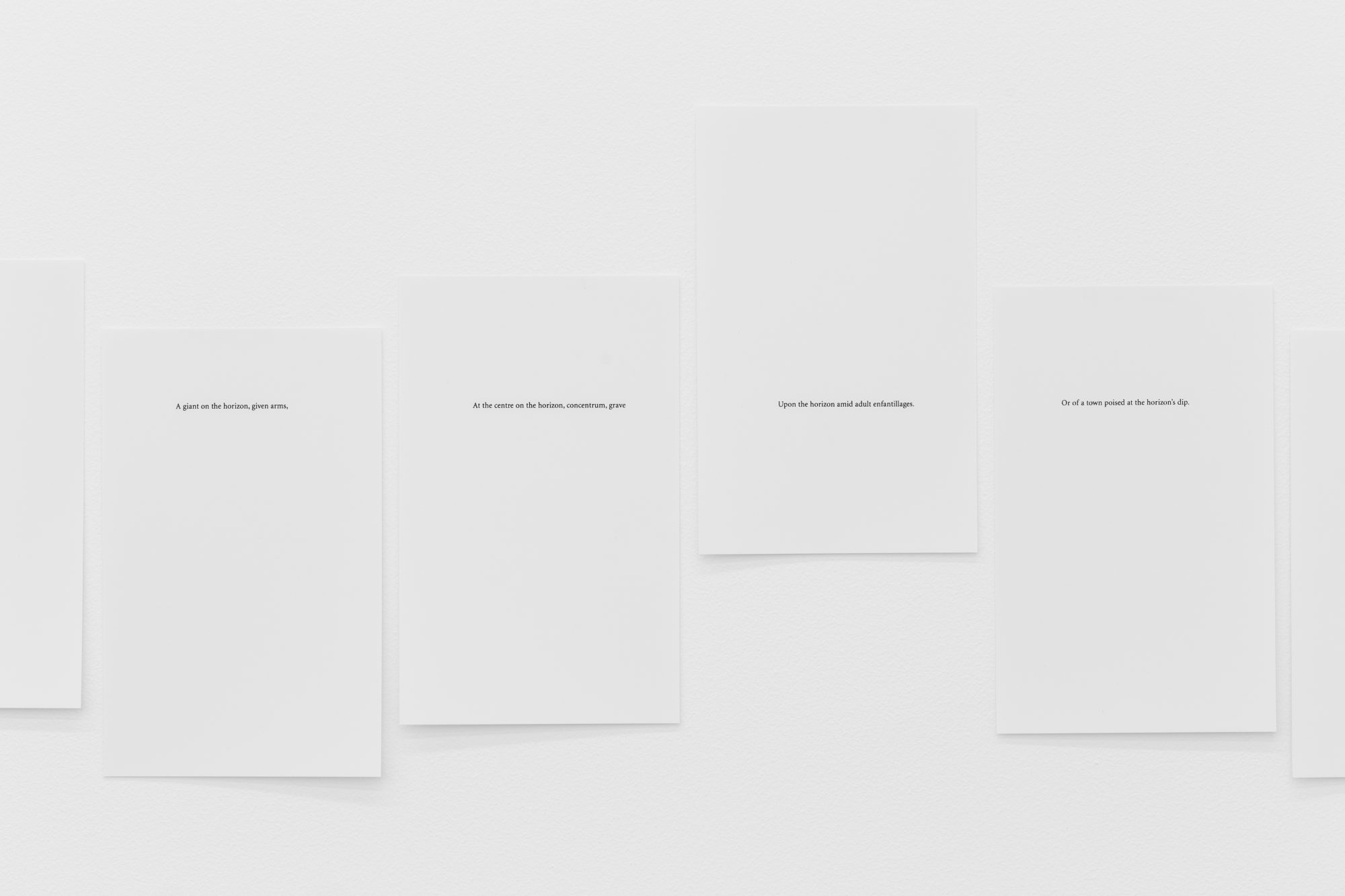
Night and Day, Virginia Woolf, 2023. Print on Munken Munken 120gr, Olin
crème. 10 pages (19,5 x 12,4 cm). Total: 22 x 130 cm
Unique
Enquire
A horizon line drawn by the lines of a book in which the word “horizon” appears.
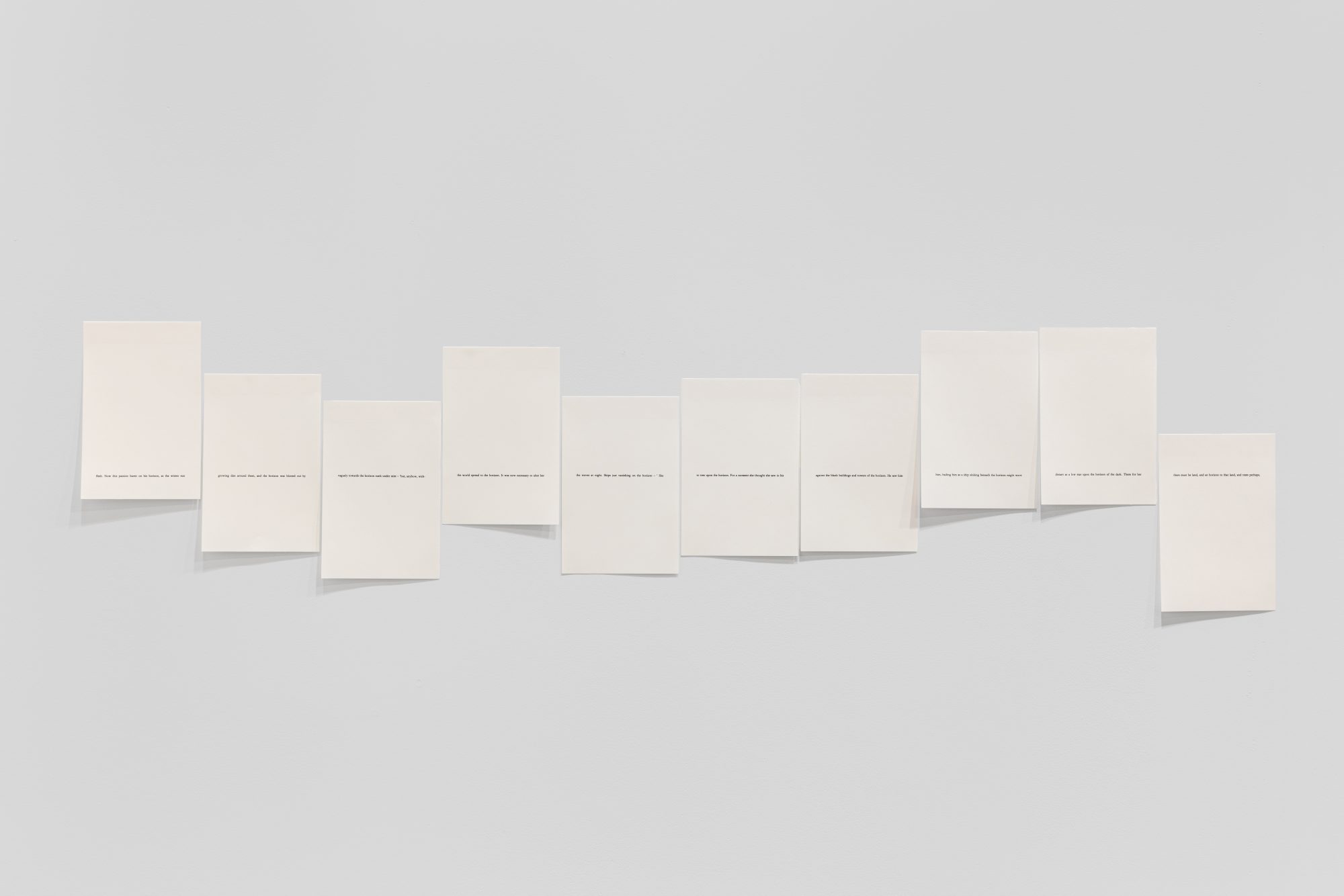
Angela Detanico / Rafael Lain, Night and Day, Virginia Woolf (detail), 2023. Print on Munken Munken 120gr, Olin crème. 10 pages (19,5 x 12,4 cm). Total: 22 x 130 cm.Unique
Enquire
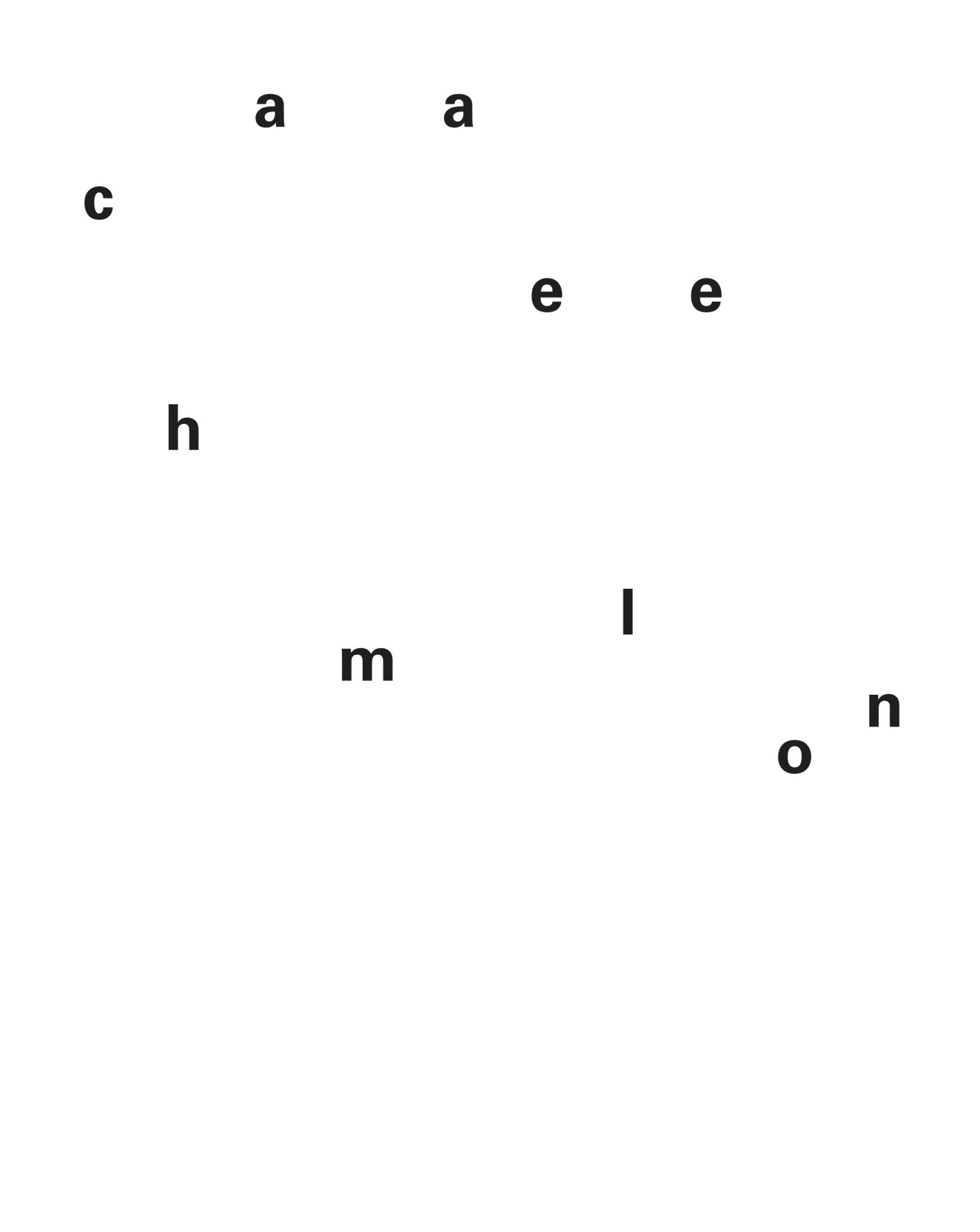
Angela Detanico / Rafael Lain, Chamaeleon, 2025. Silver. Variable dimensions.
Enquire
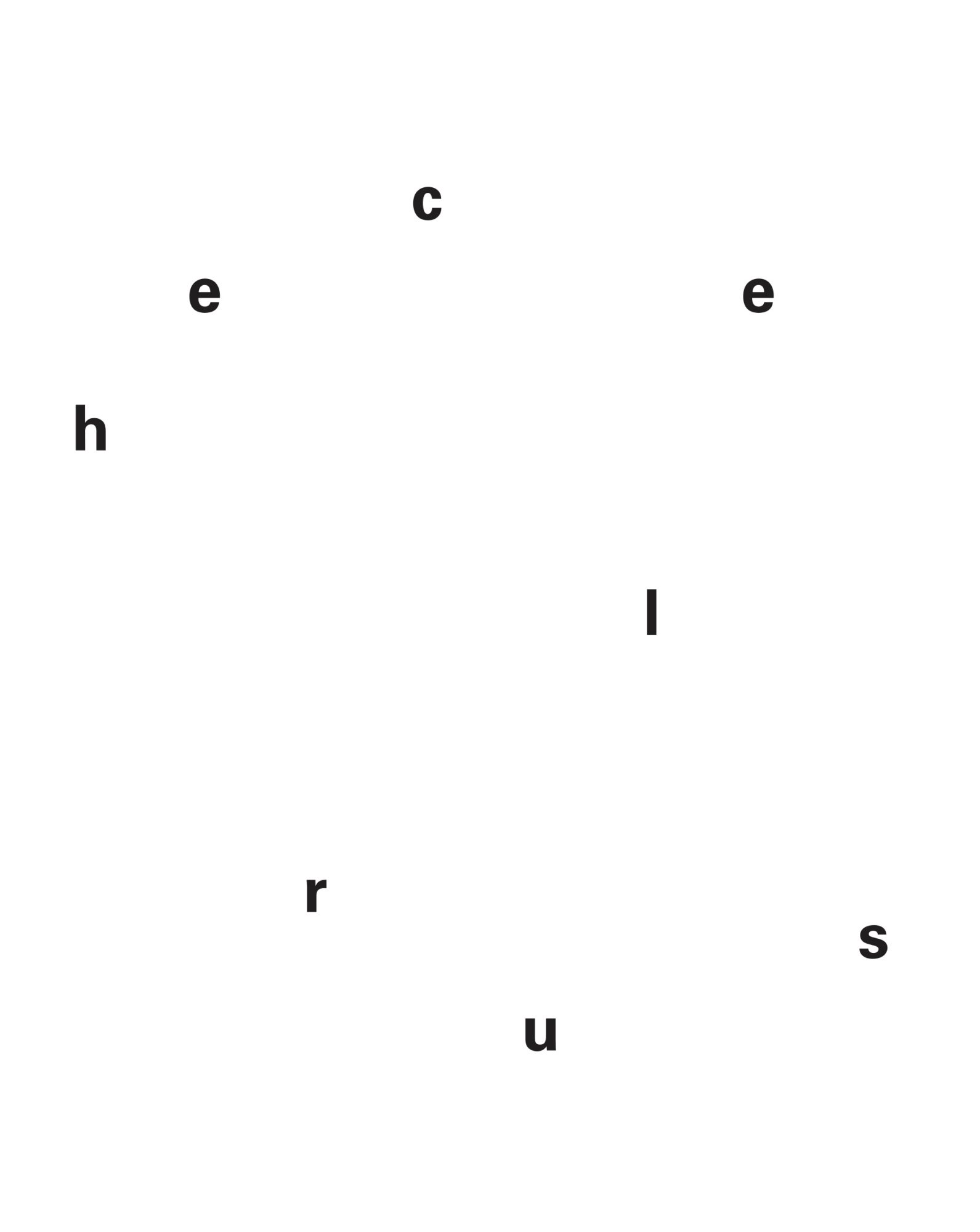
Angela Detanico / Rafael Lain, Hercules, 2025. Silver. Variable dimensions.
Enquire
Silver letters scattered like stars in space spell out the names of the constellations Chamaeleon, Delphinus, and Hercules.
CHARBEL-JOSEPH H. BOUTROS
Charbel-joseph H. Boutros was born in Lebanon in 1981 and lives and works between Beirut and Paris.
In his work invisibility is charged with intimate, geographical and historical layers; finding poetic lines that extend beyond the realm of existing speculations and realities. Being born in the middle of the Lebanese war, his art is not engaged in an explicit political and historical reflection, but is more accurately haunted by the said political and historical reflection.
For H. Boutros, each exhibition is a new geography that reformulates reality.
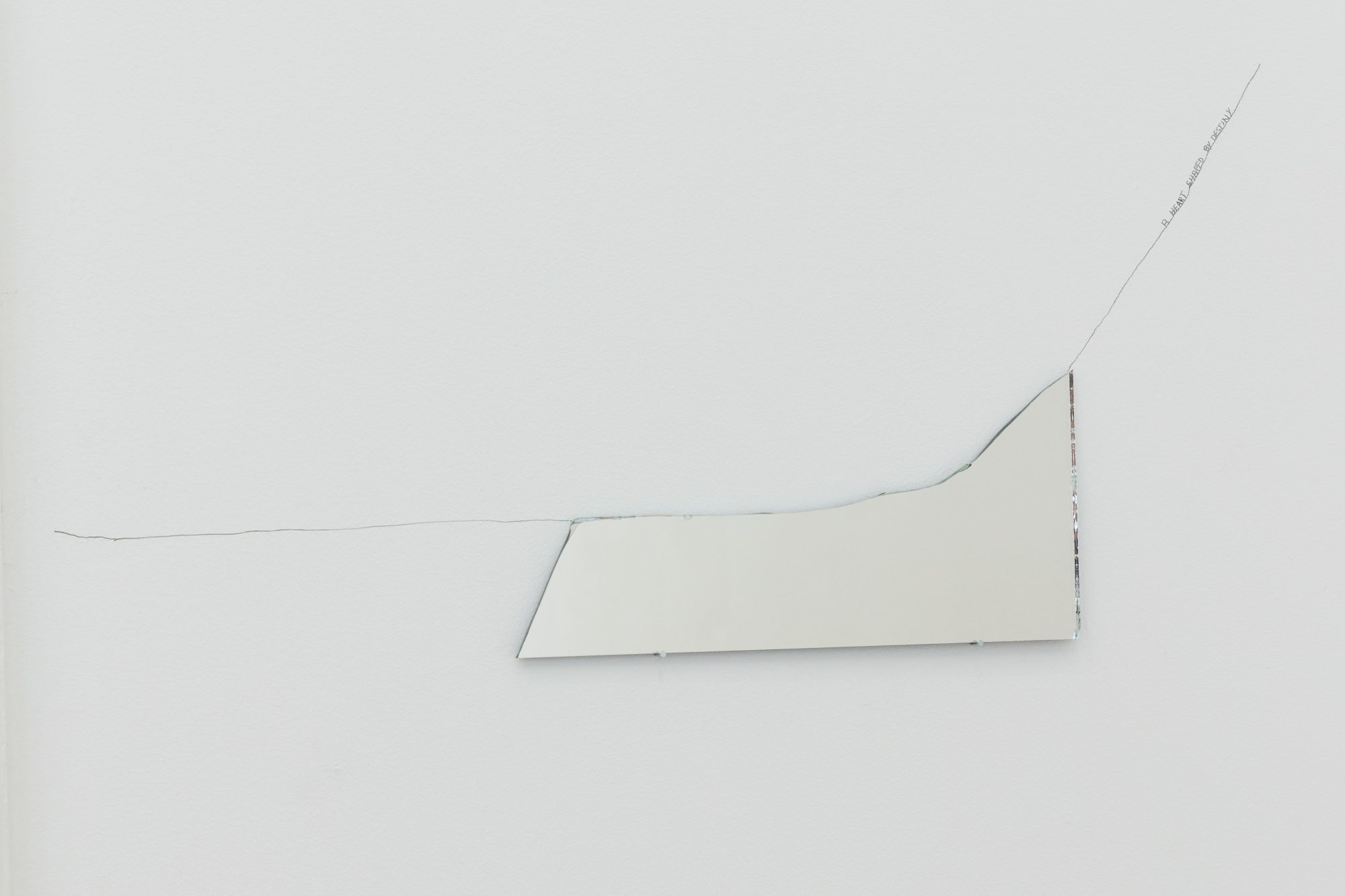
Charbel-joseph H. Boutros, A heart shaped by destiny, 2025-2026. Broken mirror, nails, drawing on wall, destiny. 10 x 30 cm
Enquire
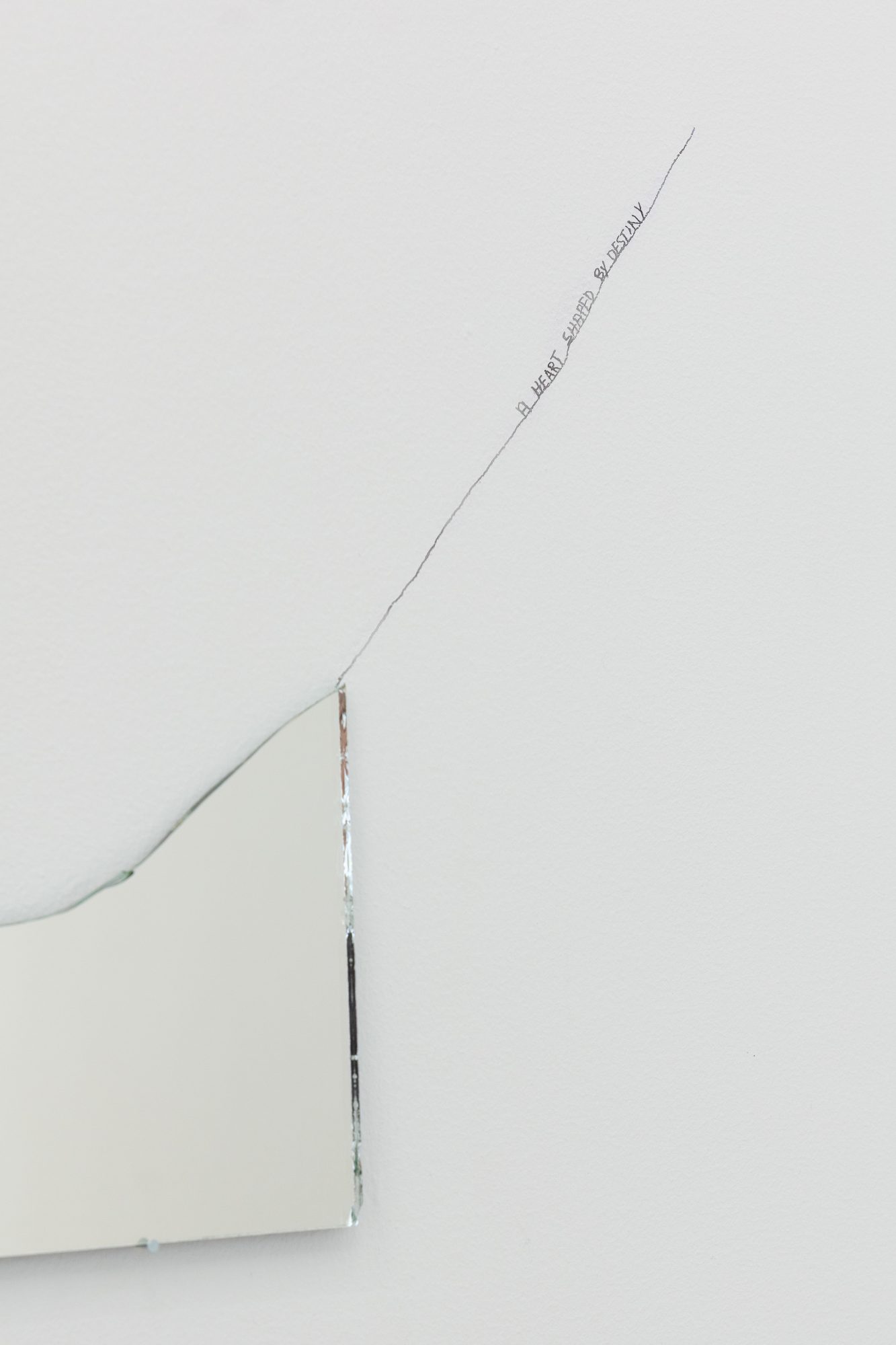
Charbel-joseph H. Boutros, A heart shaped by destiny (detail), 2025-2026. Broken mirror, nails, drawing on wall, destiny. 10 x 30 cm
Enquire
A drawing on the wall takes as its point of departure a curve in a broken mirror. Here, destiny is a fundamental material in the construction of this work; it is considered one of the mediums used to create the piece.
In the work of Charbel-Joseph H. Boutros, new immaterial materials—never used before in the conception of an artwork—are introduced alongside the traditional materials of contemporary sculpture. Dreams, hopes, the sun, love, sweat, death, exhibition, tears, labor, etc..become materials in their own right that the artist combines with more conventional ones, such as marble, wax, and rugs…
This new way of approaching artworks broadens the perspective on how artworks are perceived and conceived.

Charbel-joseph H. Boutros, But even dead can dance #2, 2016. Mechanical pencil, drawing made with the same pencil, nails, wall. Variable dimensions. Ed. 3.
Enquire
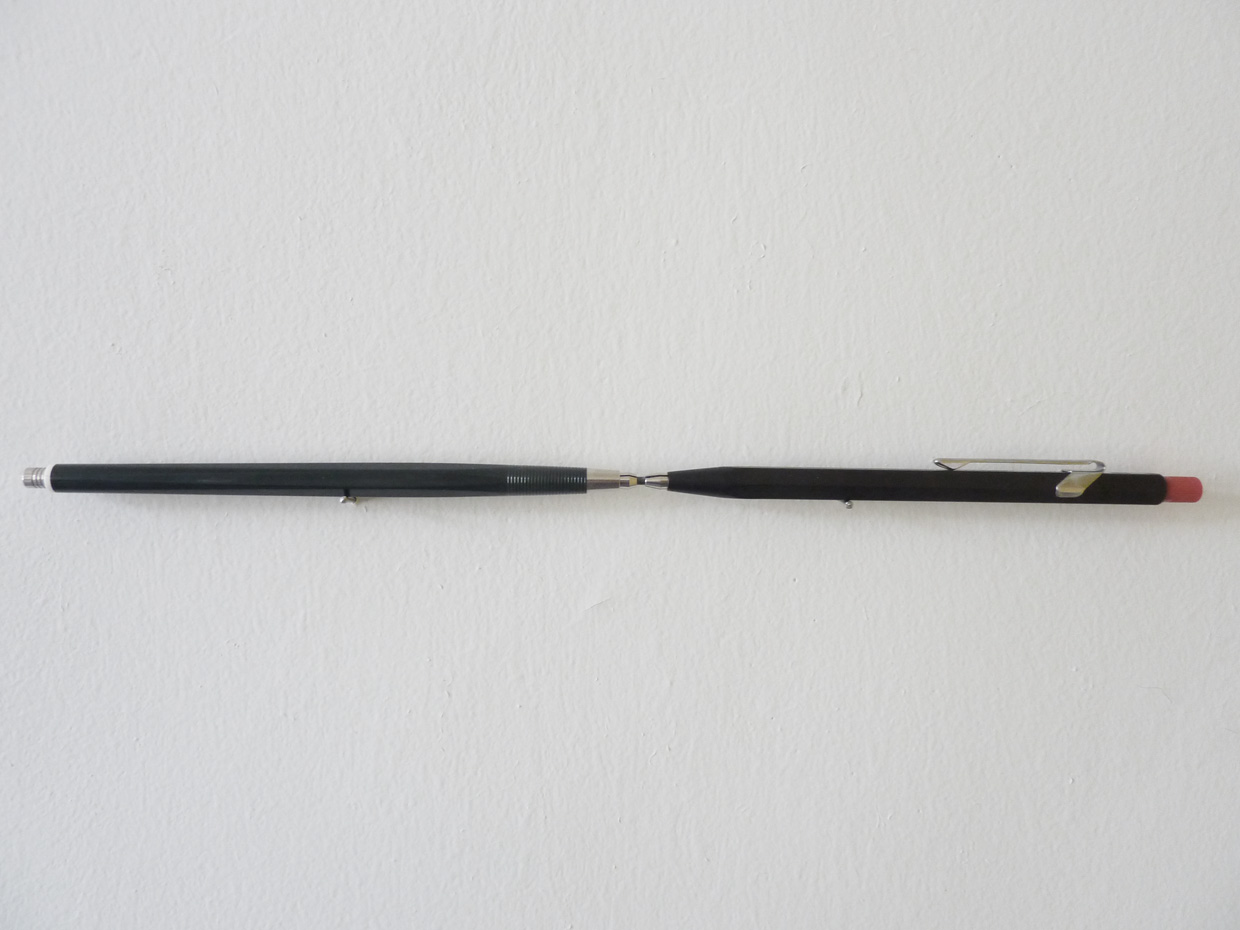
Charbel-joseph H. Boutros, Lovers, 2011. Two mechanical pencils, lead, nails.
Enquire
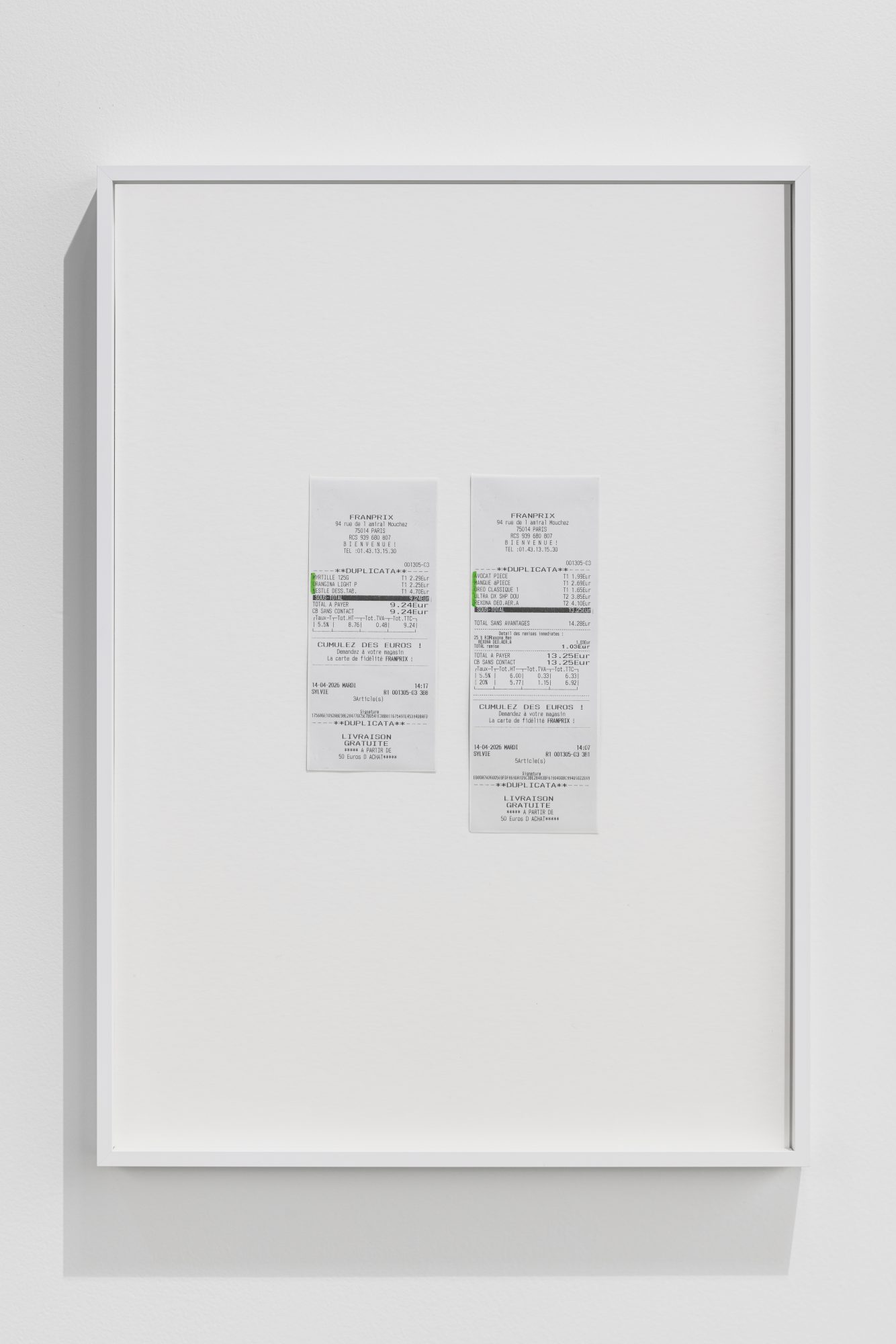
Charbel-joseph H. Boutros, Mon Amour, 2026. Supermarket receipts, marker. 60,5 x 43,5 x 3 cm (framed), Unique (Series)
Enquire

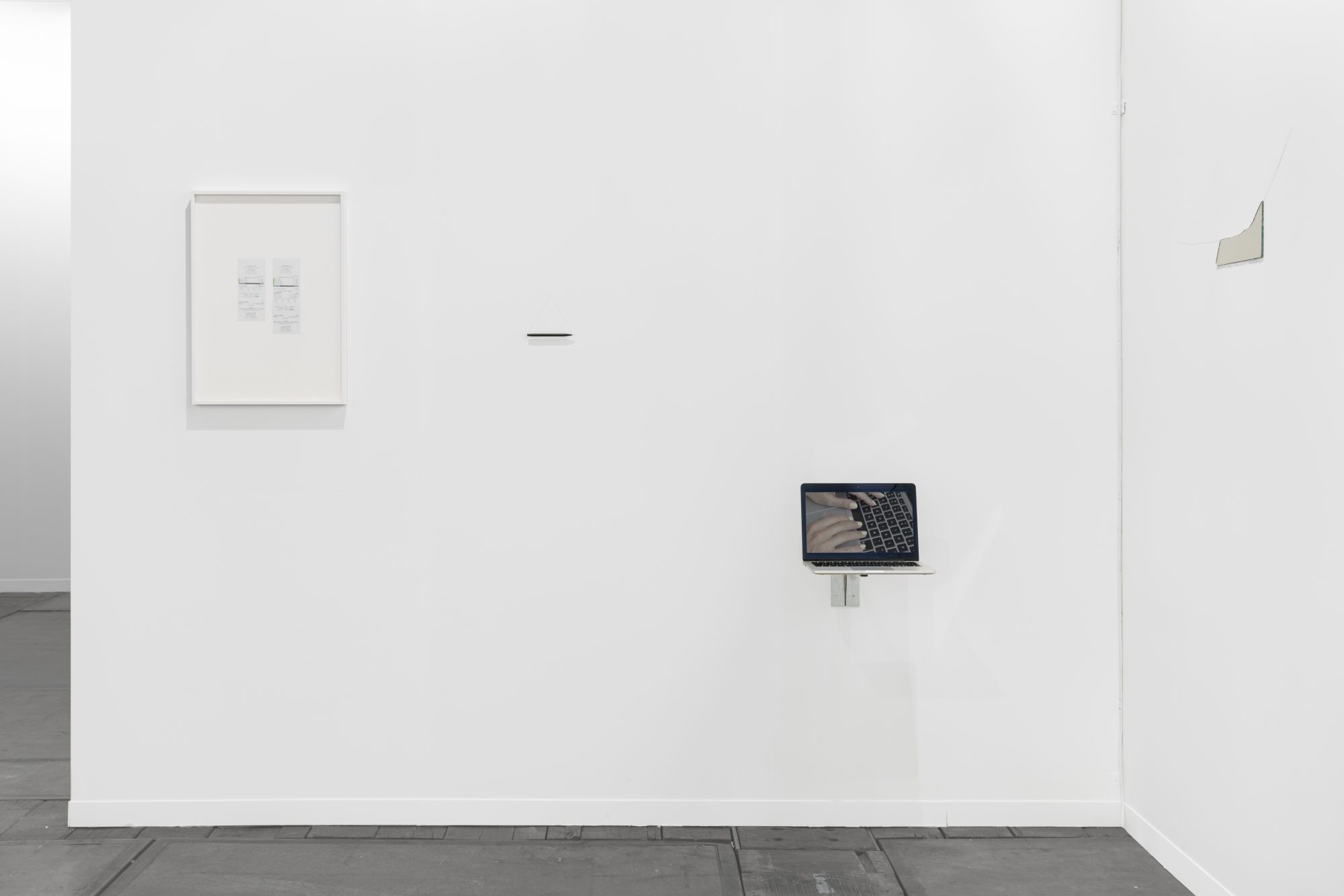
Charbel-joseph H. Boutros, Under the Shadow of your Fingers, 2019-2023. Video (5 min.), laptop, metallic structure. 54 x 59 x 2 cm. Ed 5 + 2 AP
Enquire
A video shows the hands of a woman typing on a laptop. They are none other than the hands of the artist’s partner, retyping—seven years later—the first love email she ever sent to him.
The choreography of her hands is reenacted in a surreal manner, years after the original gesture.
These abstract movements are charged with emotions. In this work, one can perceive what the artist defines as “Charged Abstraction,” an abstraction shaped by the nature of the experience it has witnessed
DANIEL BLAUFUKS
Daniel Blaufuks has been exploring the tension between opacity and transparency, a theme that runs across the work and spans a broad spectrum — from variations in light to the recreation of historical memory and the very construction of time — through an idea of intimacy and everyday life. Questioning the role of the photographic image within the context of the pictorial flow in an increasingly digital world, he relies primarily on photography, video, and more recently collage.
In 2016, he received the AICA Award for the exhibitions Tentativa de Esgotamento and Léxico. He holds a PhD from the University of Wales, with a thesis on photography and memory in relation to the works of W. G. Sebald and Georges Perec. His films — expanded photographs — have been presented at various film festivals, and his most recent works explore the resistance to the German occupation in Brittany and colonialism in São Tomé and Príncipe, while continuing his non-diary the days are numbered.
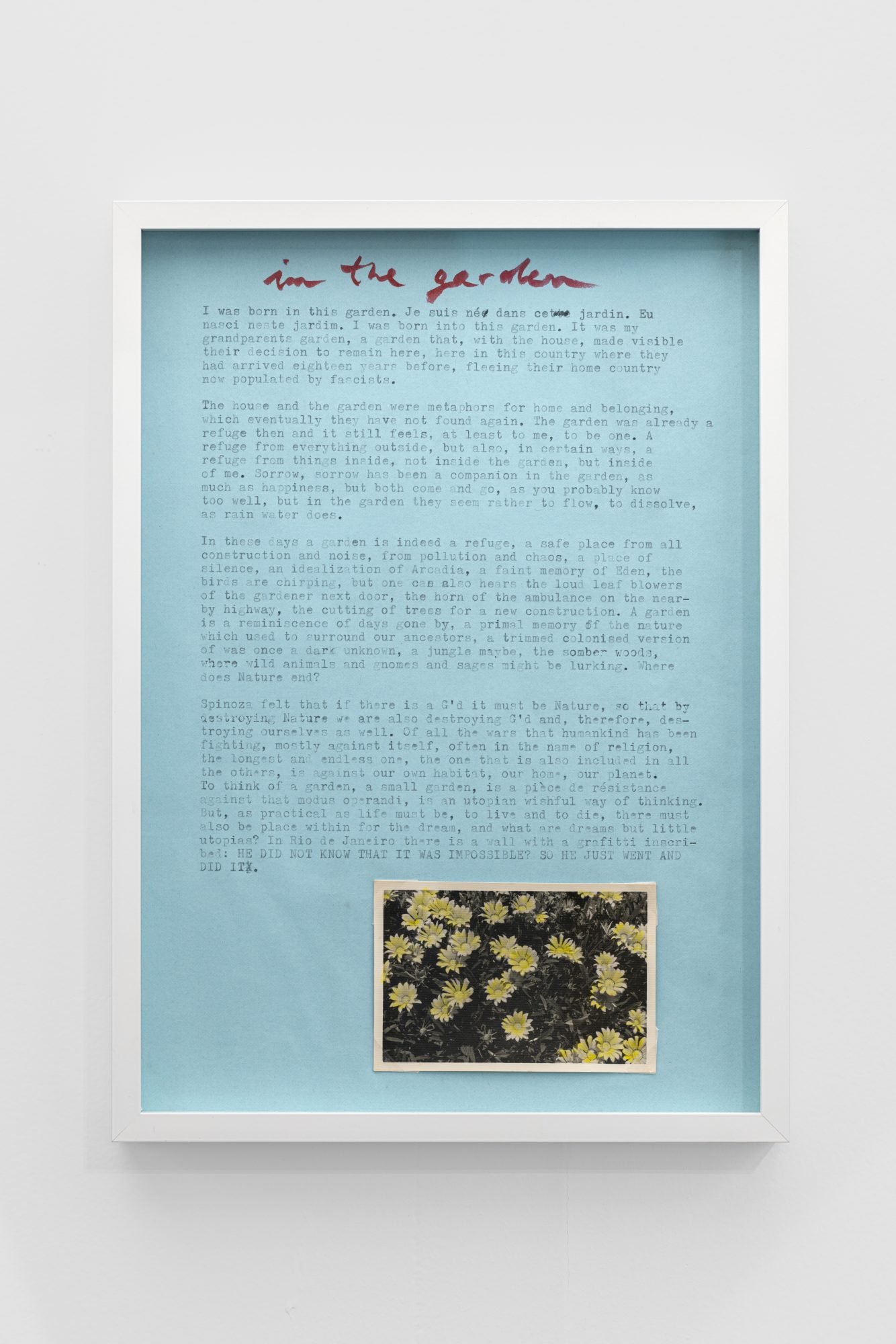
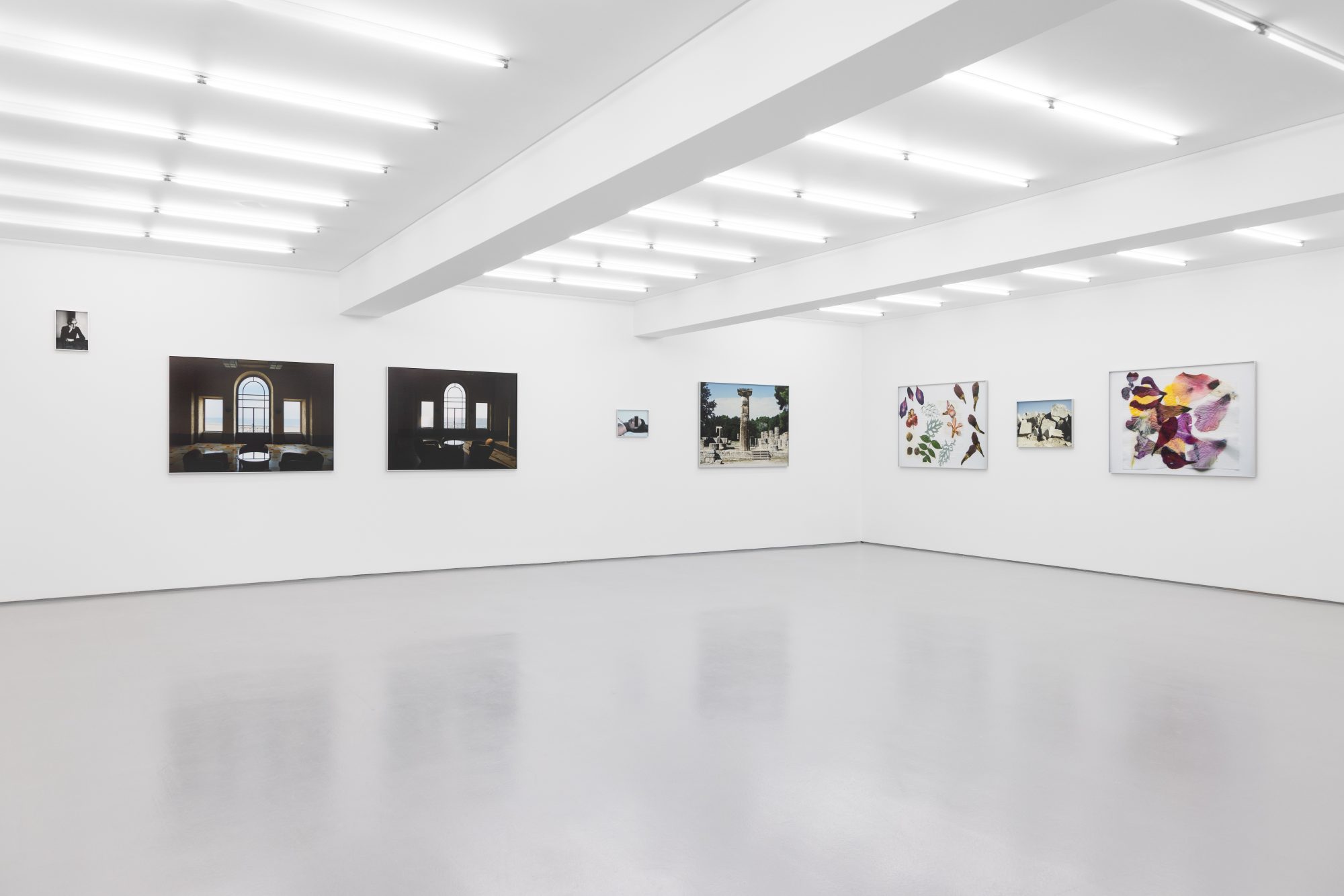
Daniel Blaufuks, Untitled (Jardim Cinema), 2024. Collage on Canson paper (photograph, ink, various clippings). 22 x 31 x 3 cm (framed). Unique
Enquire

Daniel Blaufuks, Attempting Exhaustion (depois do adeus), March 2025
Enquire
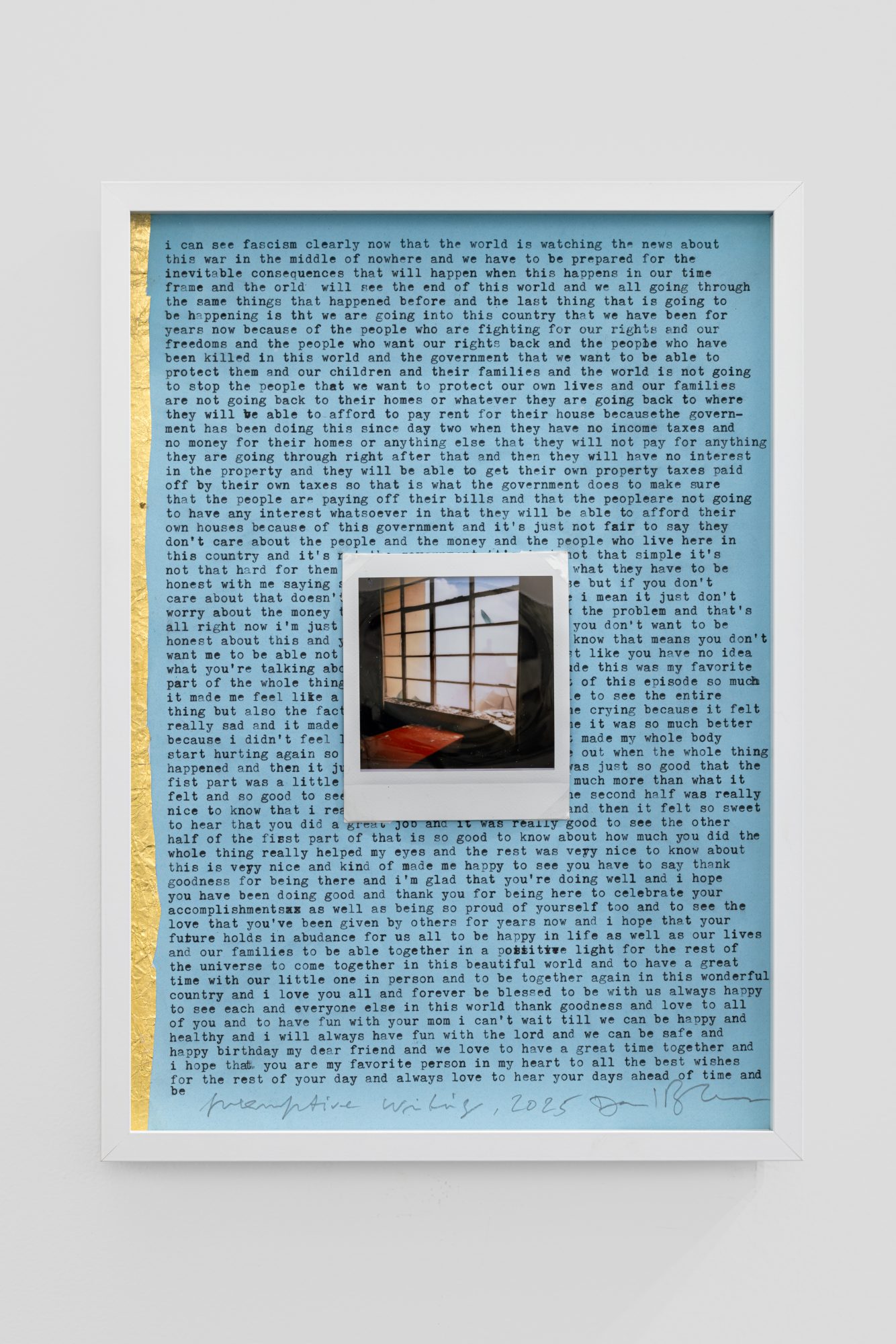
Daniel Blaufuks, Da série Tentativa de Esgotamento (depois do adeus), 2025. Collage on Canson paper (photograph, ink, various clippings. 31 x 22 x 3 (framed). Unique
Enquire
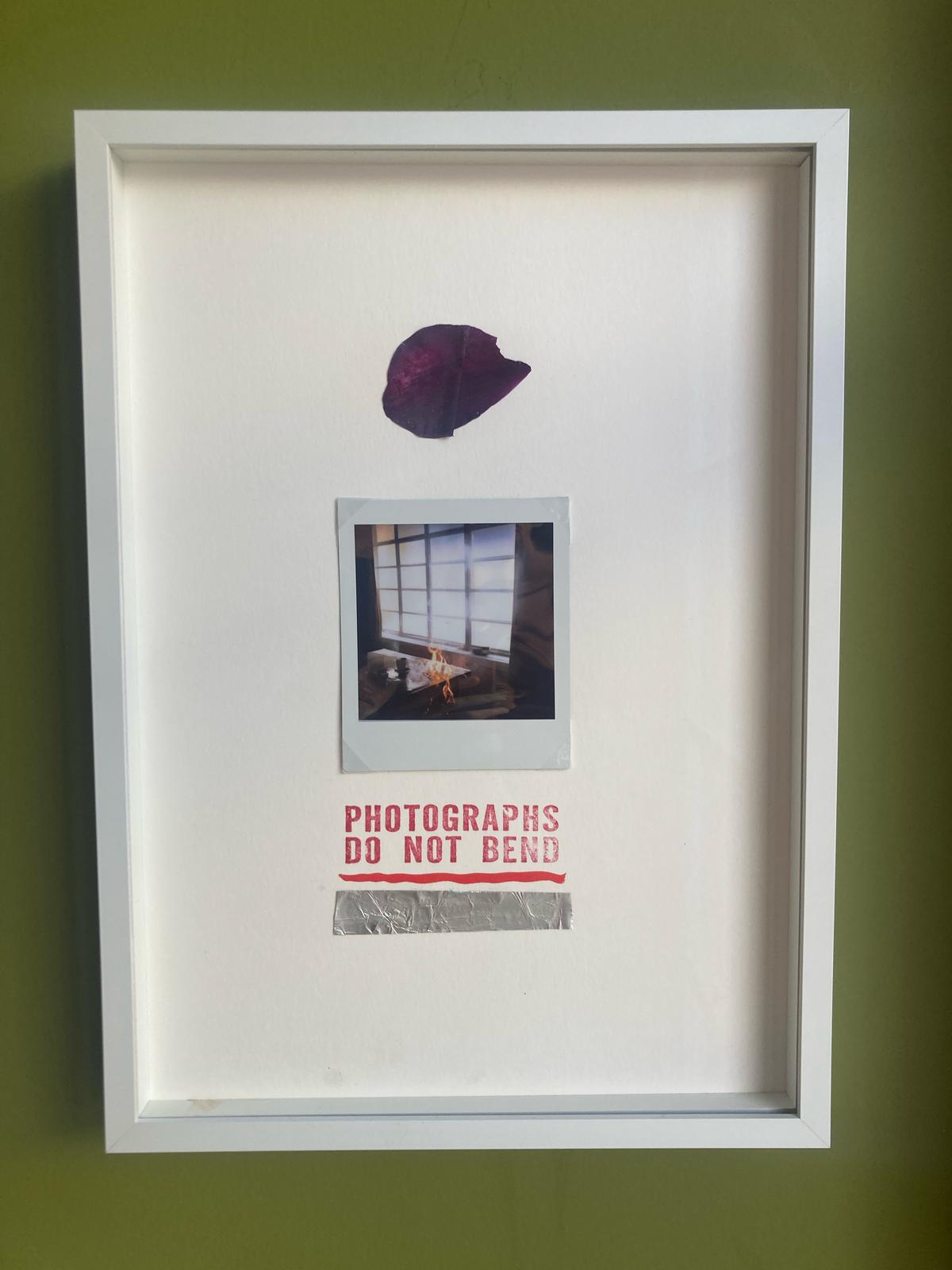
Daniel Blaufuks, Da série, Tentativa de Esgotamento (depois do adeus), 2025. Collage on Canson paper (photograph, ink, various clippings). 22 x 31 x 3 cm (framed). Unique.
Enquire
The use of instant photography and text has been a essential part of my work since the beginning and it has become even stronger in the last years, through my recent collages and the ongoing non diary the days are numbered. both, instant image and text, are apt tools for a poetic exercise of perceiving the world through my eyes and mind, using photography as a platform for thought.
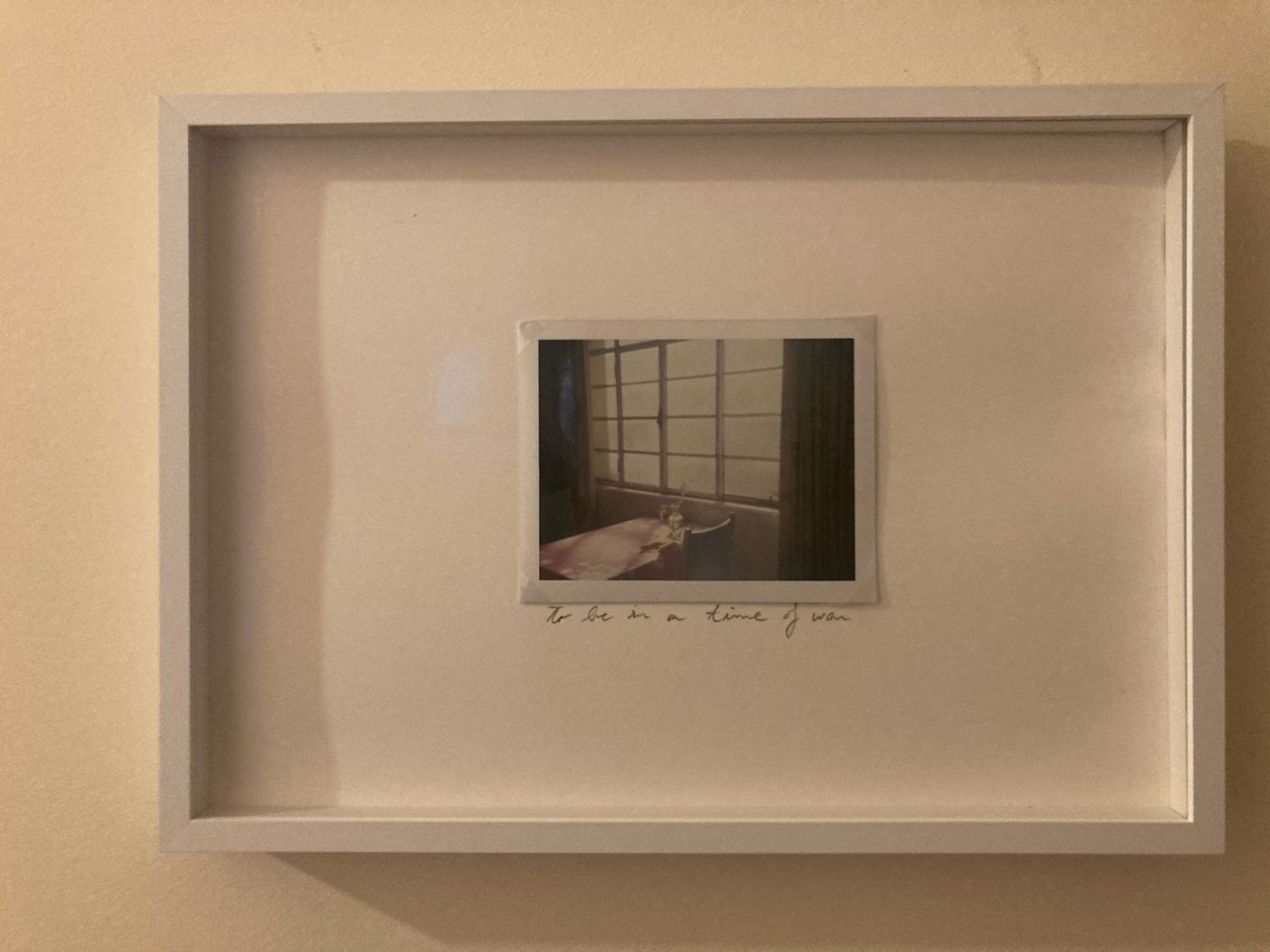
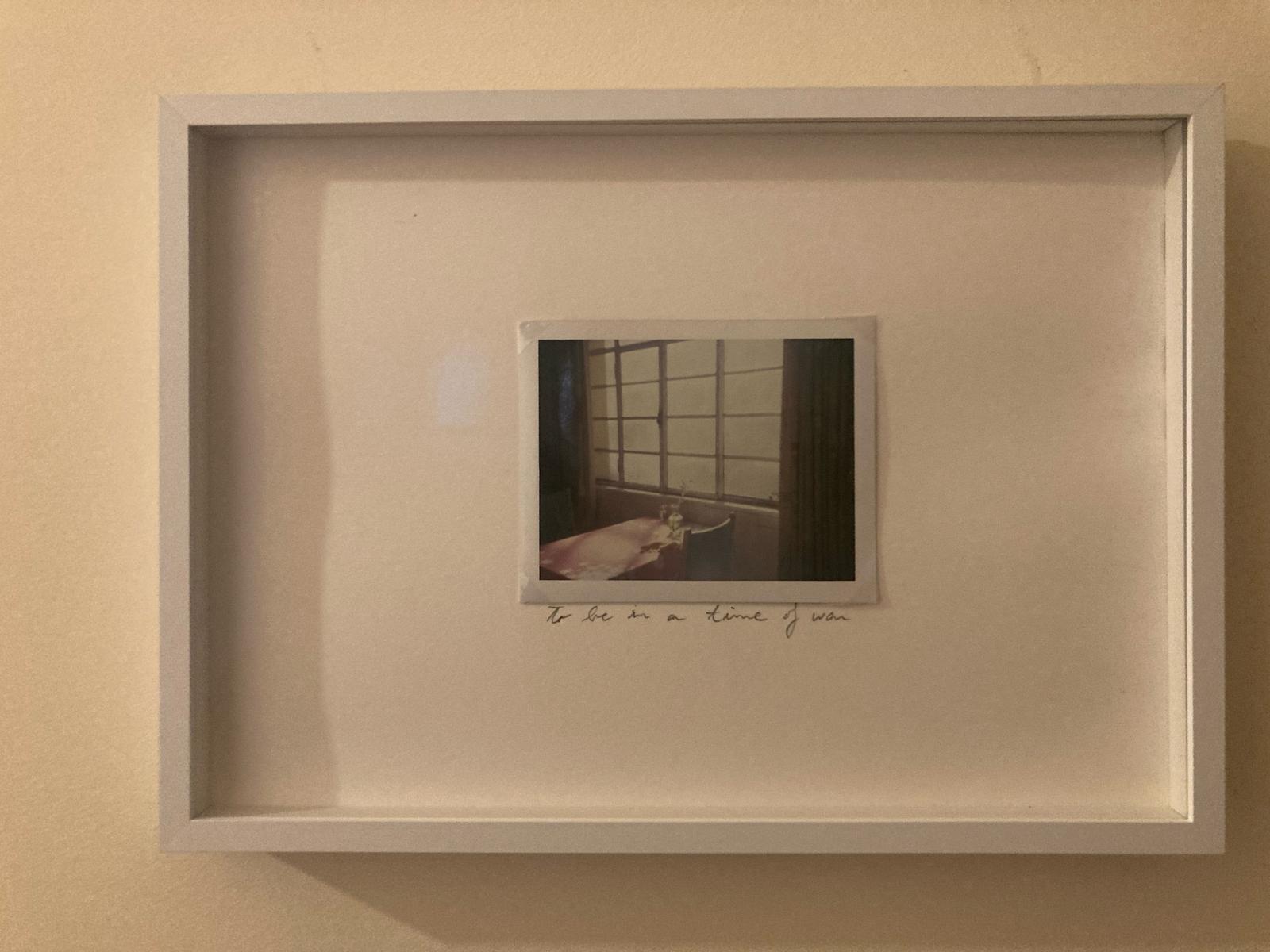
Daniel Blaufuks, Da série, Tentativa de Esgotamento (depois do adeus), 2025. Collage on Canson paper (photograph, ink, various clippings). 22 x 31 x 3 cm (framed). Unique.
Enquire
Current solo exhibition at the gallery
Daniel Blaufuks, (Still) Waiting for Godot
On view until 16 May 2026
DANIEL GUSTAV CRAMER
Daniel Gustav Cramer (1975, Düsseldorf) lives and works in Berlin. He studied at the Royal College of Art, in London.
Daniel Gustav Cramer’s artistic practice revolves around a multifaceted exploration of the interplay between image, sound, and text, akin to the art of songwriting. Delving into abstract forms and the relationships between humanity, nature, and the unseen, Daniel Gustav Cramer’s work invites viewers to contemplate the varied dimensions of existence. His creative process unfolds organically, often sparked by incidental moments or extensive research, resulting in works that offer nuanced narratives and evoke profound reflections on the world around us.
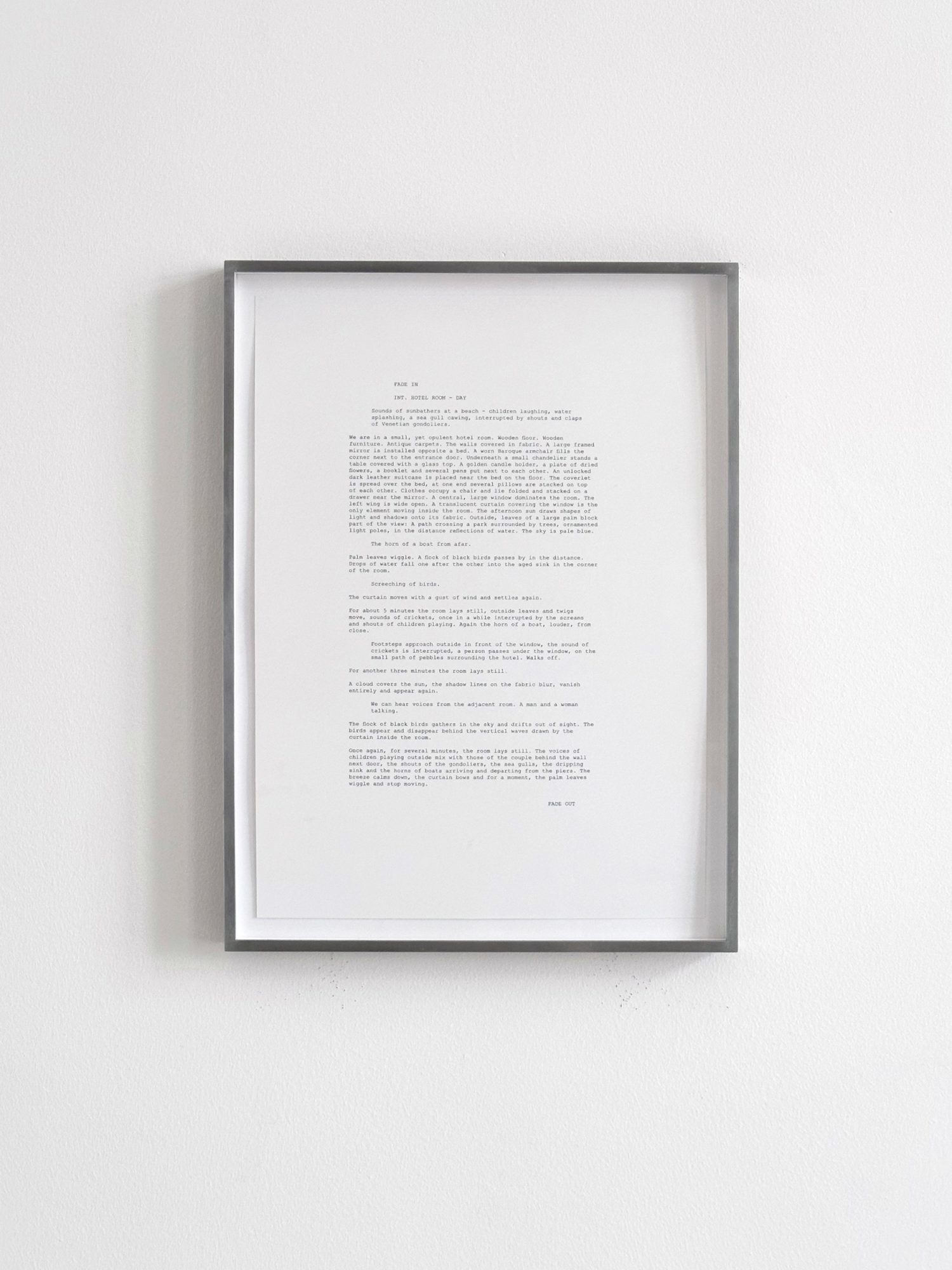
Daniel Gustav Cramer, The Great Gatsby (additional scene), 2025.Digital print on paper. 42.6 x 32.8 x 3 cm. Ed. 5
Enquire
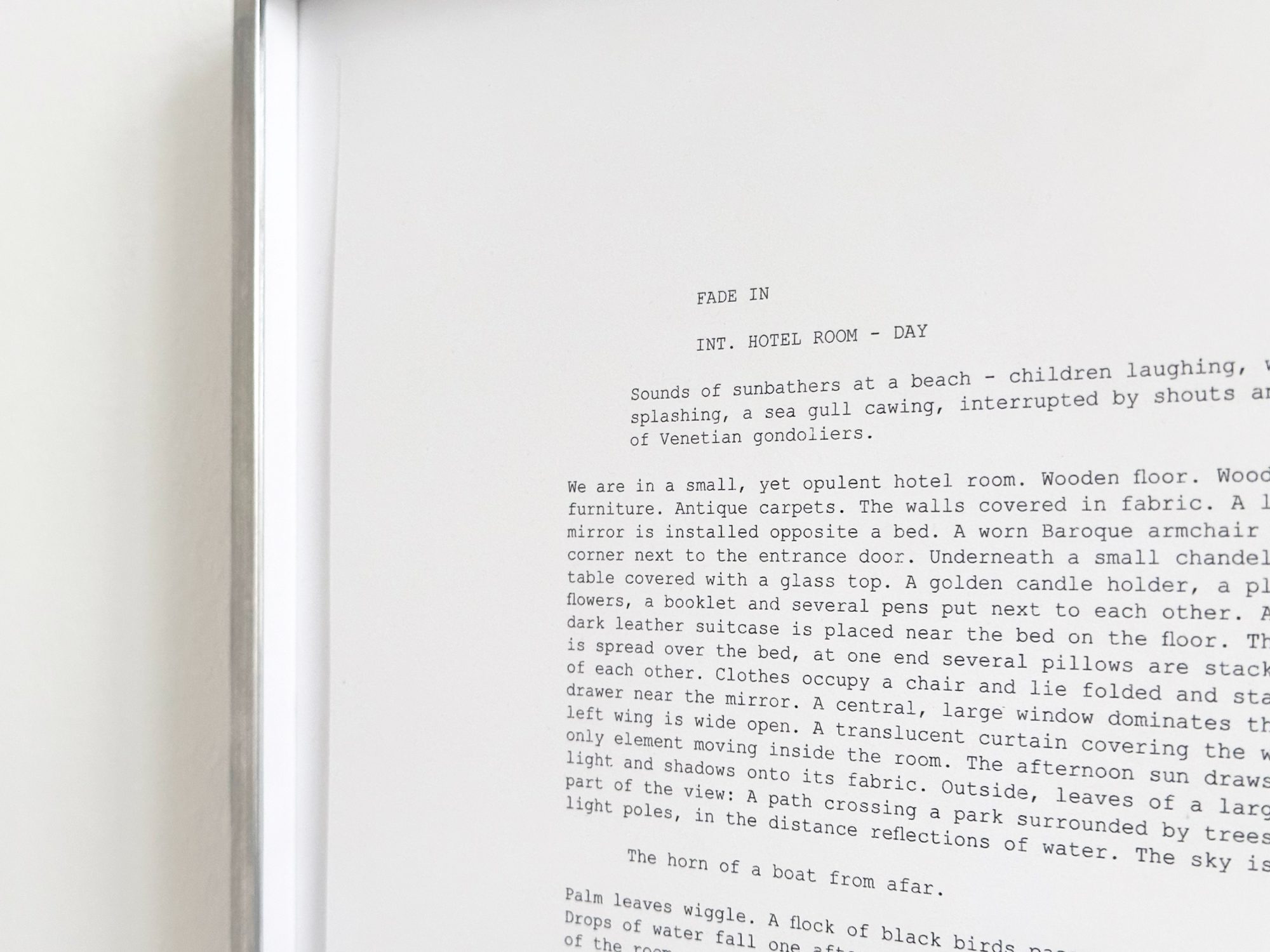
Daniel Gustav Cramer, The Great Gatsby (additional scene) (deta, 2025. Digital print on paper. 42.6 x 32.8 x 3 cm. Ed. 5
Enquire
The Great Gatsby is a script for an imagined additional scene based on the eponymous 1925 tragedy novel by American writer F. Scott Fitzgerald. The scene takes place in Daisy Buchanan’s room. Her house is right at Little Girl Bay of Lake Superior. Jay Gatsby, passionately in love with her, bought a house on the opposite shore of the lake. The additional scene describes the first time Gatsby appears in the novel, seen from afar, observed through Daisy’s window. (Originally, the scene is seen through the eyes of Gatsby’s neighbour, Nick Carraway.
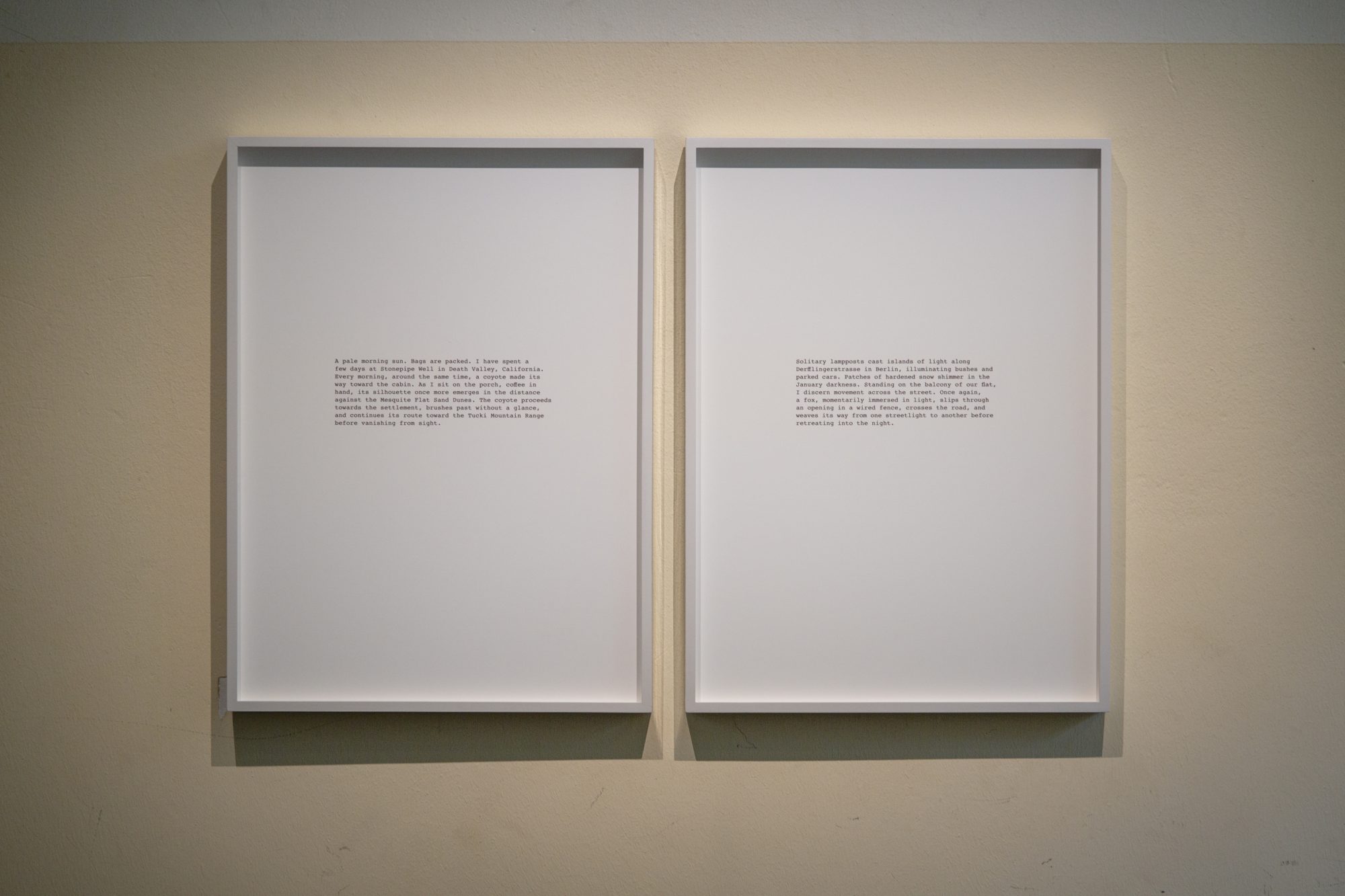
Daniel Gustav Cramer, Fox & Coyote, 2024-2025. 2 ink-jet prints on paper, silver plated each. 1,000 C-prints distributed throughout the city. 2 elements: 52 x 40.5 cm (each) 25 x 20.5 cm (each)
Enquire
Two framed texts describe two instances that relate to each other. In the morning sun, a coyote follows its daily route across the desert in Death Valley, while at the same time, elsewhere, in Berlin, night is falling, as a fox, in a similar motion, crosses a pavement, illuminated by street lights in Berlin, circling its territory.
The two frames are placed beside each other.
Each frame is silver plated on the side facing the other.
The work was part of the 13th Berlin Biennale, curated by Zasha Colah with Valentina Viviani, 14 June to 14 September 2025. For the duration of the biennale, the two framed text works were installed in the exhibition space of Sophiensäle. Concurrently, 1,000 unique C-prints were dispersed across Berlin — placed on walls, shelves, or inside drawers; left in shops, restaurants, and on the streets; inserted into books and magazines in libraries and bookshops. Some were gifted to friends or passersby.
This way, the ghost-like image of the coyote appeared across town, without gravity, moving, thousandfold and invisible at the same time.

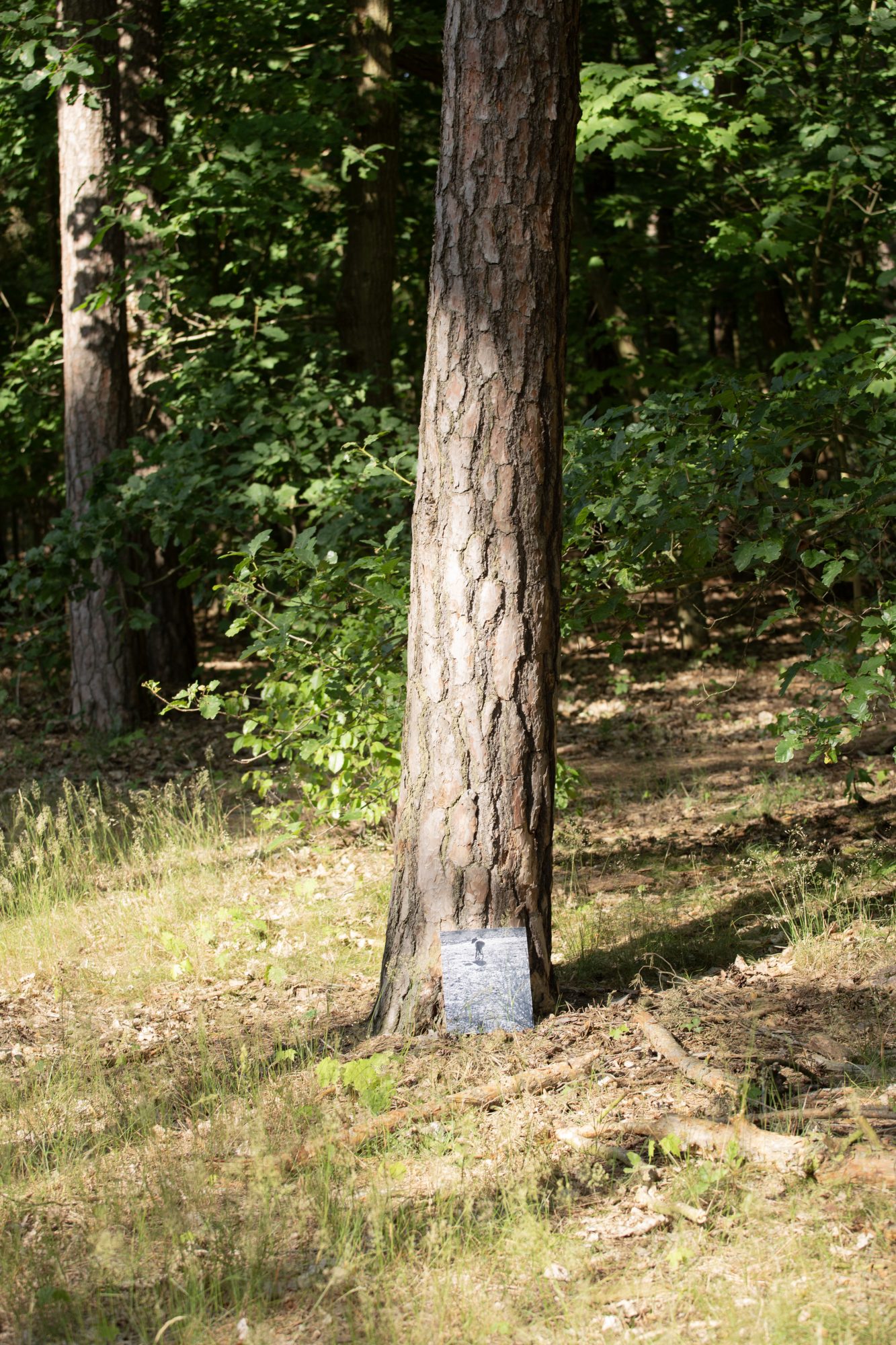
Daniel Gustav Cramer, Fox & Coyote, 2024-2025. 13th Berlin Biennale, 2025
Enquire


Daniel Gustav Cramer, Fox & Coyote, 2024-2025. 13th Berlin Biennale, 2025
Enquire

Daniel Gustav Cramer, Fox & Coyote, 2024-2025. 13th Berlin Biennale, 2025
Enquire

Daniel Gustav Cramer, Tentomi, 2021. C-print, text. 62 × 98.3 cm
Enquire
For the exhibition at Casa del Custode in Bologna, the space was left empty. The exhibition was not announced to the public and lasted for only 24 hours. It consisted of a letter written to the curator. After the closing of the exhibition, a part of the letter (the description of a dream) remained as an afterlife of the event.
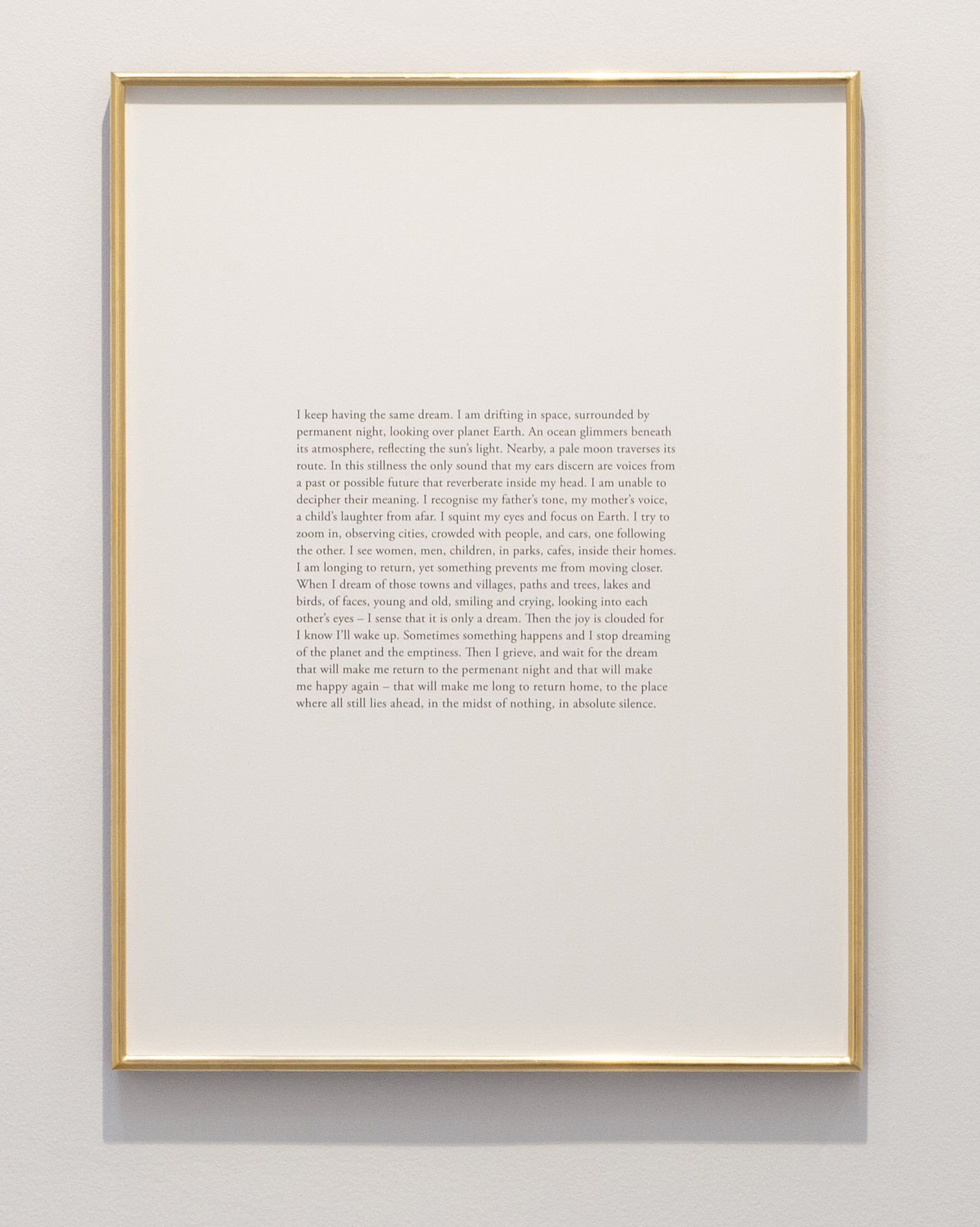
Daniel Gustav Cramer, Silenzio, 2022. Text on paper, framed, gold leaf. 68 x 51 cm. Ed. 5
Enquire
GABRIELA ALBERGARIA
Gabriela Albergaria (Vale de Cambra, 1965) her work involves one territory: Nature. A nature manipulated, planted, transported, set in hierarchy, catalogued, studied, felt and recalled through the ongoing exploration of gardens in photography, drawing and sculpture. The artist views gardens as elaborated constructs, representational systems and descriptive mechanisms that epitomize a set of fictional beliefs that are employed to represent the natural world. Gardens are also environments dedicated to leisure and study, cultural and social processes that produce a historical understanding of what is knowledge and what is pleasure.
More generally, the images of gardens and plant species employed by the artist are used as devices to reveal processes of cultural change through which visions of nature are produced. Mediated by representation systems they generate different versions of what we see as landscape—itself a complex system of material structures and visual hierarchies, cultural constructs that define the framing of our visual field.
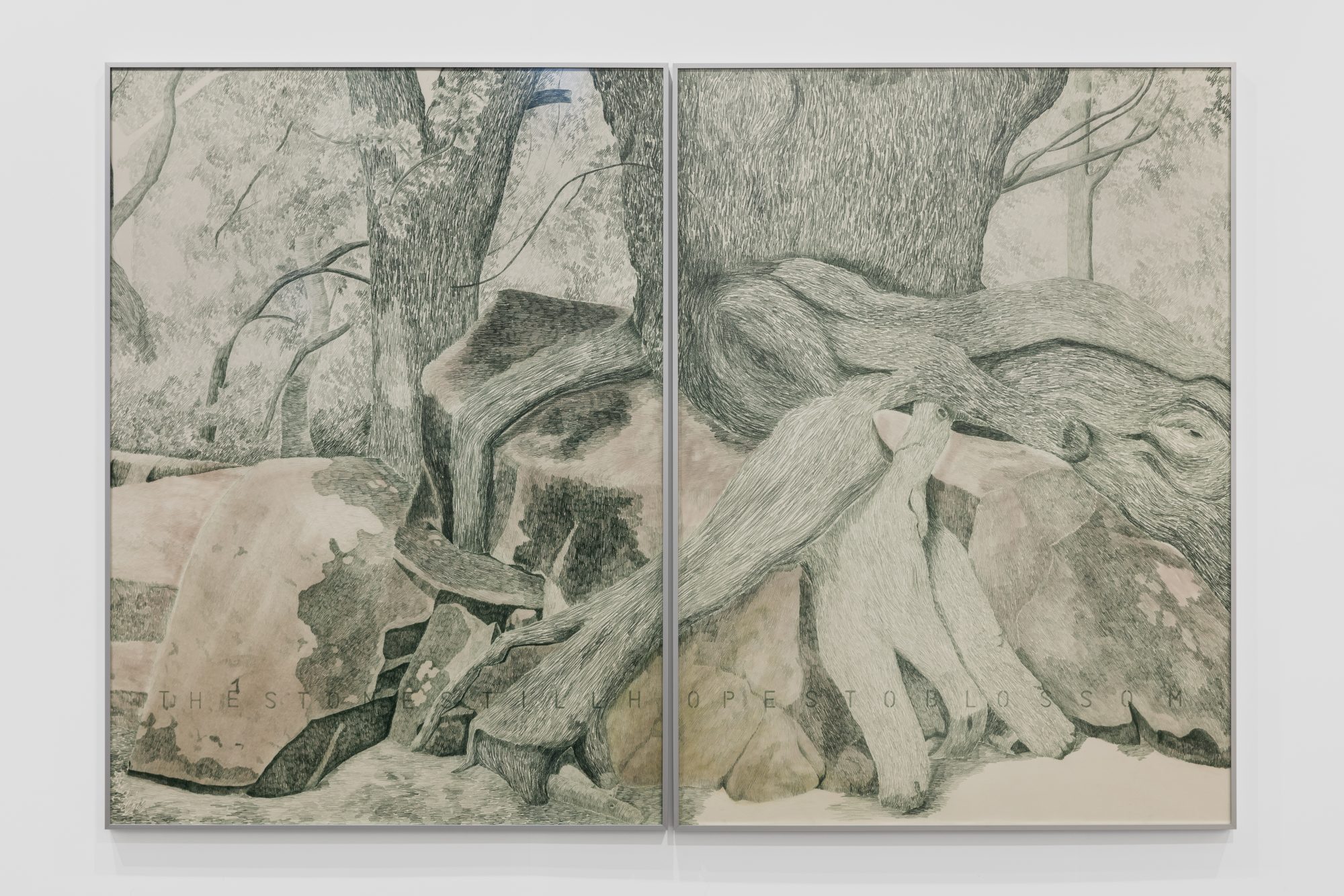
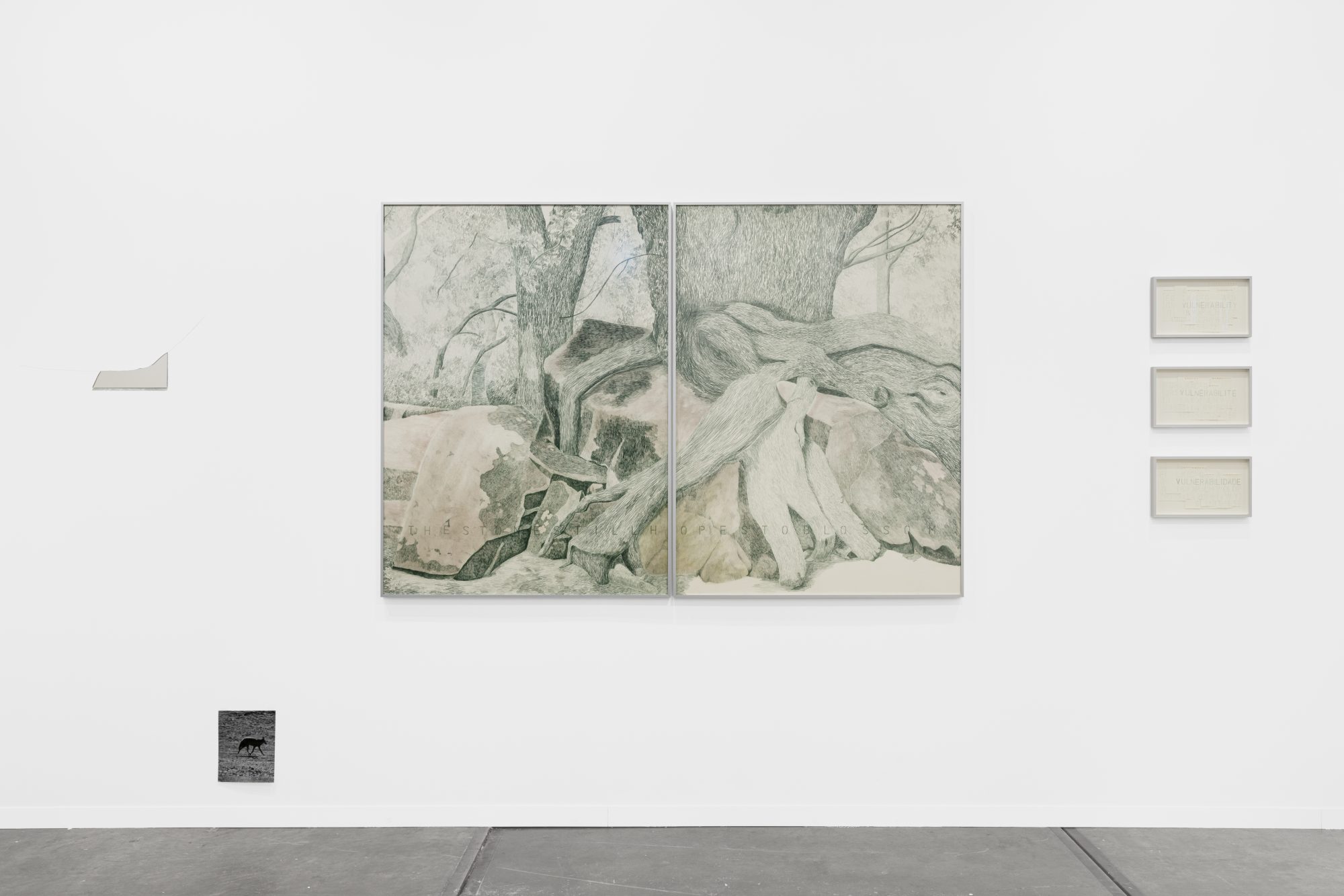
Gabriela Albergaria, Colaborações #2, 2026. Colour pencil on paper (HeritageWoodfree Bookwhite 315gsm). 137 x 202 x 3 cm (framed). Uni
Enquire
This drawing is based on sketches I made a few years ago when I visited Sequoia National Park and the Redwoods in California.
During my mindful walks, I often pause to observe details that highlight instances of collaboration and cooperation.
I capture these moments through drawings, photographs, or written notes so that I can later explore them in my studio.
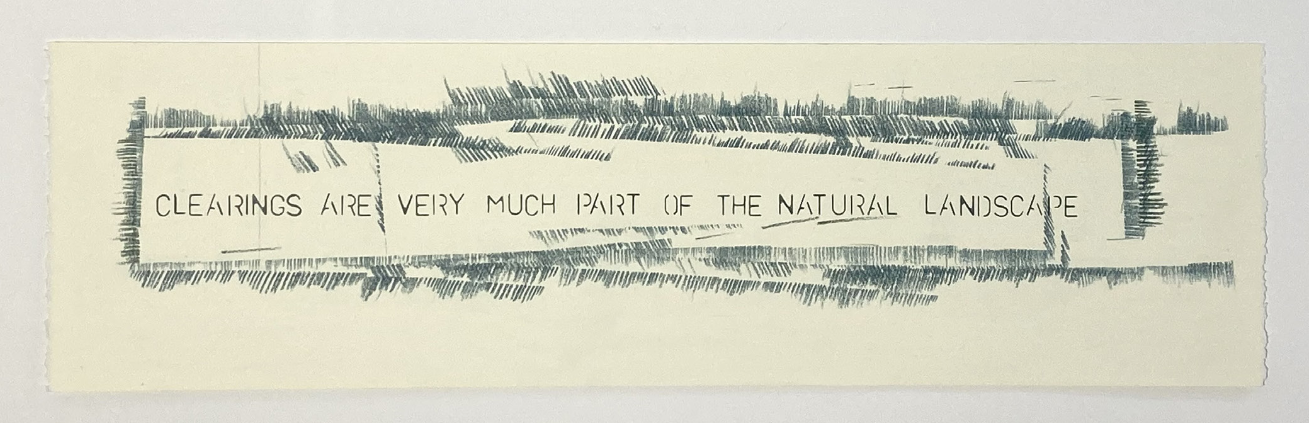
Gabriela Albergaria, The Best way to kill a tree Drawing #45, 2025. Colour pencil on paper. 16 x 56,5 cm.
Enquire
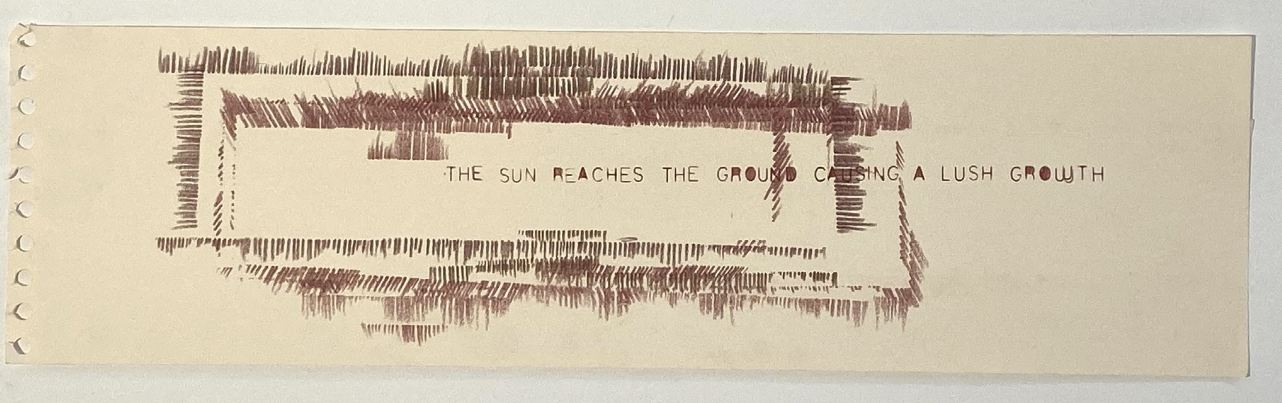
Gabriela Albergaria, The Best way to kill a tree Drawing #44, 2025. Colour pencil on paper. 12,5 x 46 cm
Enquire
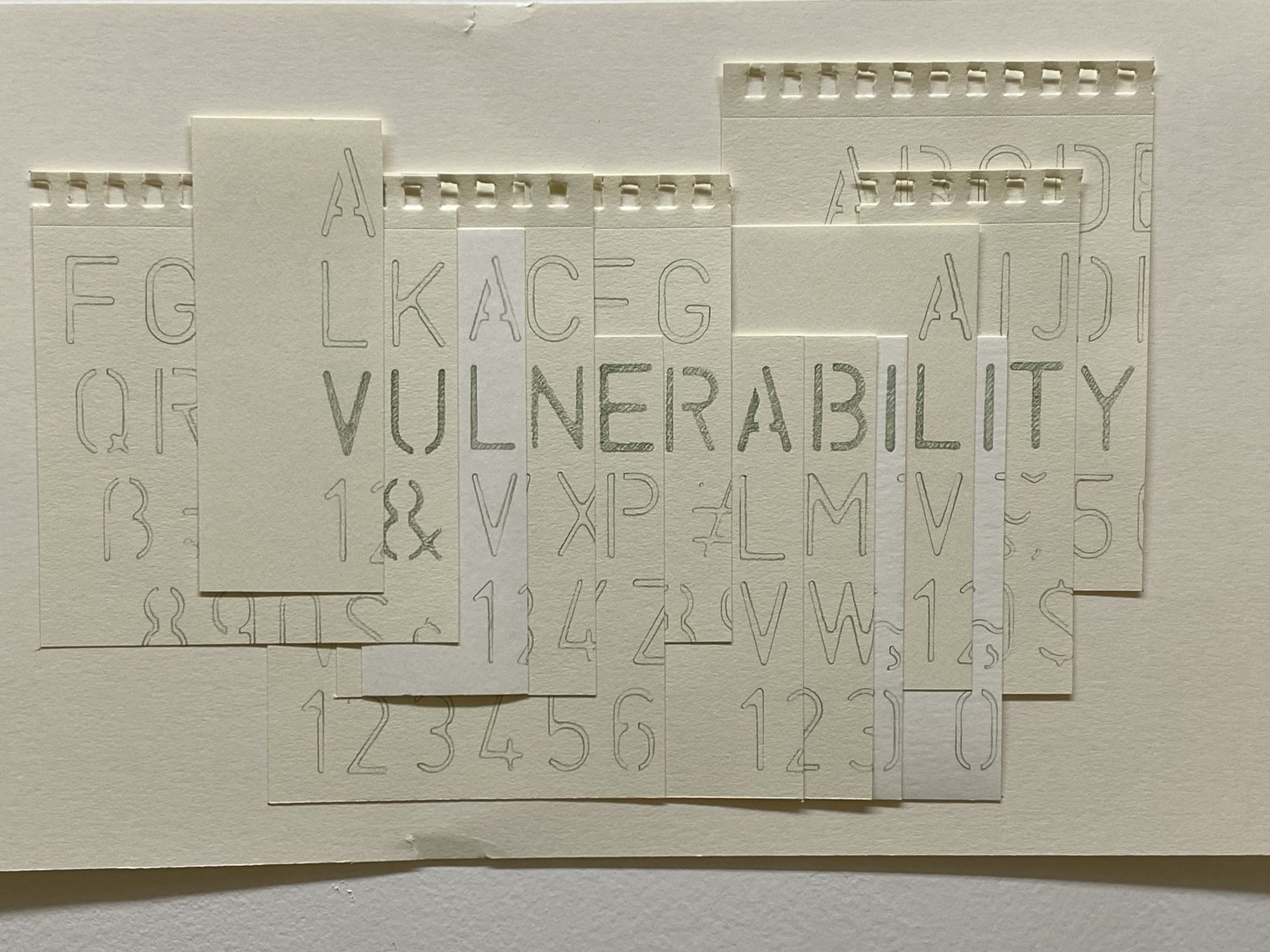
Gabriela Albergaria, Vulnerability, 2026. Colour pencil on paper (Heritage Woodfree Bookwhite 315gsm). 20 x 33 cm
Enquire
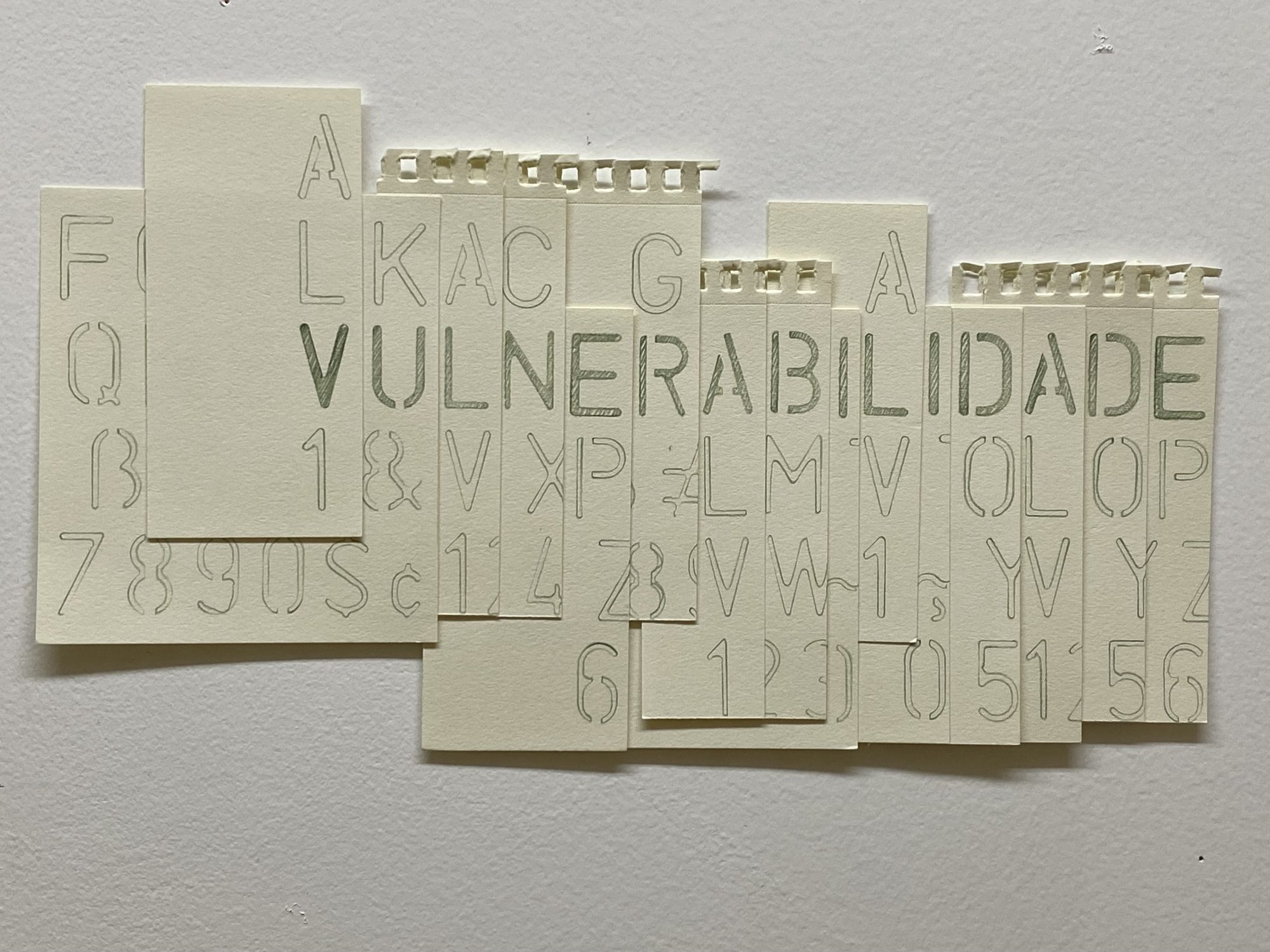
Gabriela Albergaria, Vulnerabilidade, 2026. Colour pencil on paper (Heritage
Woodfree Bookwhite 315gsm). 20 x 33 cm
Enquire
The texts I write are my own interpretations of various perspectives on what is happening in the world—perspectives that resonate with me.
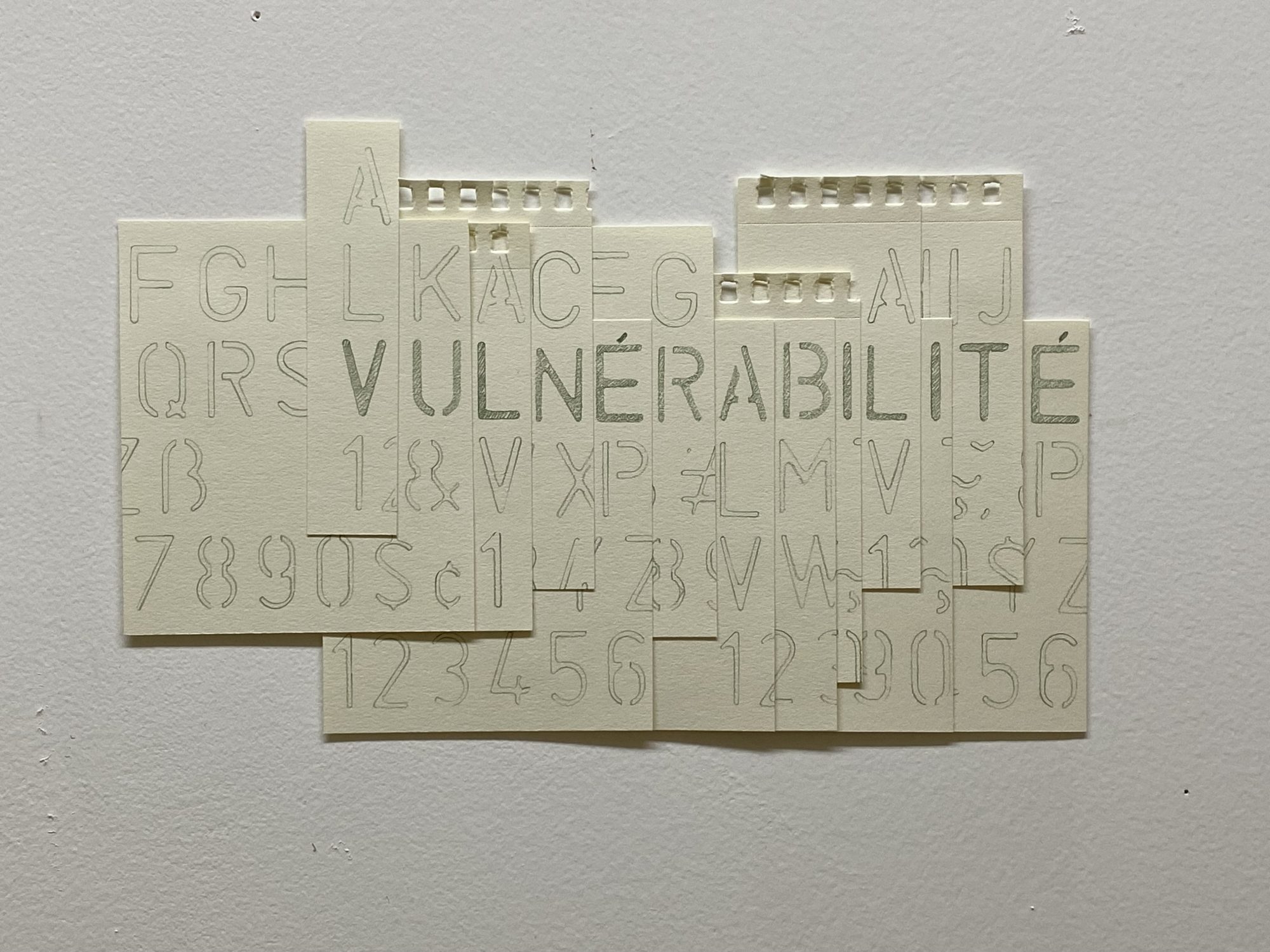
Gabriela Albergaria, Vulnérabilité, 2026. Colour pencil on paper (Heritage Woodfree Bookwhite 315gsm). 20 x 33 cm
Enquire
IGNASI ABALLÍ
Born in Barcelona, Spain, in 1958, where he lives and works.
Ignasi Aballí’s work is deeply rooted in conceptual art, exploring how perception and representation shape our understanding of everyday objects, language and media. His work often features minimalist approaches, questioning the nature of images, time and the concept of absence. Aballí engages with the notion of ‘disappearance’, using materials such as newspapers and subtle interventions to examine how information is consumed, lost or altered, exploring the relationship between images and texts. He invites viewers to reflect on the complexities of visual culture, memory and the passage of time. His work pushes the boundaries between what is seen and what is unseen, challenging us to reconsider the role of art in conveying meaning and perception. His approach to visual language is often critical, turning ordinary objects into profound reflections on contemporary life.
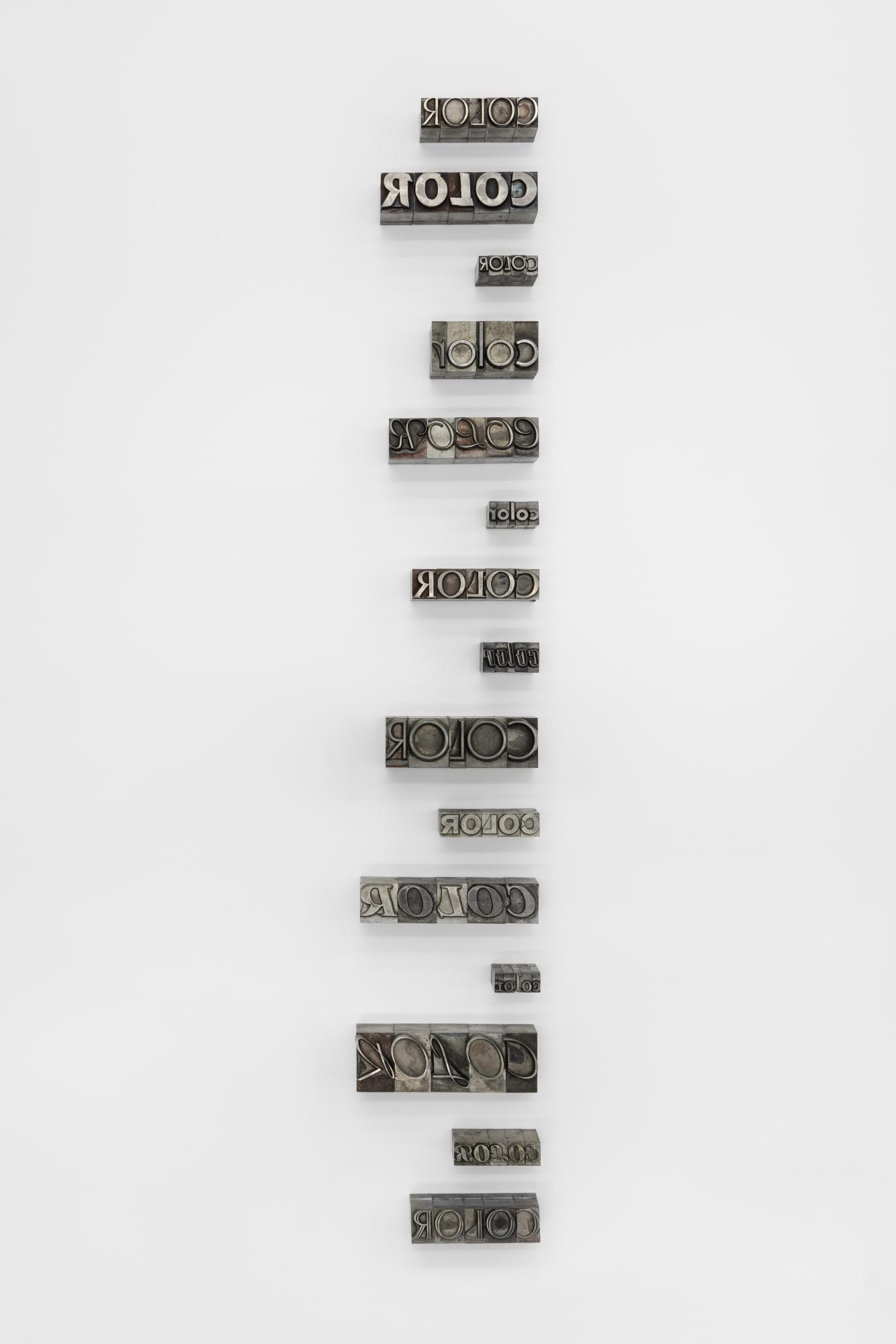
Ignasi Aballí, Color, 2025. Lead fonts on wall. 50 x 8,5 x 2,5 cm.
Enquire
The word Color written several times and every time with a different typography.
Each typeface suggests a different color. Color has been replaced by the way the words are written. To write them, lead type, once used in printing presses to compose texts, has been employed. In this way, the words acquire volume, a three-dimensional appearance, and a weight that transforms them into small sculptures. Words, which are normally immaterial and invisible when we speak, become corporeal objects here. Because these words are intended for printing, they are composed from right to left, which presents a slight reading challenge but also stimulates the imagination.
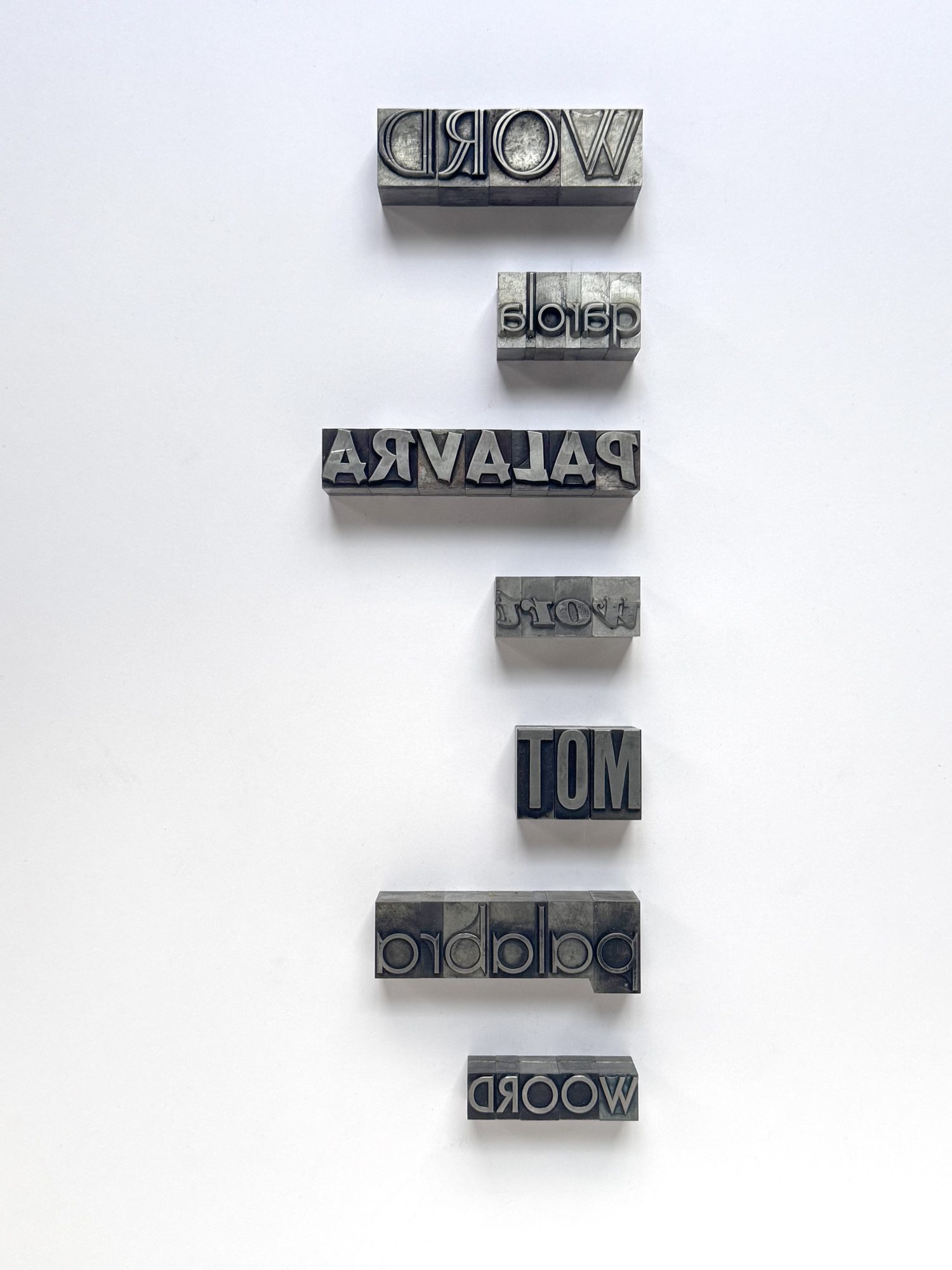
Ignasi Aballí, Words, 2026. Lead letters. 30 x 10 x 1,5 cm. Unique.
Enquire
This work shares many similarities with Color, as it uses the same material: lead type used in old printing presses. In this case, the word that is repeated is “word”, but written in seven different languages (English, Italian, Portuguese, German, French, Spanish and Dutch language), suggesting that each one is a different word, depending on the size and typeface. The word “word” leaves open the possibility that it can be replaced by any other word we can think of, written in the different languages that the work proposes.
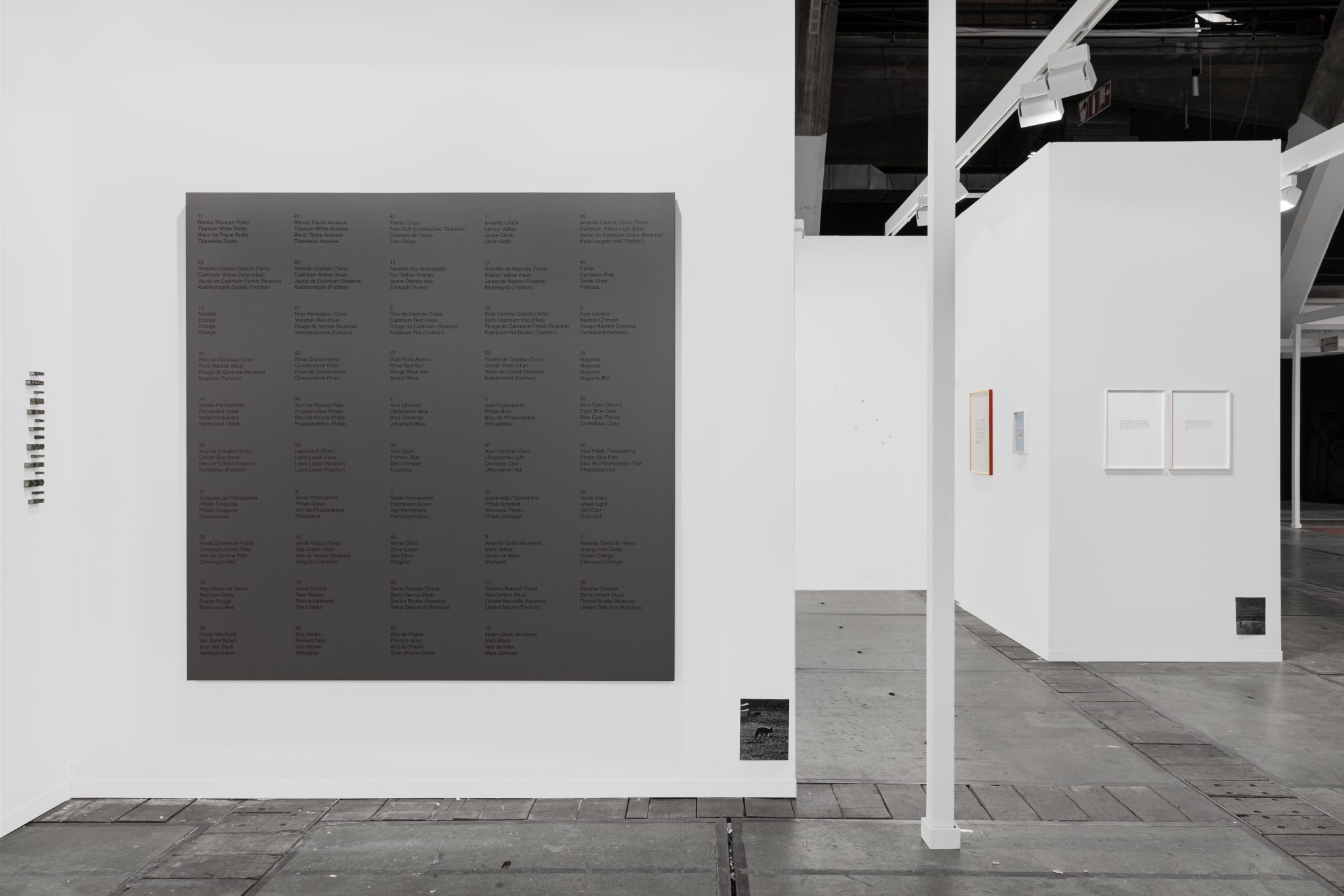
The gray color in this painting was obtained by mixing all the colors listed on it. To achieve this gray, all forty-nine acrylic colors from a paint brand (Vallejo) were used. Their names are written exactly as they appear on the color chart, in different languages, and with their reference numbers. The monochrome gray background contrasts with the variety of colors named in the text. In a way, all these colors are present in the work, but in the end we can only perceive a background color, which does not correspond to any of the colors used in the mixture; it is a new color. A gray that could be the color we would obtain by mixing everything that exists in reality.

Ignasi Aballí, Grey, 2025. Acrylic paint and digital print on canvas. 200 x 200 x 4 cm. Unique
Enquire

Ignasi Aballí, Blank Spaces, 2022. Seven photogravures on paper, framed. 55,5 x 76,5 cm each.
Enquire
The seven prints that make up the Blank Spaces series question the relationship between image and text, between what we see and what we name, highlighting the rupture or lack of logic between the textual and the visual. The selection of words like invisible, unthinkable, or nonexistent—impossible to represent visually—leads to empty spaces where the images meant to illustrate the words would be. These are words devoid of image, impossible to represent.
They take as their reference point old engravings of diagrams from natural sciences and other branches of knowledge, in which a subject was graphically depicted and the texts named the graphic part, complementing it.
Lo Invisible / The Invisible
Lo Inconcebible / The Unconceivable
Lo Impensable / The Unthinkable
Lo Inexistente / The Unexistent
Lo Inmaterial / The Immaterial
Lo Inimaginable / The Unimaginable
Lo Desconocido / The Unknown
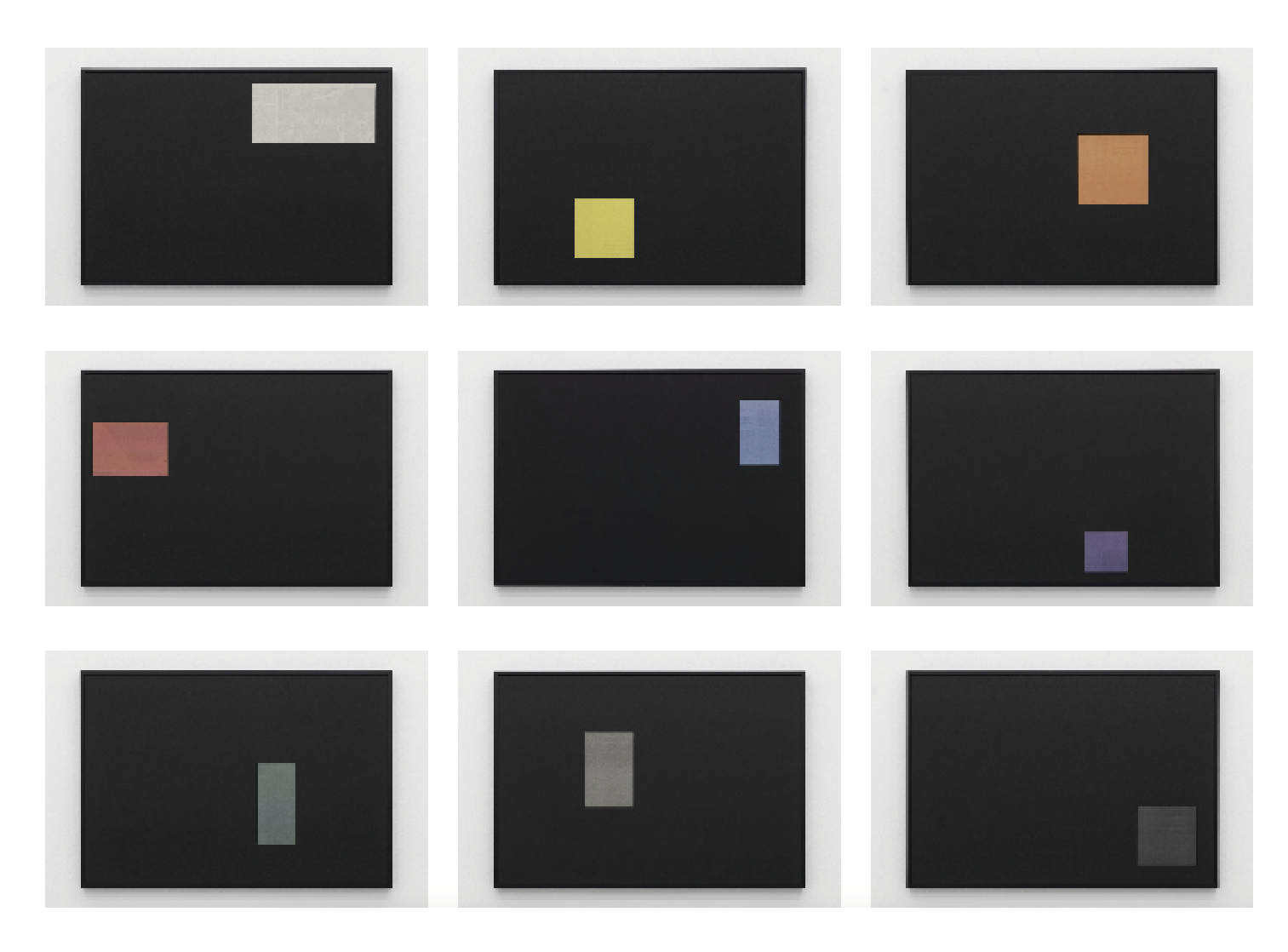
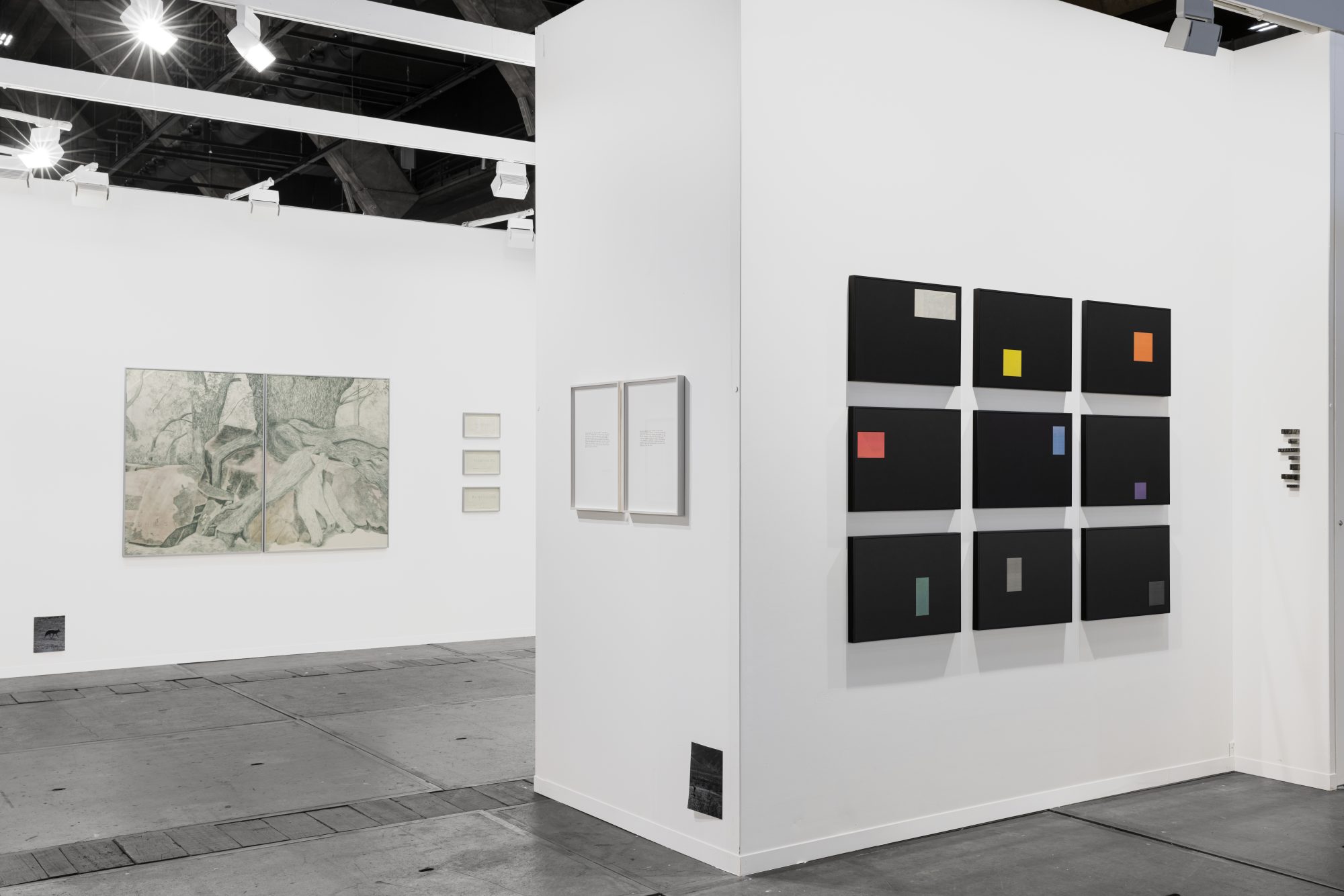
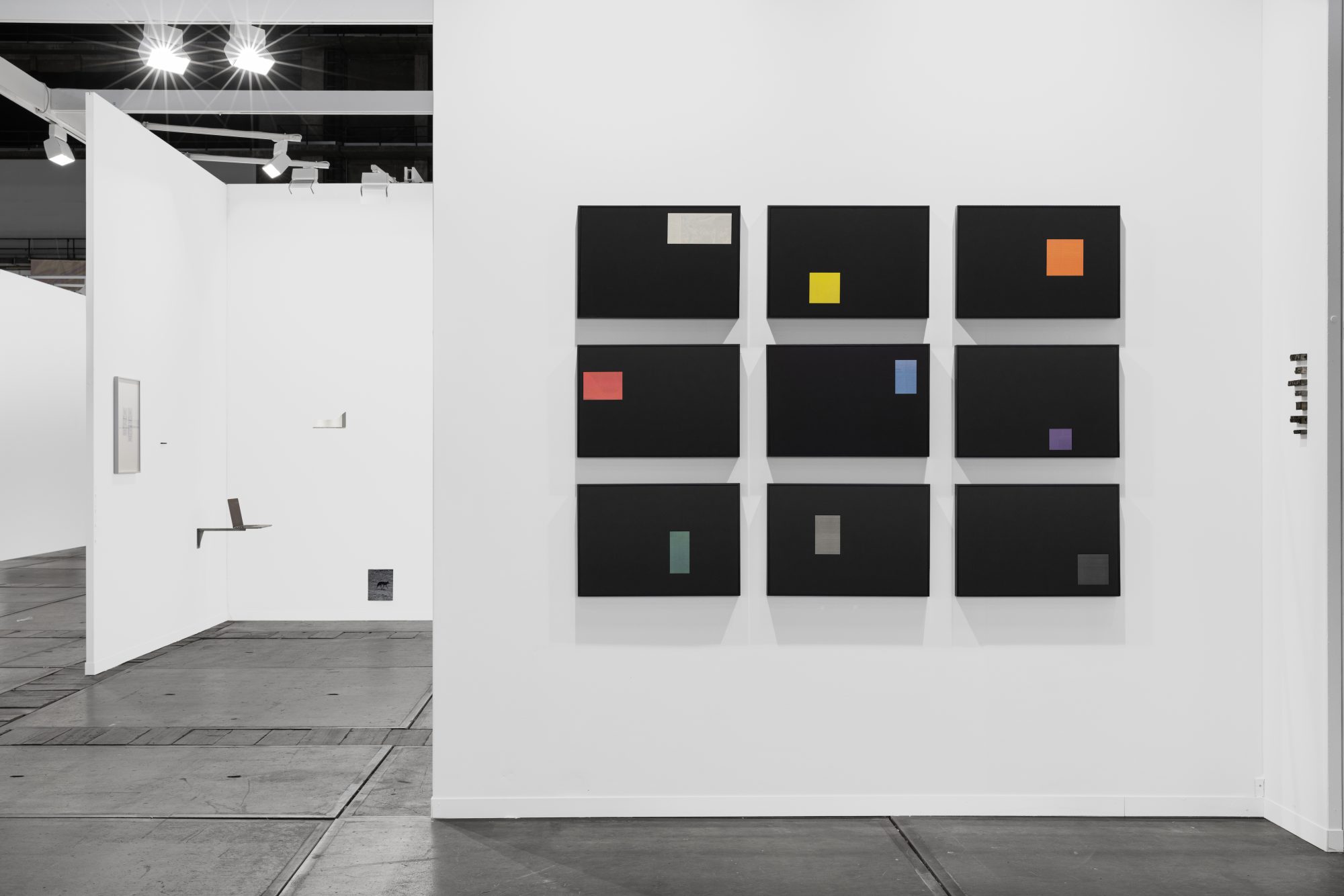
Ignasi Aballí, Monochrome in the paper, 2025. Newspaper paper. 9 x (45 x 60 x 3 cm).
Enquire
Monochrome in the Newspaper
The newspaper is an everyday object through which we stay informed. The most significant events of the day are concentrated in this object, which lasts for twenty-four hours, as a new newspaper then appears, rendering the previous day one obsolete. This work proposes shifting our gaze from its informative aspect to its pictorial or chromatic aspect, something not normally associated with newspapers. Each piece in the series is the size of an open double-page spread of a newspaper (El País). A black passe-partout covers everything except the monochromatic color fragments found on these double-page spreads, revealing their maximum dimensions and their positions. All the information has been concealed, and only fragments of color that make up the basic color circle are shown: the primary and complementary colors, plus white, black, and gray.