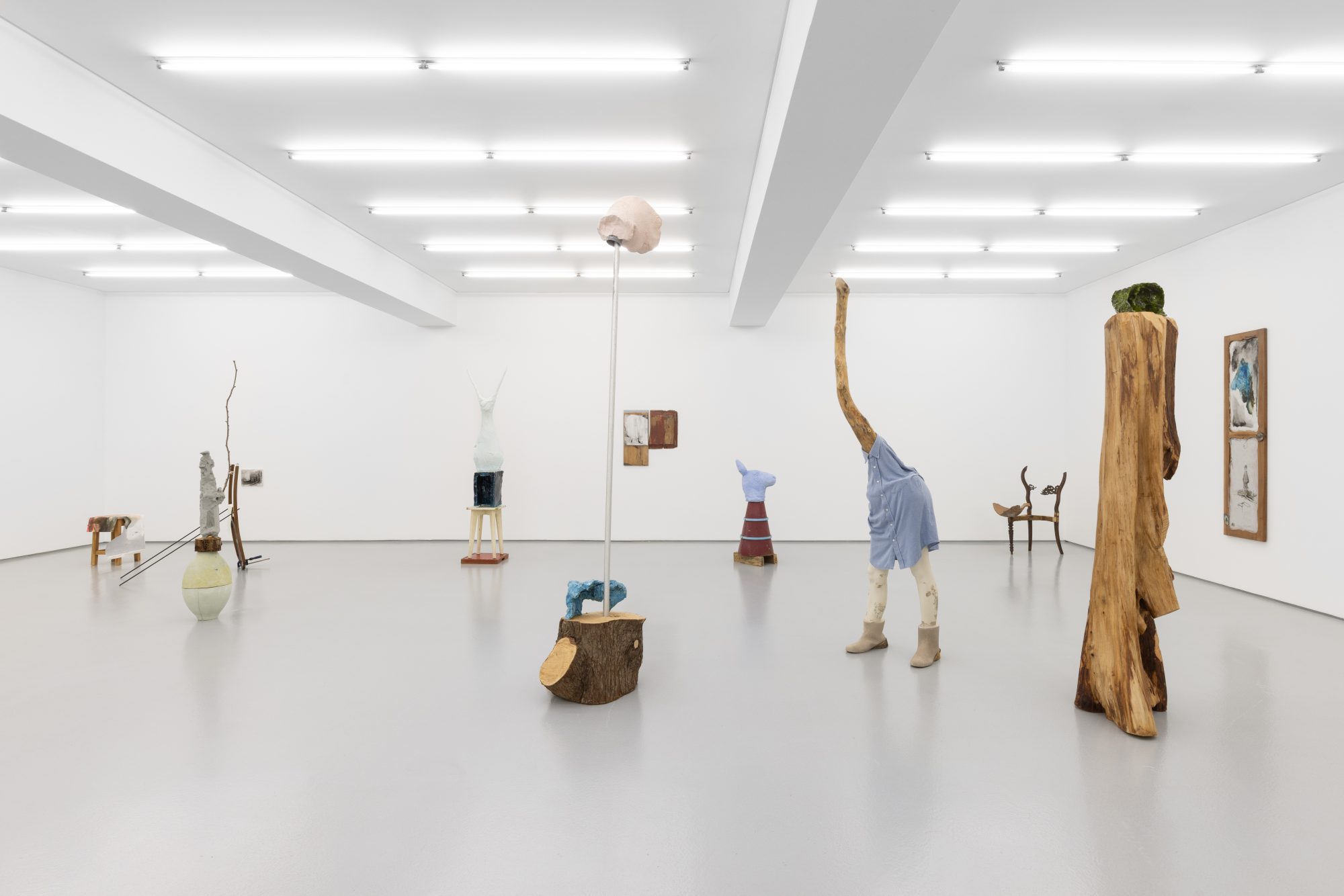
Susanne S. D. Themlitz, Natural History.
Enquire
The Earless Kangaroo and the Wandering Mollusc
In a small red forest always submerged in mist coming from the plains, lived two unlikely companions: an earless kangaroo and a mollusc with a broken shell. Both worked in a traveling circus, where jumps and pirouettes were repeated to the sound of a whistle. The nights were cold and the mornings smelled of sawdust. One time at dawn, tired of being mere applause and not whole beings, they decided to run away. The kangaroo, with a sidelong glance and a resolute step, jumped over the wooden fence, carrying the mollusc in a small bag hanging around his neck.
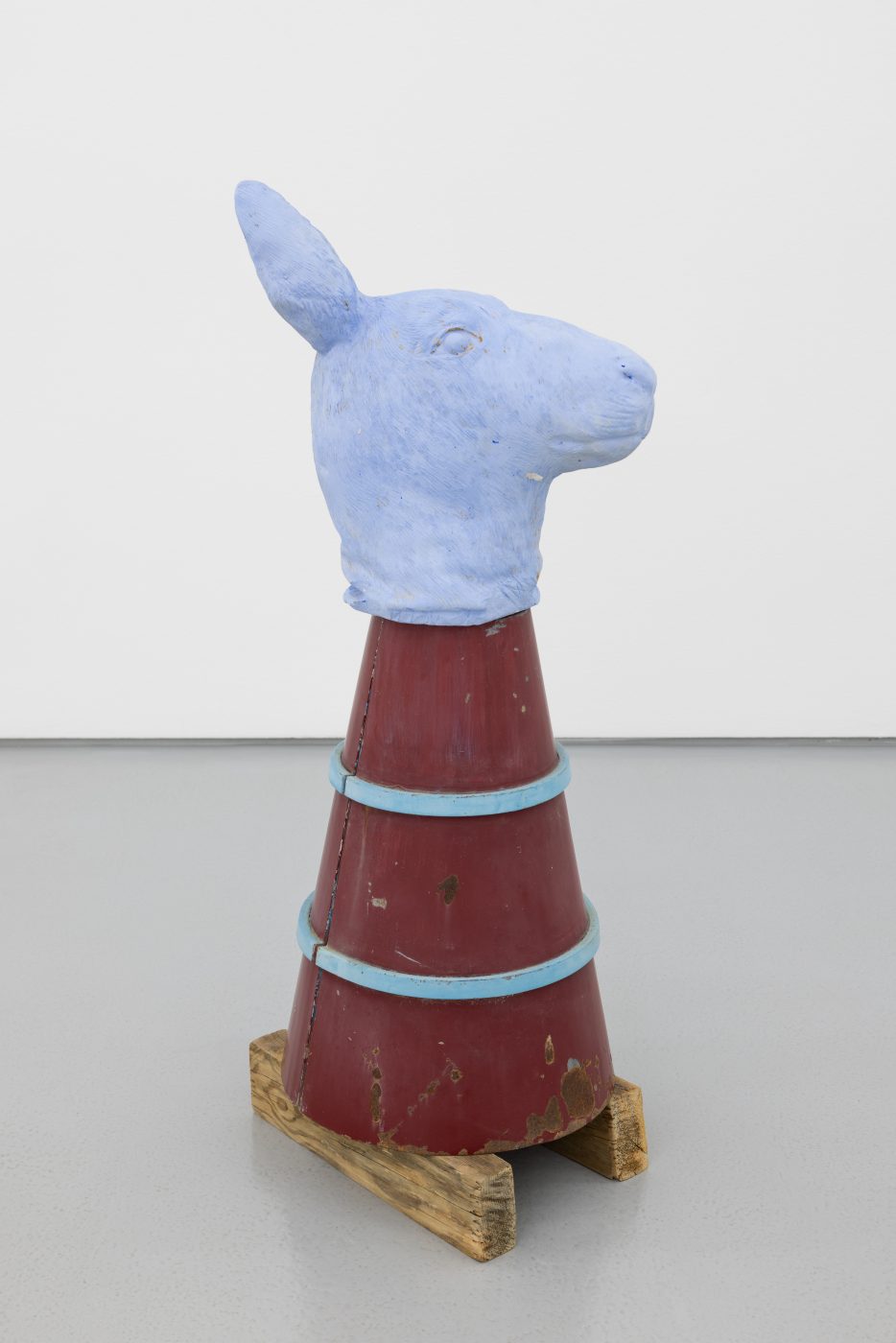
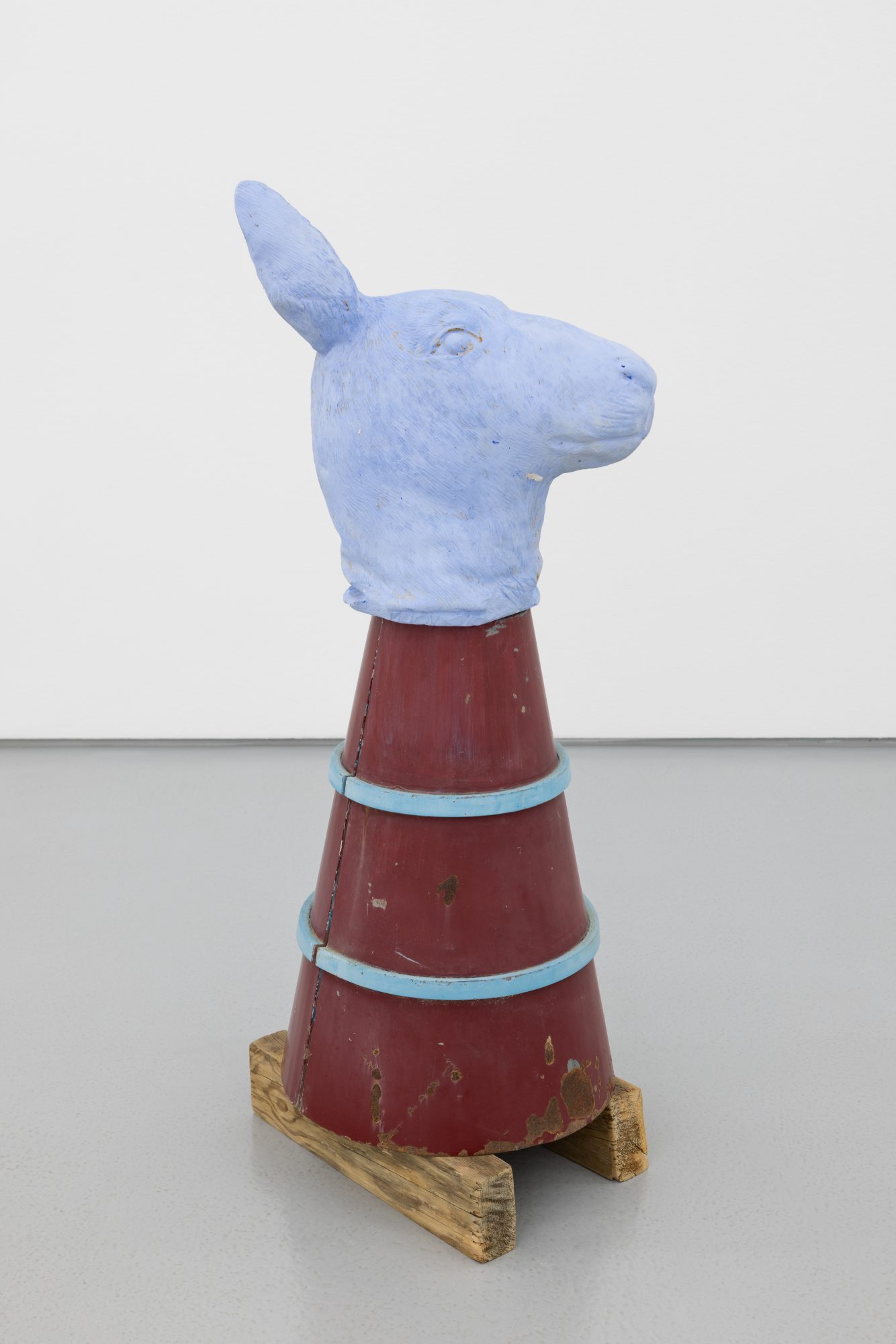
Susanne S. D. Themlitz, Kangaroo (Monument)/ Canguru (Monumento), 2025. Pigmented ceramic plaster, painted iron, wood. 101 x 35 x 37 cm.
Enquire
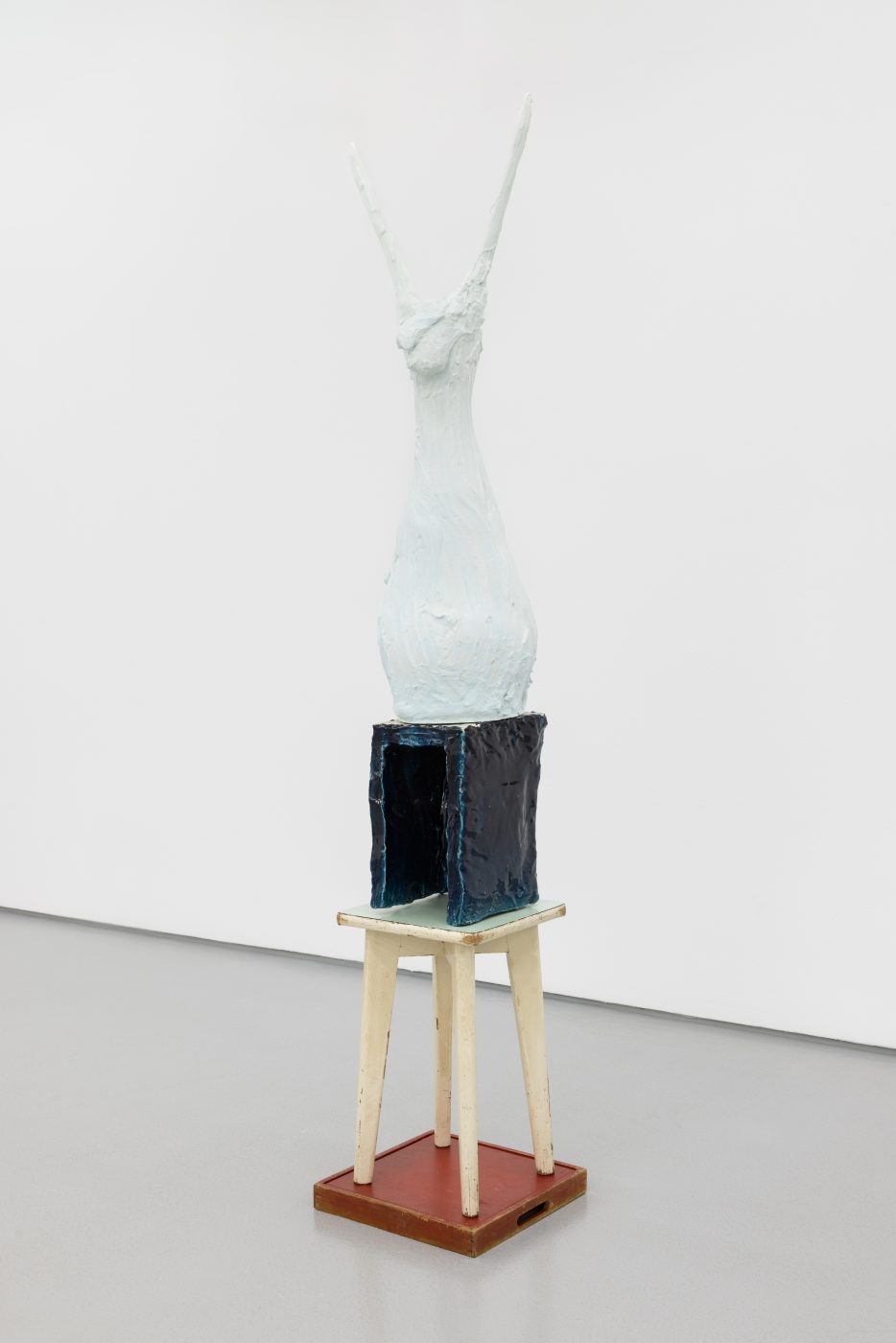
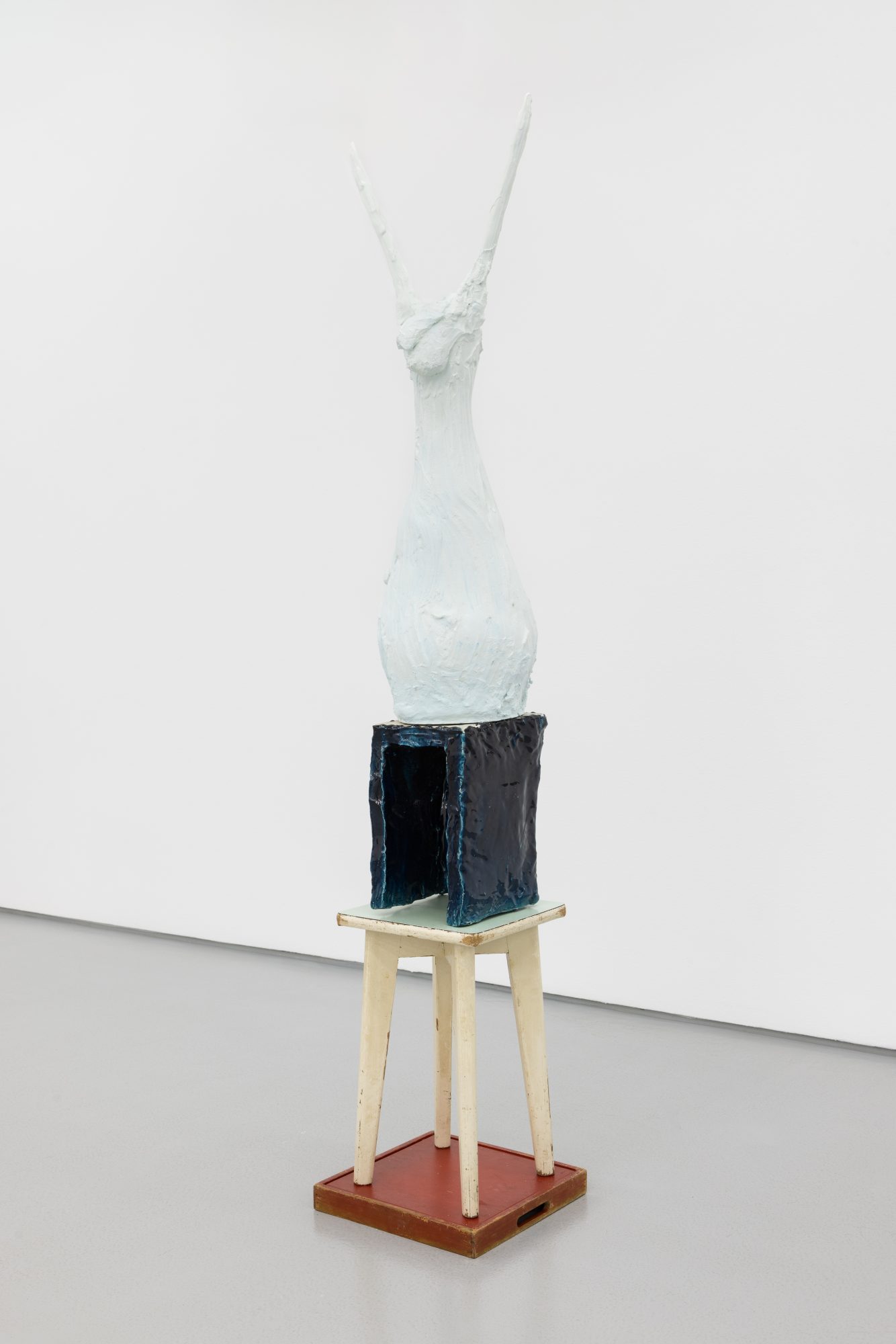
Susanne S. D. Themlitz, Mollusk NR/ Molusco NR, 2025. Ceramic, painted wood, pigmented ceramic plaster, iron interior structure, gauze, and plastic 188 x 35 x 35 cm.
Enquire
O canguru sem orelha e o molusco errante
Num pequeno bosque vermelho sempre submerso em neblinas que vinham da planície, viviam dois companheiros improváveis: um canguru sem uma orelha e um molusco de concha partida. Ambos trabalhavam num circo ambulante, onde saltos e piruetas eram repetidos ao som de um apito. As noites eram frias e as manhãs cheiravam a serrim. Certa madrugada, fartos de serem apenas aplausos e não seres inteiros, decidiram fugir. O canguru, com um olhar enviesado e um passo determinado, saltou a cerca de madeira, levando o molusco numa pequena bolsa pendurada ao pescoço.
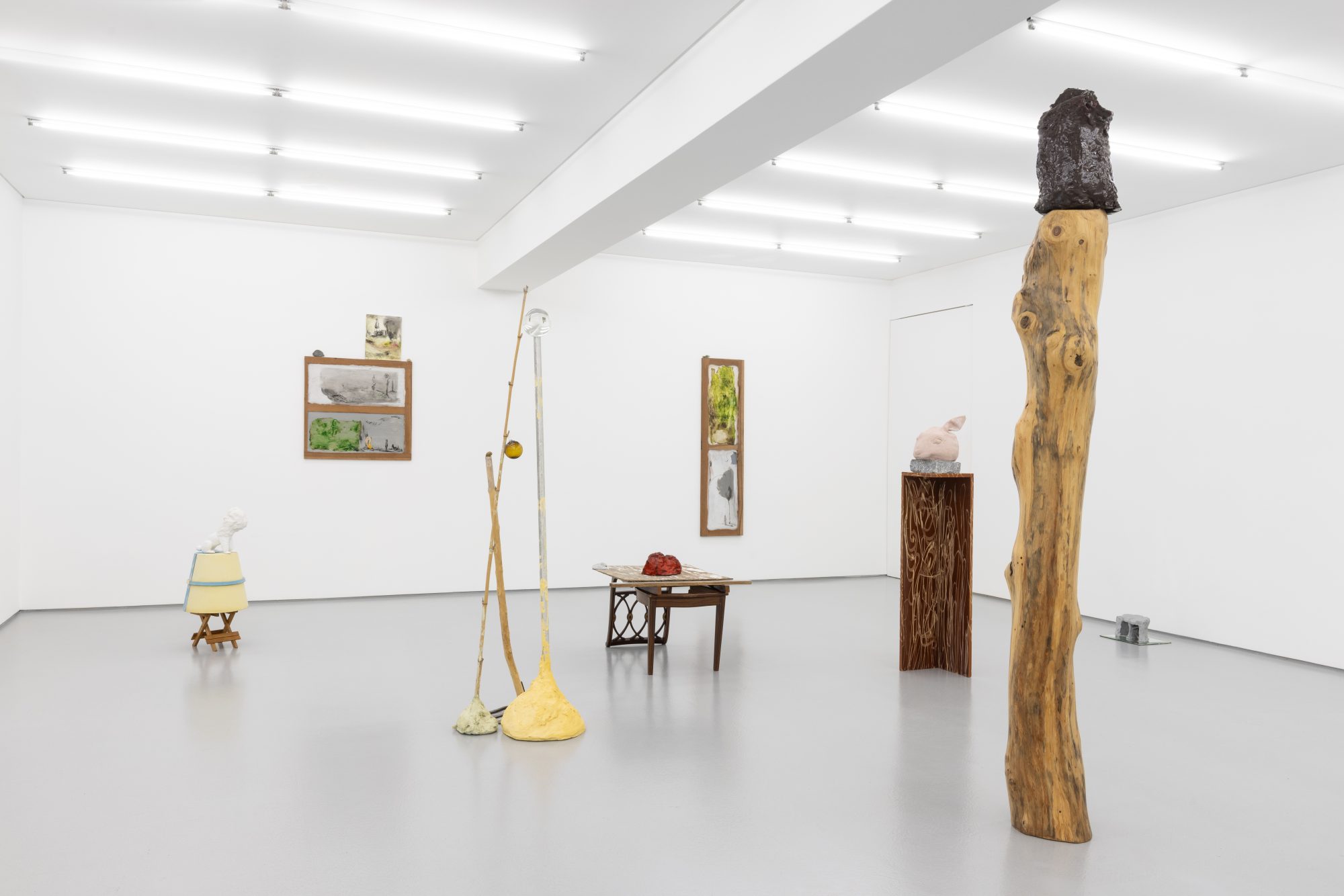
Exhibition view: Susanne S. D. Themlitz, Natural History, 2025.
Enquire
“Today, my dear, we will be whatever we want to be,” said the kangaroo.
The mollusc, who spoke slowly as someone thinking in spirals, replied, “To be free is also to learn not to have a place to be.” And he asked, “Where shall we go?”
The kangaroo said to him, “To meet EgG, the Oracle of the Passages. They say he unveils the fortune of those who dare to start over.”
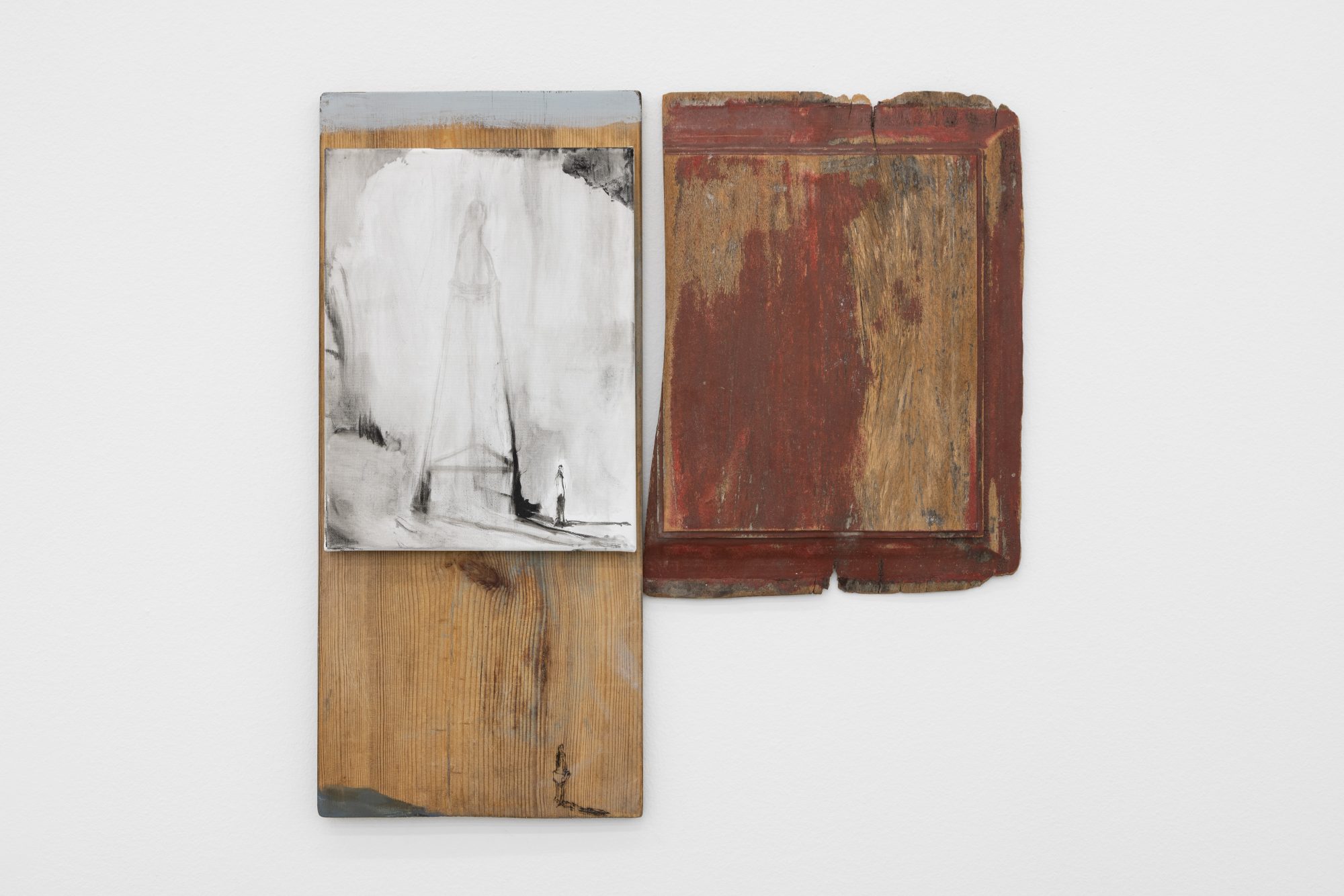
Susanne S. D. Themlitz, Interrelation/ Inter-relação, 2025. Oil on wood and canvas. 64 x 66 x 2 cm.
Enquire
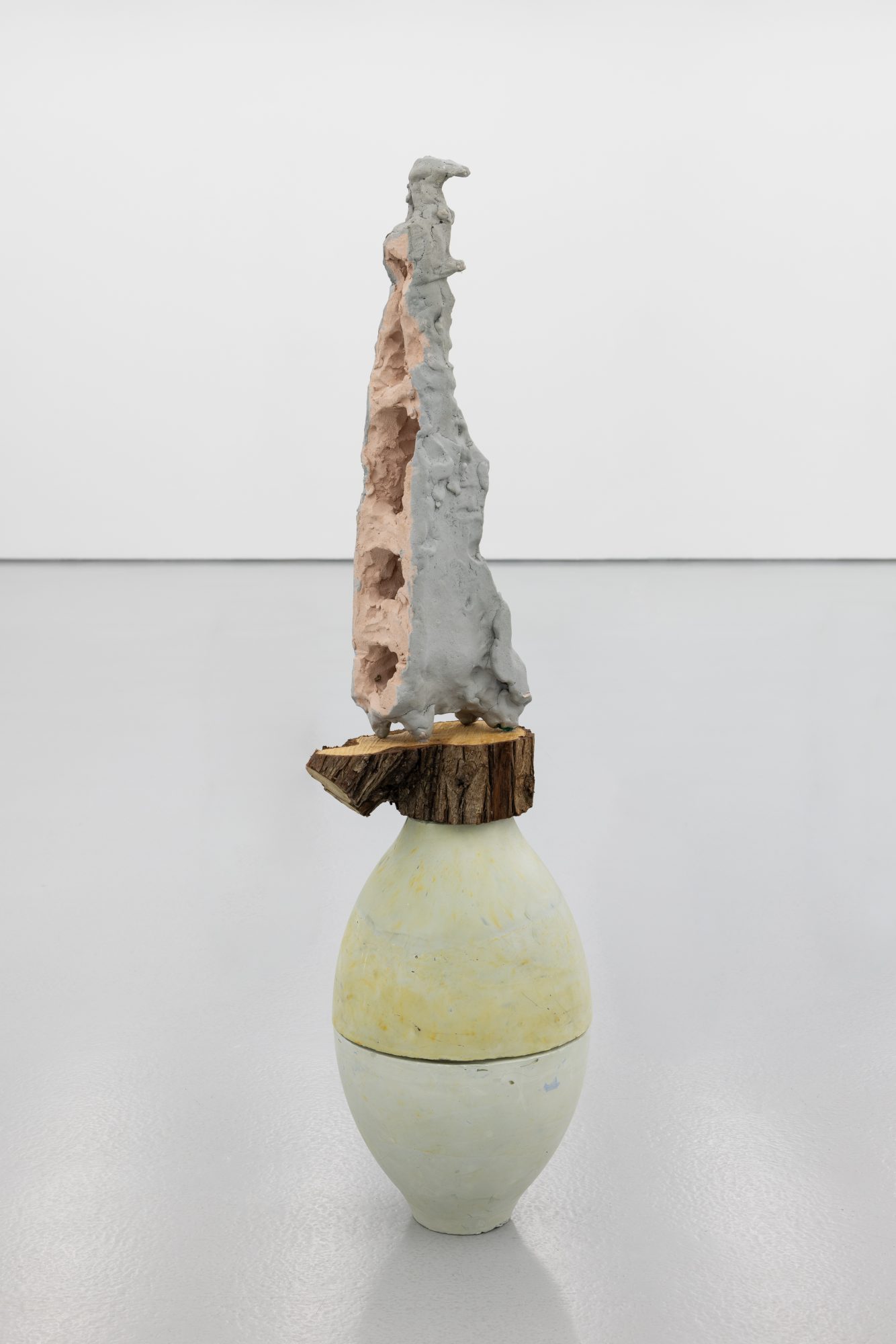
Susanne S. D. Themlitz, EgG/ OvO, 2025. Ceramic, wood, ceramic plaster with pigment. 112 x 26 x 26 cm.
Enquire
“Hoje, meu caro, seremos o que quisermos ser”, disse-lhe o canguru.
O molusco, que falava devagar como quem pensa em espiral, respondeu: “Ser livre é também aprender a não ter onde estar.” E perguntou, “Para onde iremos?”
Disse-lhe o canguru: “Ao encontro do OvO, o Oráculo dos Caminhos. Dizem que ele revela a fortuna de quem ousa começar de novo.”
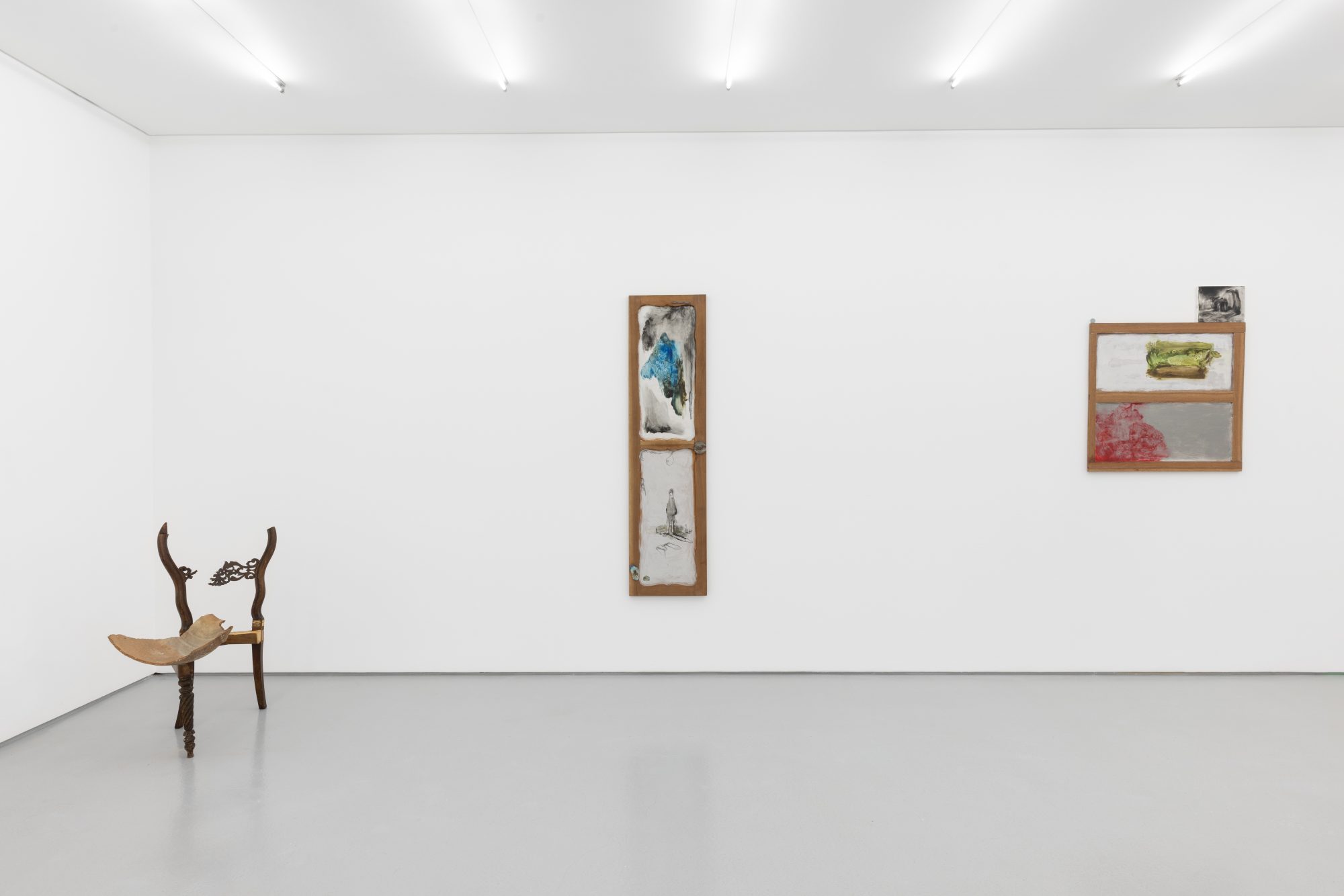
Exhibition view: Susanne S. D. Themlitz, Natural History, 2025.
Enquire
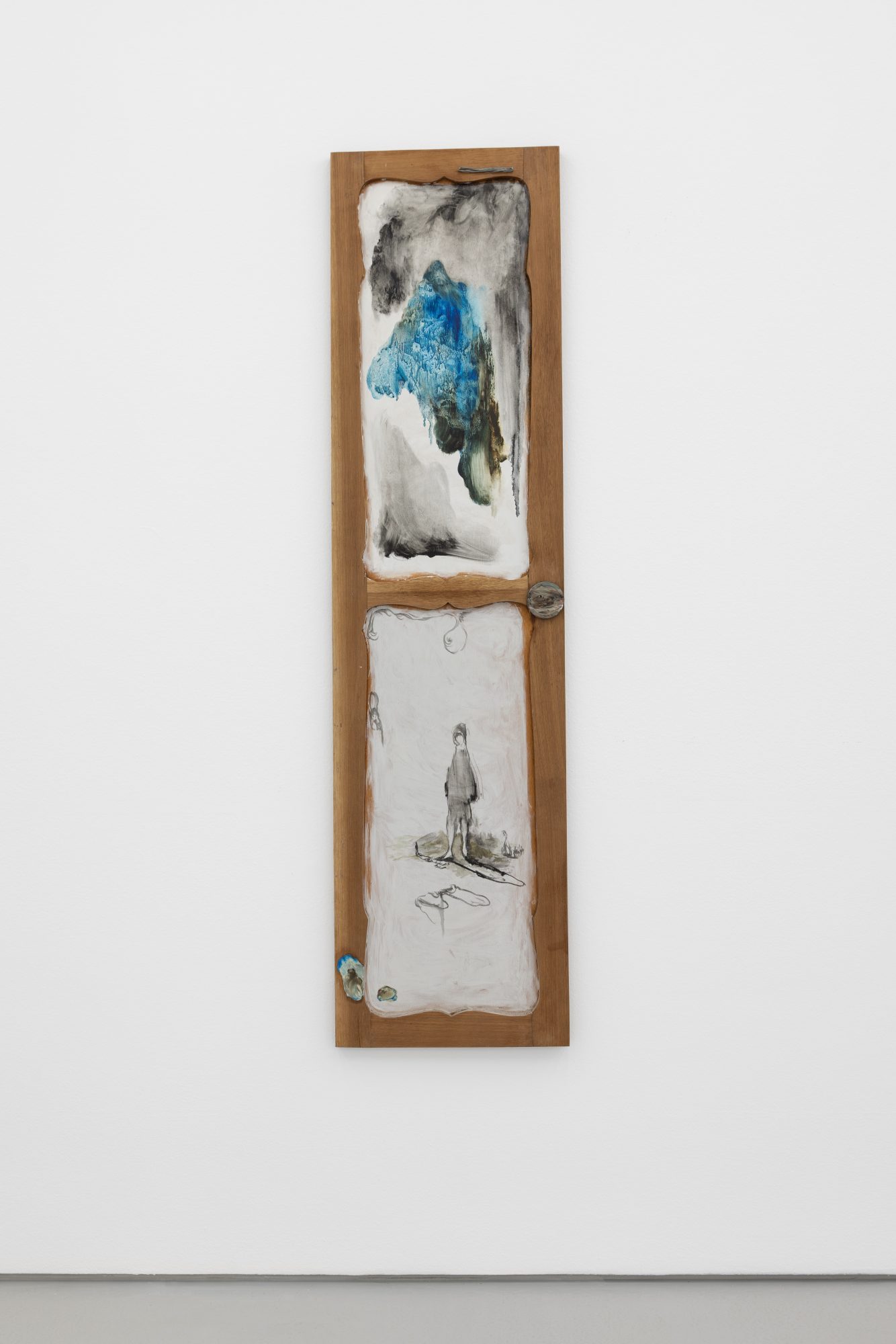
Susanne S. D. Themlitz, Flowers Appear, 2025. Oil and acrylic on wood and metal, nails, wire. 159 x 41 x 2 cm.
Enquire
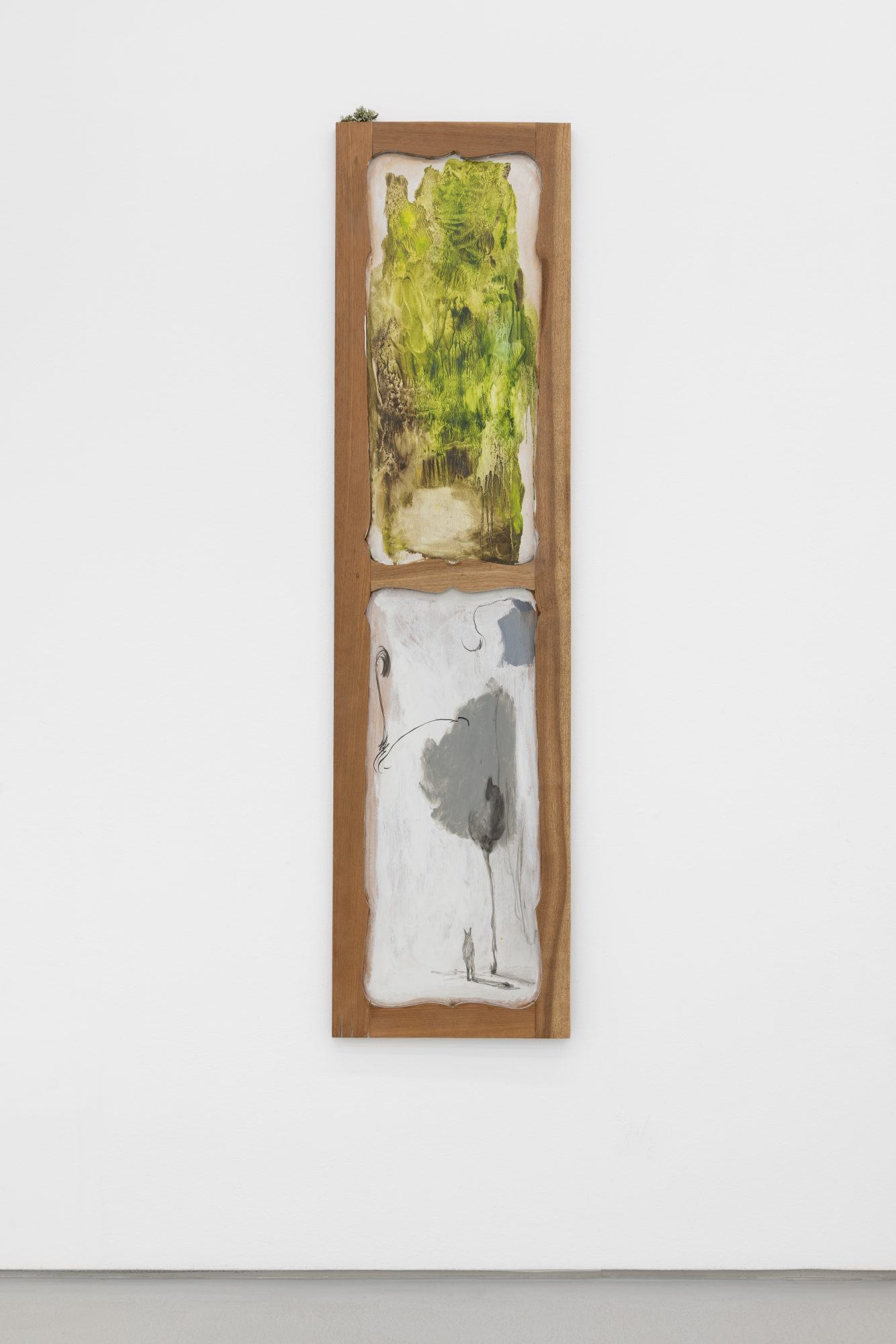
Susanne S. D. Themlitz, Natural Process/ Processo natural, 2025. Oil, acrylic and lichen on wood. 162 x 41 x 2 cm
Enquire
They left before dawn and traveled through an unusual landscape, where a rainbow shaped like a huge headboard crossed the sky and landed in the middle of a field with a blue mountain which floated in the distance as it melted slowly. The wind climbed its slope with a sprightly tenderness, and at the top, next to a tree, a being stood motionless with its back turned, contemplating the horizon. The kangaroo wanted to call out to it, but the mollusc whispered, “Don’t disturb those who see more than we do.”
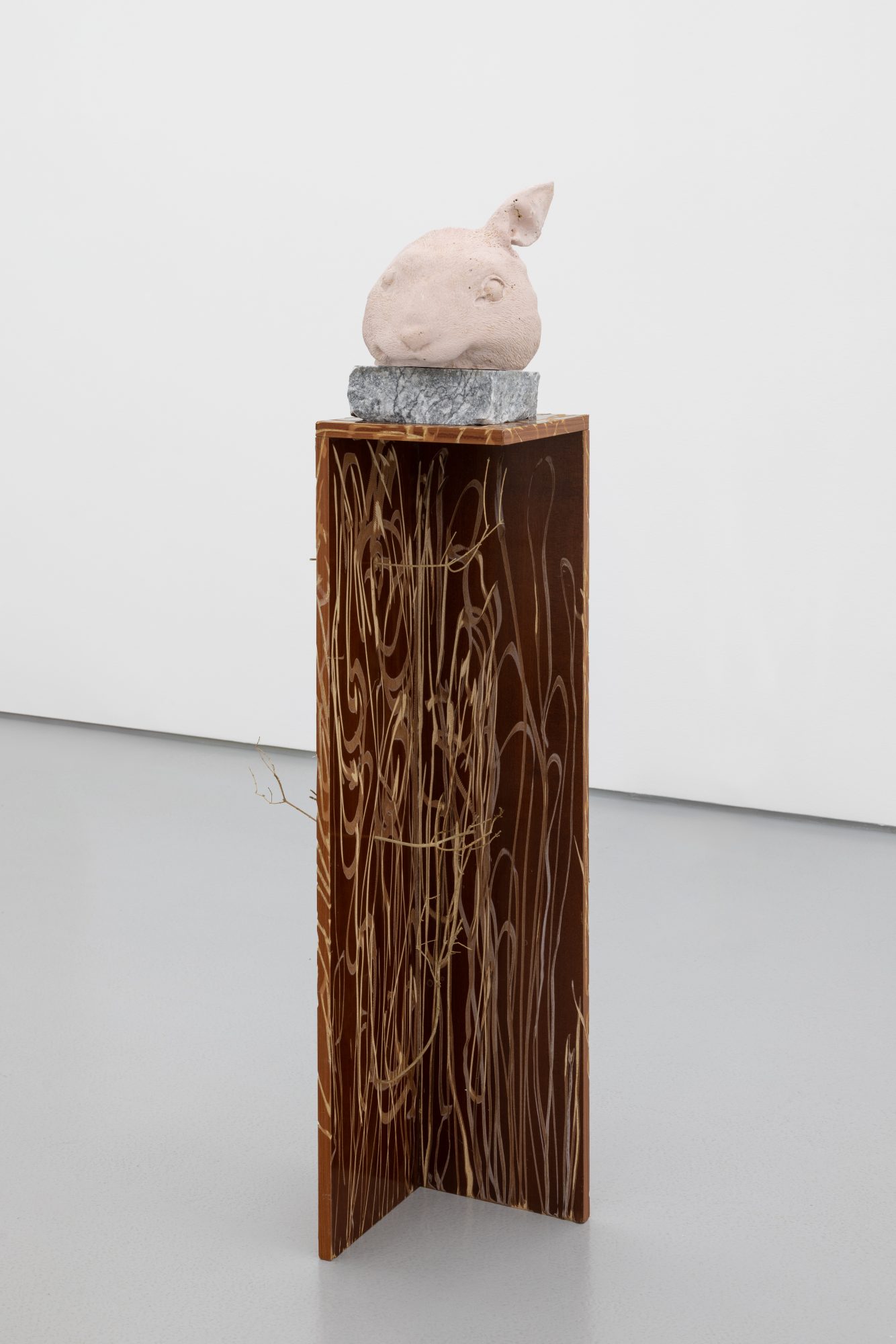
Susanne S. D. Themlitz, One-Ear Rabbit (Monument)/ Coelha-orelha (Monumento), 2025. Pigmented ceramic plaster, marble, veneered chipboard, tree branches. 143 x 50 x 27 cm.
Enquire
Partiram antes da aurora e seguiram por uma insólita paisagem, onde um arco-íris com a forma de uma enorme cabeceira de cama cruzava o céu e pousava no meio de um campo com uma montanha azul, que flutuava ao longe enquanto derretia lentamente. O vento galgava a sua encosta com uma doçura viva e, no cimo, junto a uma árvore, um ser de costas, imóvel, contemplava o horizonte. O canguru quis chamá-lo, mas o molusco sussurrou: “Não perturbes quem vê mais do que nós.”
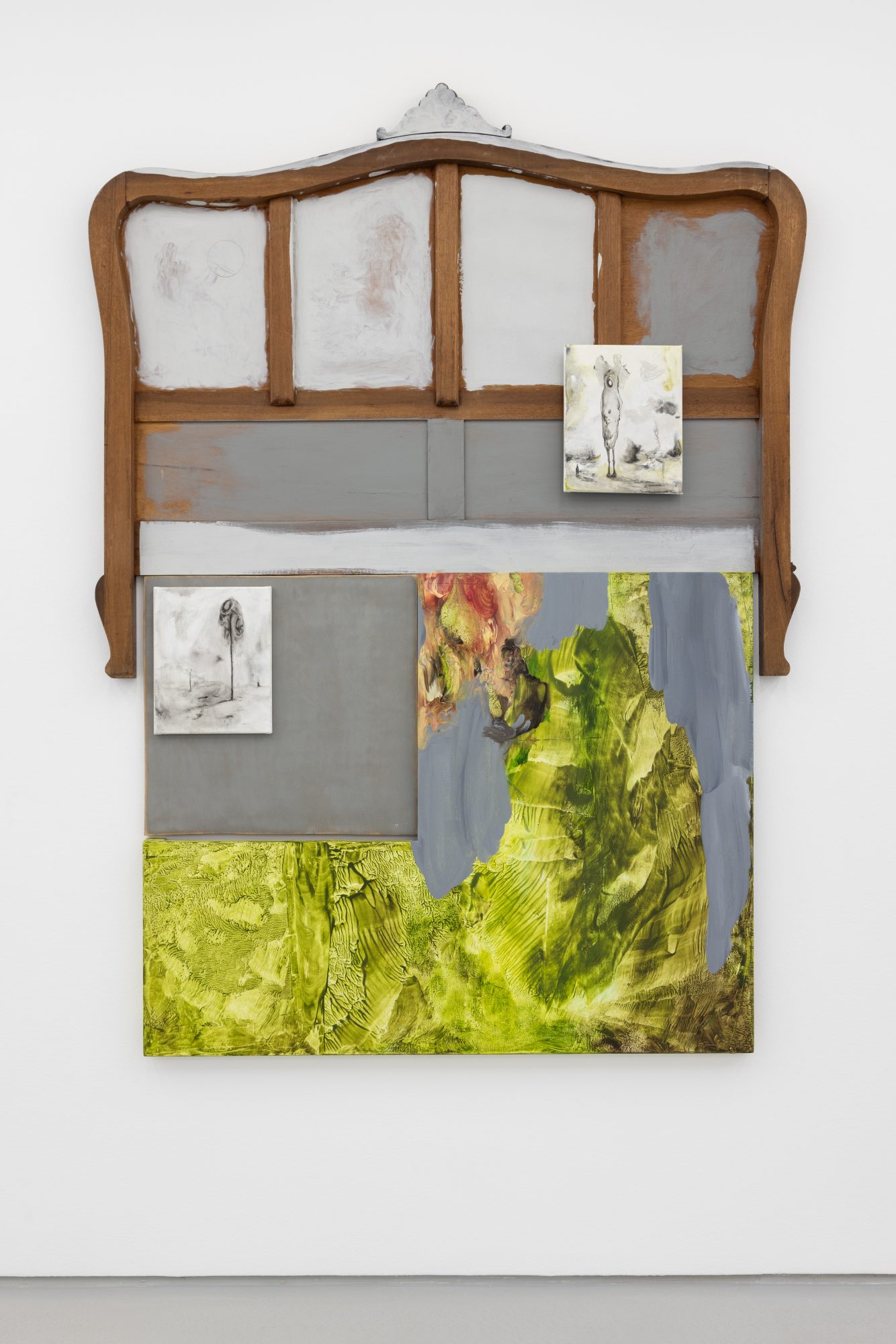
Susanne S. D. Themlitz, The State of Aggregation and Interaction/ Estado de agregação e interação, 2025. Oil and acrylic on wood and canvas. 198 x 143 x 5 cm.
Enquire
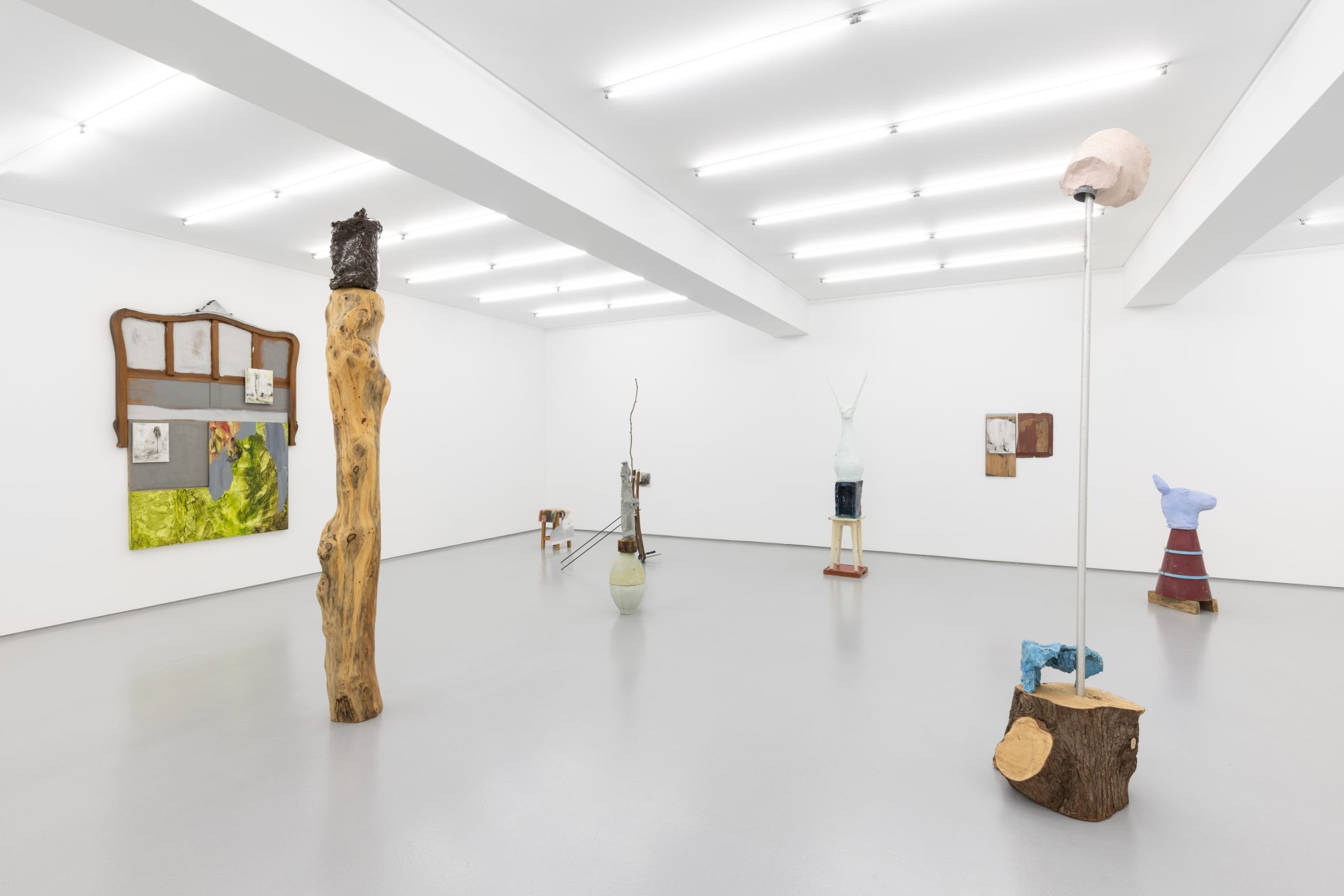
Exhibition view: Susanne S. D. Themlitz, Natural History, 2025.
Enquire
As they traversed a small hill, they came across a broken chair. It was missing one of its legs, but it struggled to remain upright, wiggling with dignity.
“Poor thing,” murmured the mollusc.
“No, look closely: there is a nobility in persistence,” replied the kangaroo.
The chair, hearing them, replied with a crack: “Keep going. What is broken can also bear the journey.” And with a slight creak, it leaned toward the mountain, as if to show them the way.
As the evening fell, the winds endured and the shadows of the trees began to dance on the floor. They found a field of mauve flowers and, exhausted, wanted to rest among the petals. But when they lay down, the ground sounded hollow. The flowers trembled under their weight, and the mollusc realized, “This isn’t a field, it’s a table!” And they laughed, surprised by the strange new world they had entered. It was then, there among the flower-tables, that appeared two cousins with long necks and eyes pointed at the clouds, introducing themselves as Grown-Up and The Stretched One.
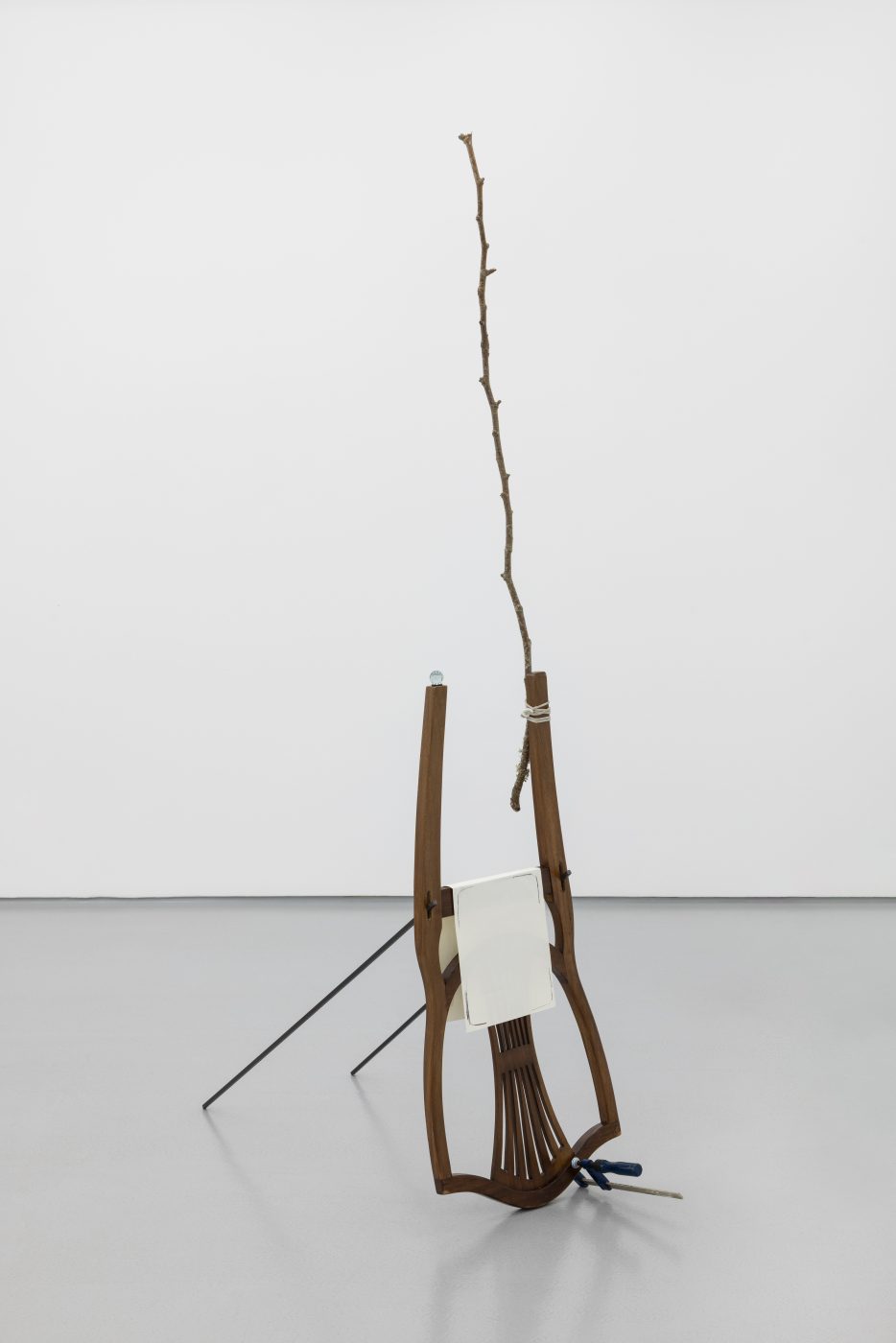
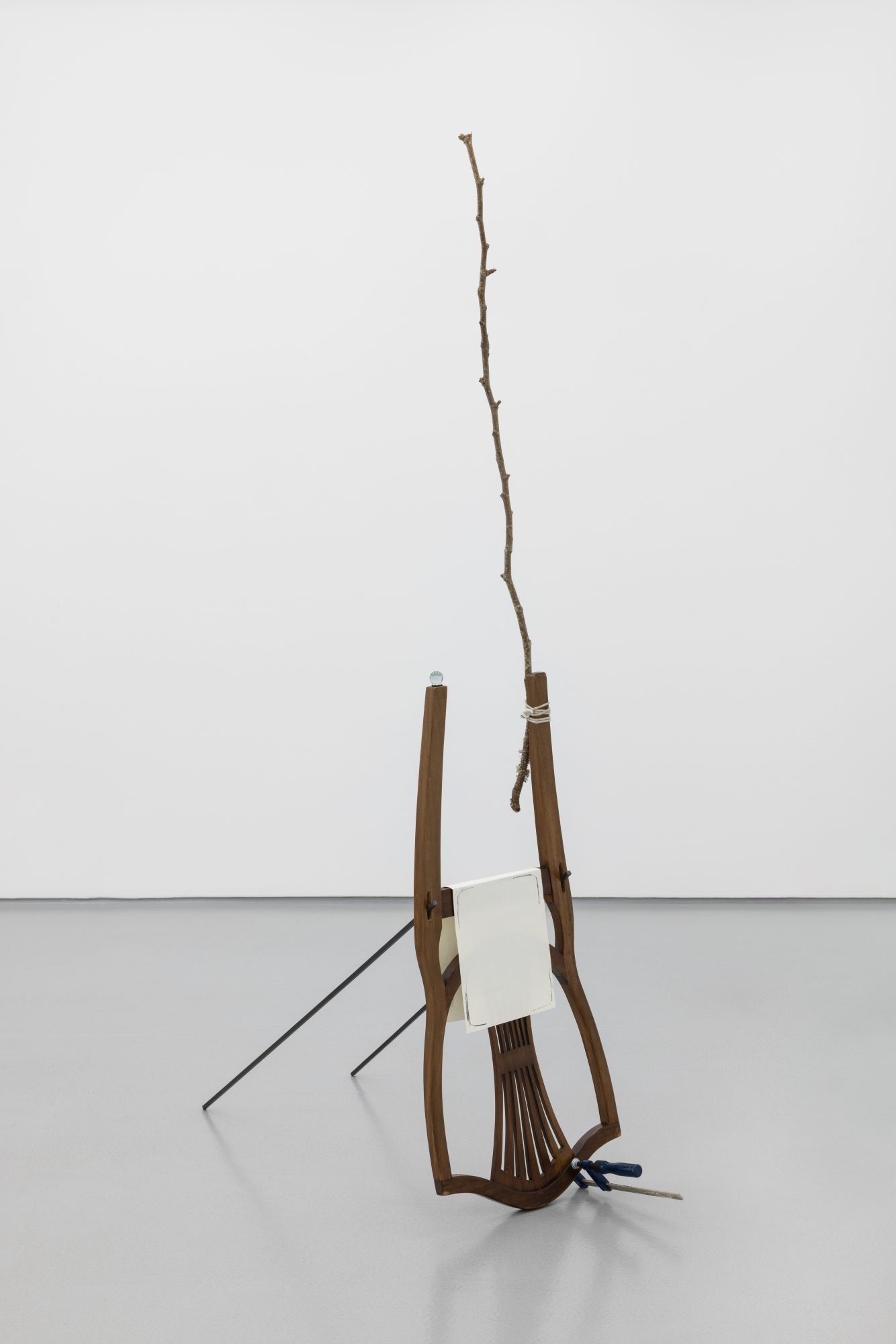
Susanne S. D. Themlitz, Drawing (Iceberg)/Desenho (Iceberg), 2025. Wood, glass sphere, elastic band, graphite on paper, iron, staple. 188 x 100 x 39 cm.
Enquire
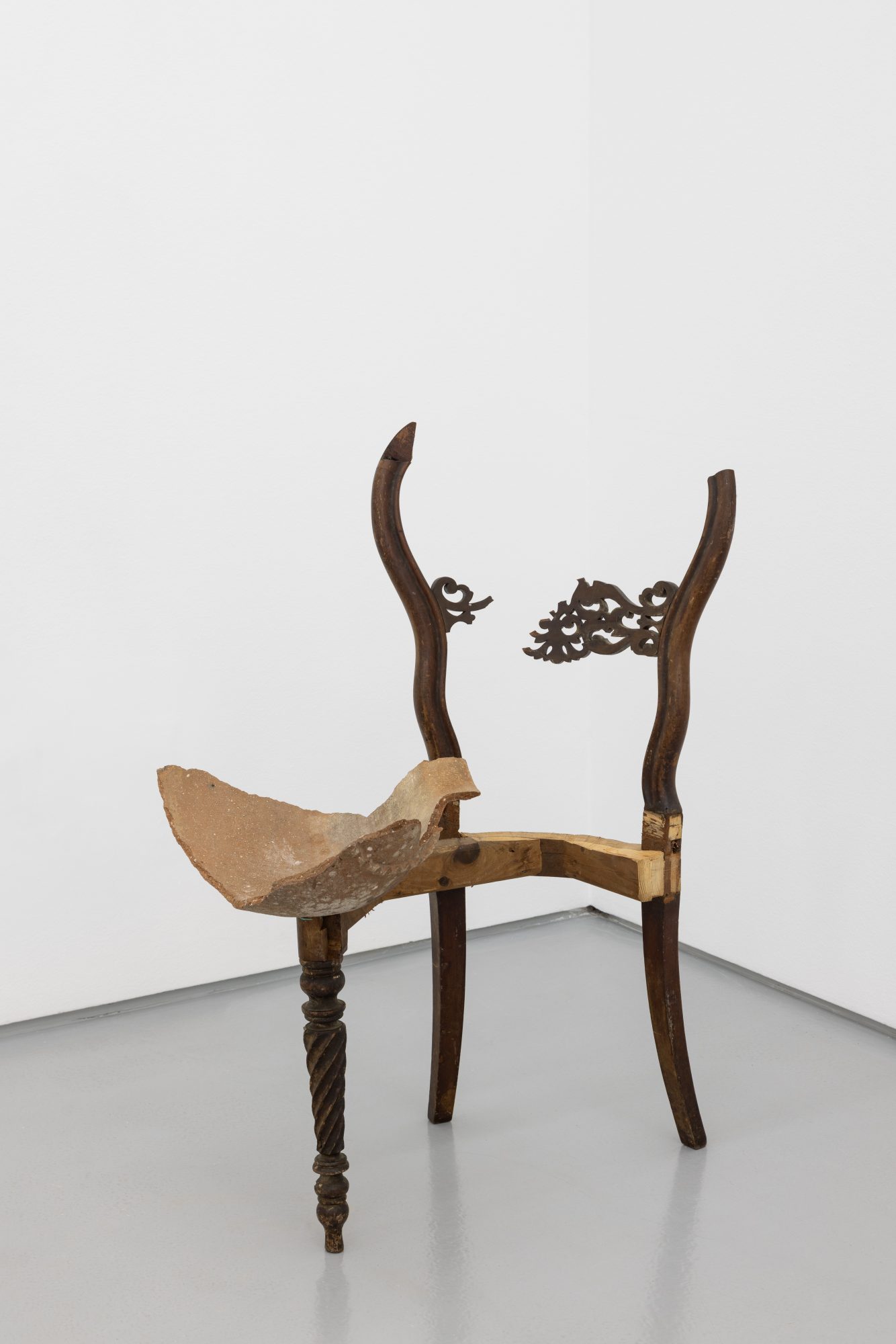
Susanne S. D. Themlitz, Sustainable Form (Equilibrium)/ Forma sustentável (Equilíbrio), 2025. Wood, ceramics. 60 x 90 x 56 cm.
Enquire
Ao atravessarem uma pequena elevação, cruzaram-se com uma cadeira partida. Faltava-lhe uma das pernas, mas esforçava-se por manter-se direita, equilibrando-se com dignidade.
“Pobrezinha”, murmurou o molusco.
“Não, olha bem: há nobreza na persistência”, respondeu o canguru.
A cadeira, ouvindo-os, respondeu num estalo de madeira: “Sigam firmes. O que é quebrado também pode sustentar a jornada.” E com um leve ranger, inclinou-se na direção da montanha, como a indicar-lhes o rumo.
Caindo a tarde, os ventos persistiam e as sombras das árvores começavam a dançar sobre o chão. Encontraram um campo de flores malvas e, exaustos, quiseram descansar entre as pétalas. Mas, ao deitarem-se, o chão soou oco. As flores tremiam sob o seu peso e o molusco percebeu: “Isto não é campo, é uma mesa!” E riram, surpreendidos com o estranho e novo mundo que tinham adentrado.
Foi então, ali entre as flores-mesa, que apareceram duas primas de longos pescoços e olhos apontados às nuvens, que se apresentaram como Crescida e Comprida.
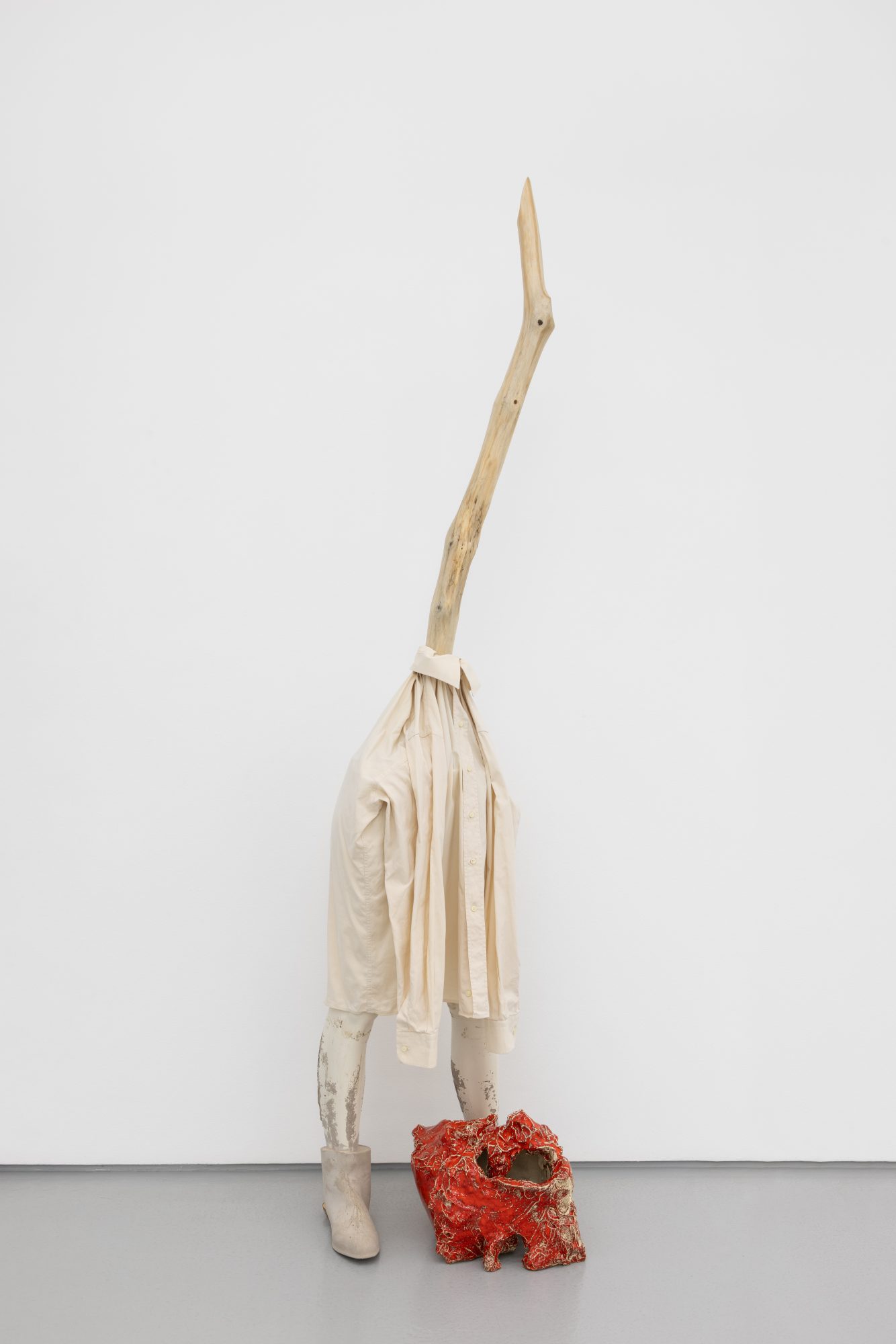
Susanne S. D. Themlitz, The Stretched One/ Comprida, 2025. Wood, cotton shirt, fiberglass, cement, ceramics, elastic, tree branch with lichen. 215 x 48 x 60 cm
Enquire
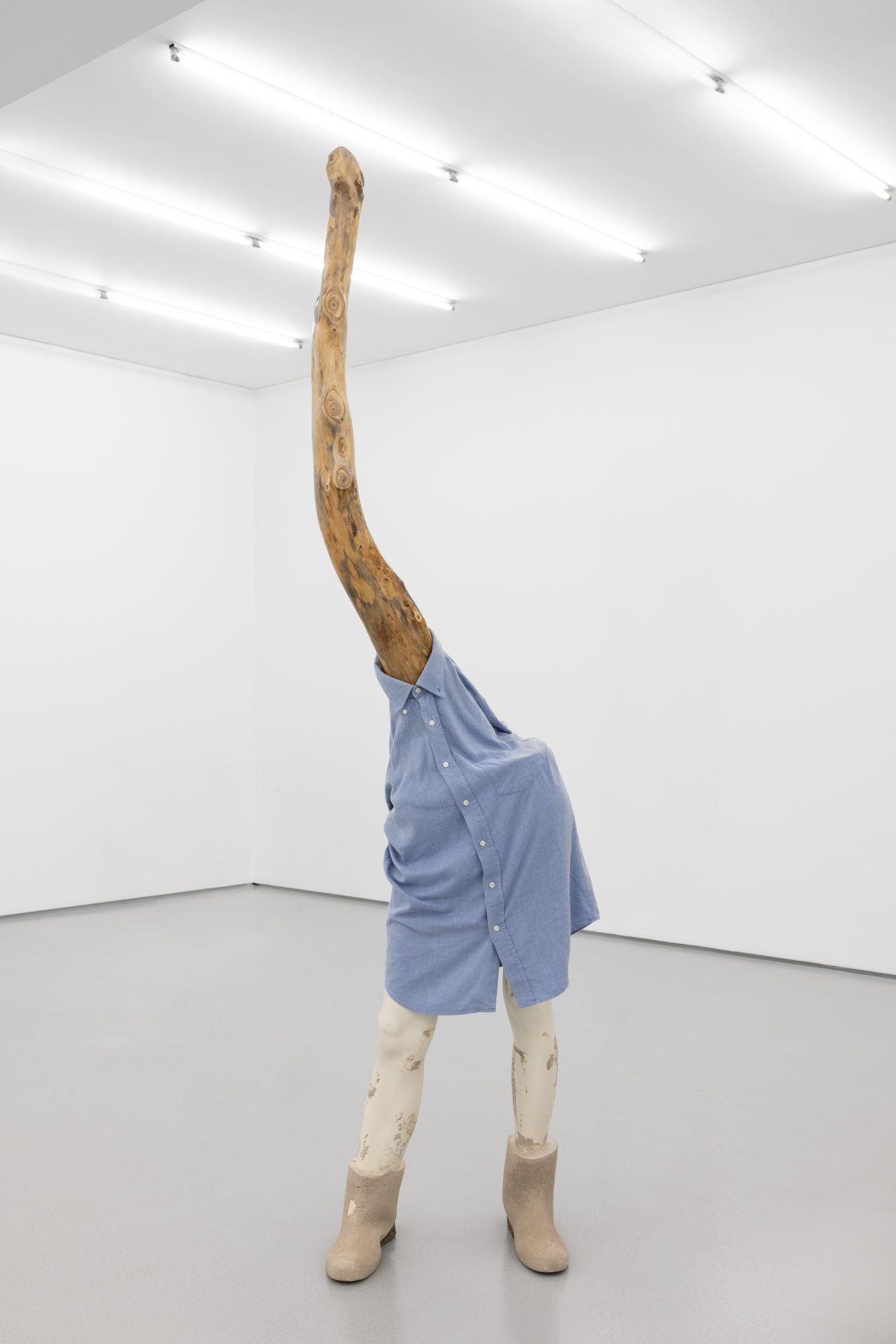
Susanne S. D. Themlitz, Grown-Up/ Crescida, 2025. Wood, cotton shirt, fiberglass, cement. 205 x 50 x 33 cm.
Enquire
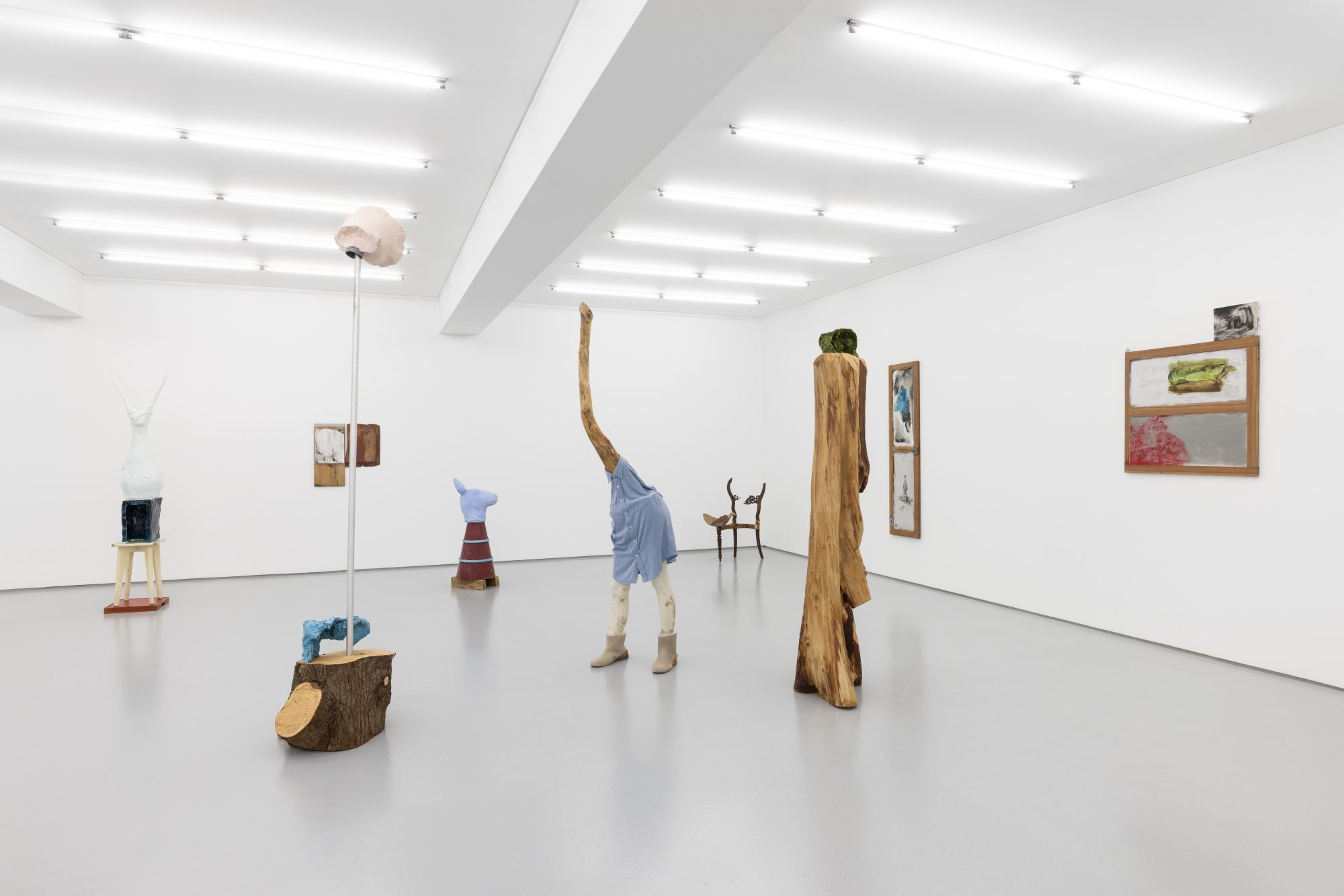
Exhibition view: Susanne S. D. Themlitz, Natural History, 2025.
Enquire
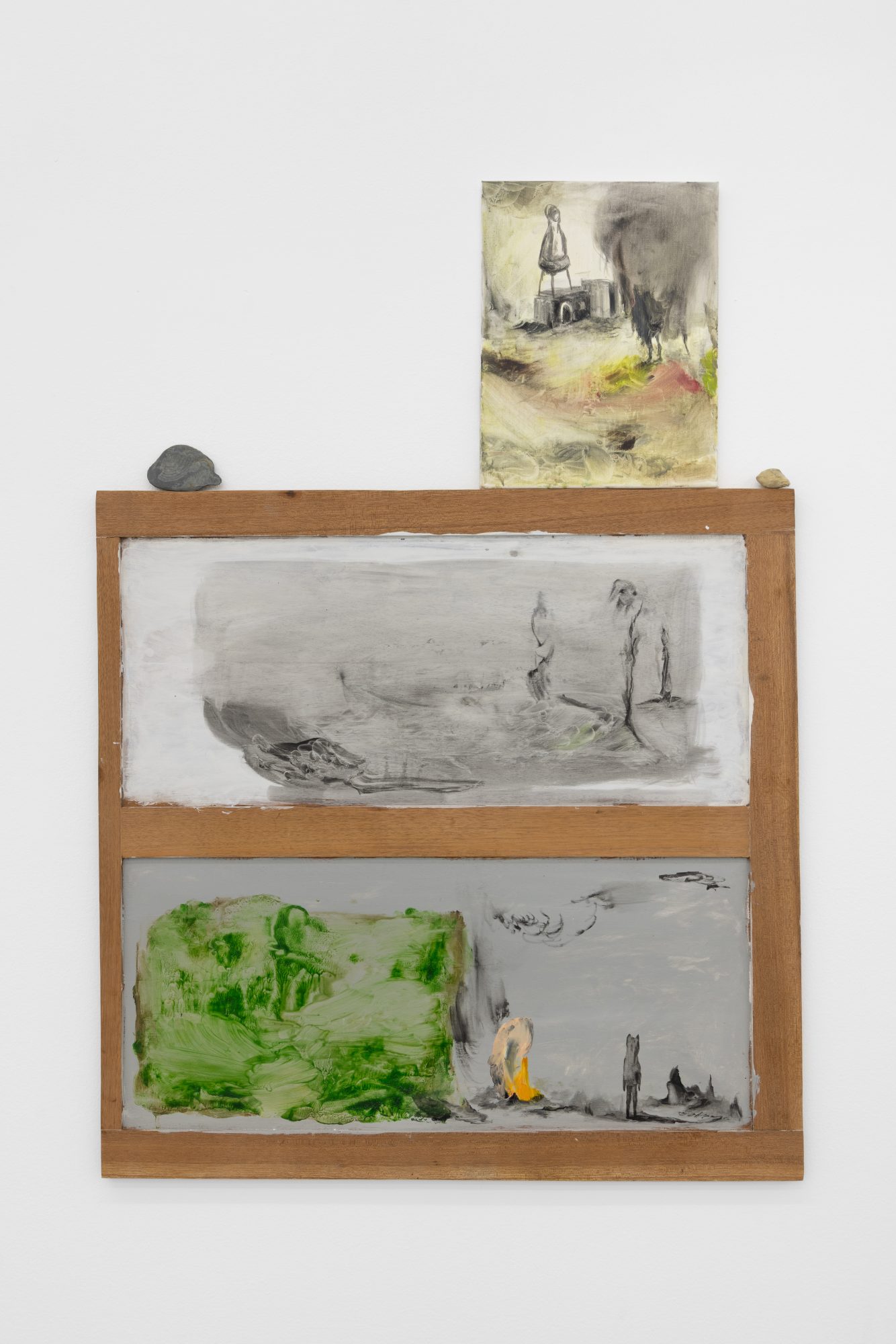
Susanne S. D. Themlitz, Ah ha, 2025. Oil and acrylic on wood and canvas, stones. 114 x 79,5 x 2 cm
Enquire
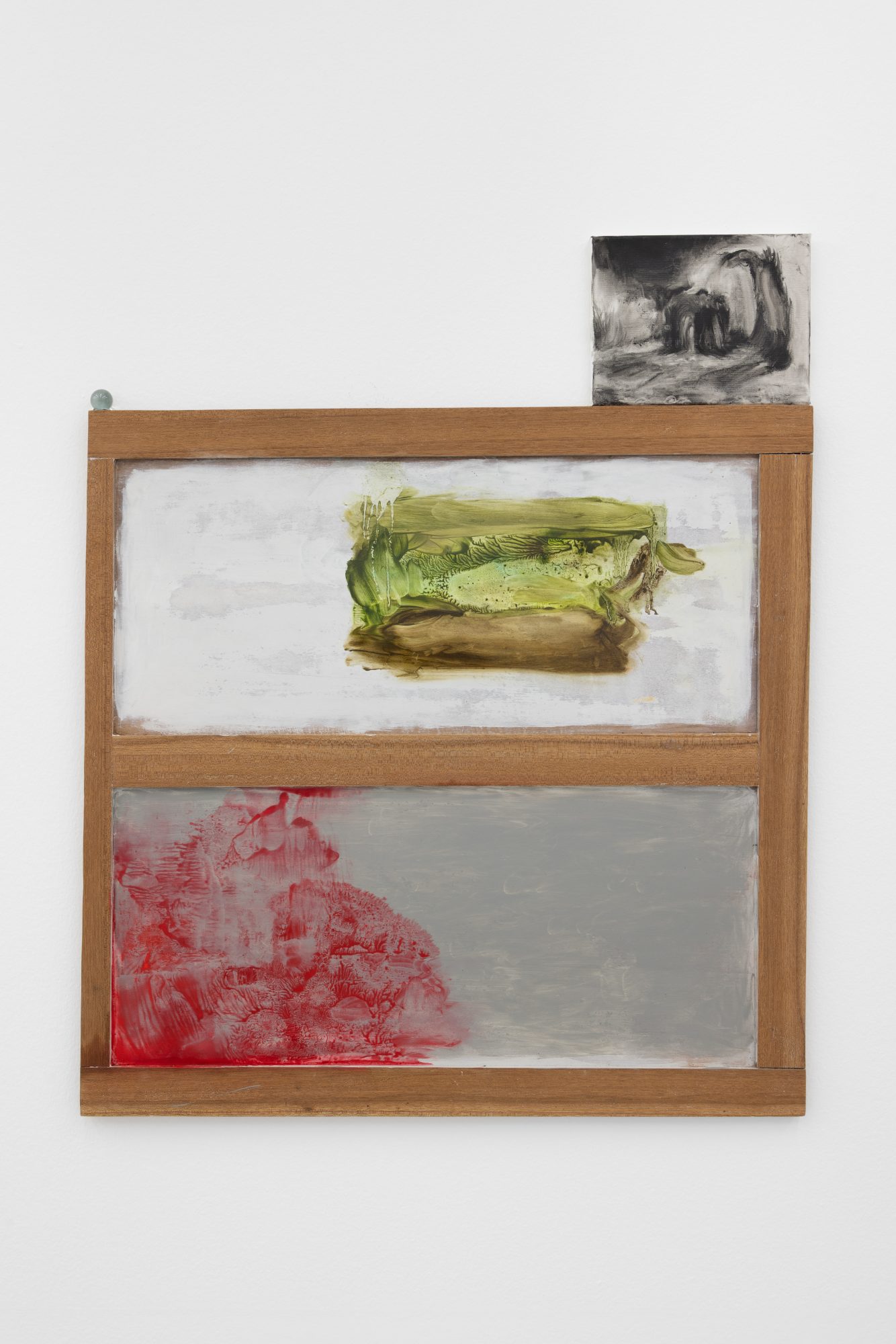
Susanne S. D. Themlitz, Monomorphic System/ Sistema monomórfico, 2025. Oil and acrylic on wood and canvas, glass ball. 97 x 80 x 2 cm
Enquire
“Where are you going, cageless travelers?” asked Grown-Up.
“We are looking for a place where the wind has no holder,” replied the kangaroo. The Stretched One pointed the way: “Follow the breeze that comes from the North. Before the winds take over the plain and sweep you away, you will find an empty retreat at the top of the old tree.”
“And EgG?” asked the kangaroo.
“You will find it where the shelter breathes,” replied The Stretched One, enigmatically.
“Para onde ides, viajantes sem jaula?”, perguntou Crescida.
“Procuramos um lugar onde o vento não tenha dono”, respondeu o canguru.
Comprida então indicou o caminho: “Segui o sopro que vem do Norte. Encontrareis, antes que os ventos tomem a planície e vos arrastem, um retiro vazio no cimo da árvore velha.”
“E o OvO?”, quis saber o canguru. “Encontrá-lo-eis onde o abrigo respira”, respondeu Comprida, enigmática.
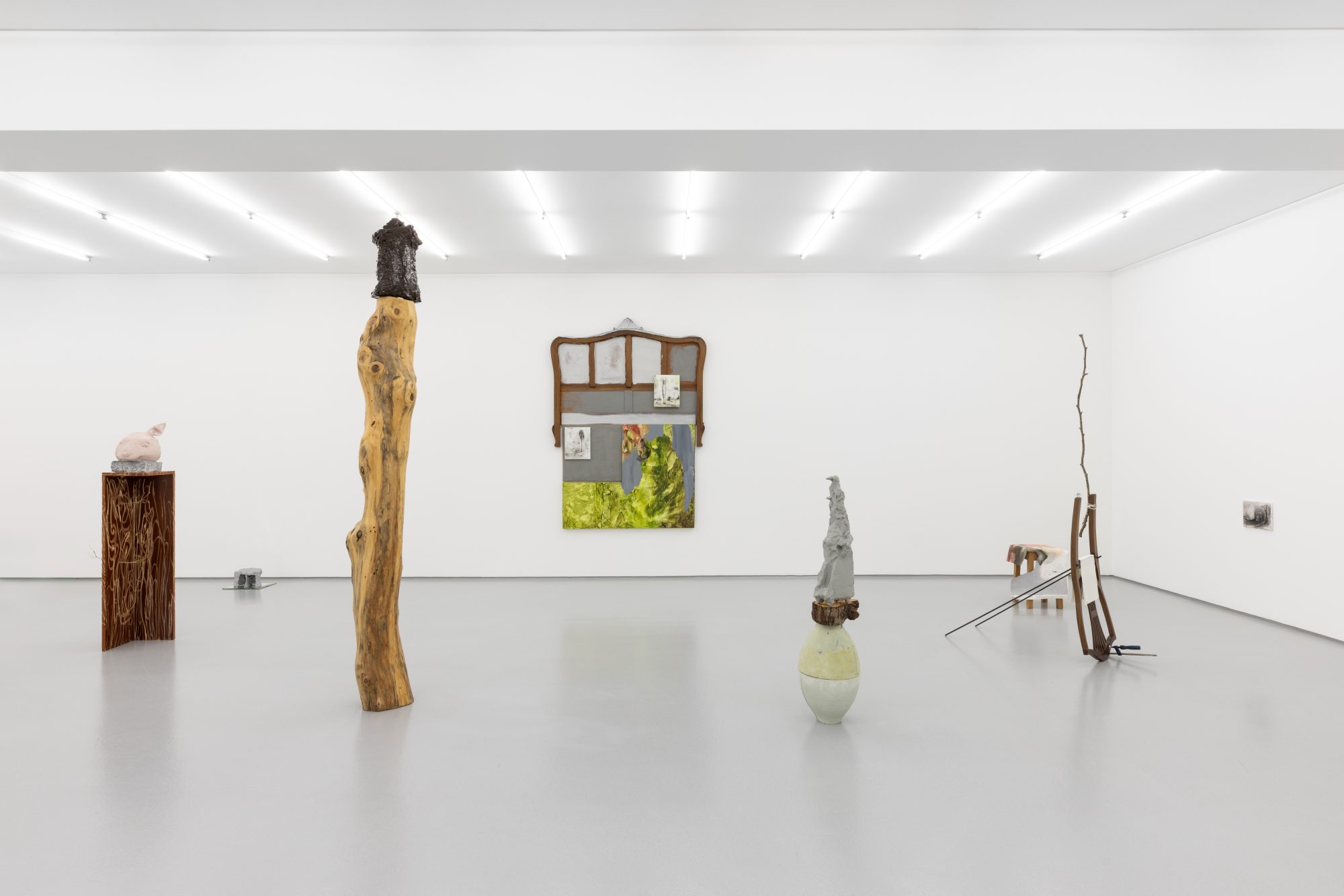
Exhibition view: Susanne S. D. Themlitz, Natural History, 2025.
Enquire
They hurried off, grateful. The wind grew stronger, pushing grass and dust like waves on an invisible sea. On the horizon, the shelter appeared, a bright green shape. They approached: it was a giant, soft fungus. It breathed slowly, as if asleep. They entered. Inside, the air was humid and warm. In the center of the shelter, on a bed of moss, rested EgG, larger than the mollusc and lighter than air, wearing a heavy crown of ceramic arabesques.
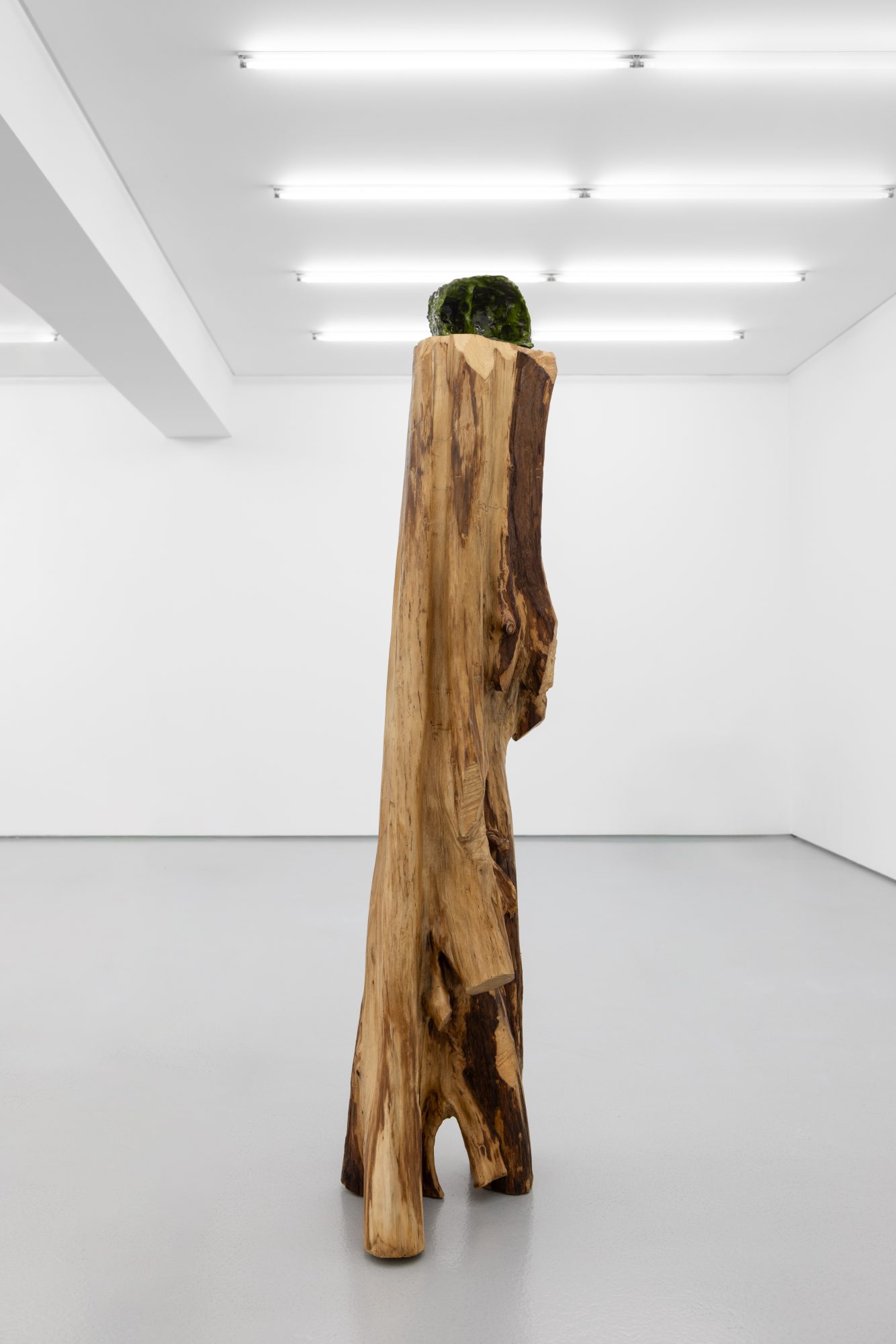
Susanne S. D. Themlitz, Fungus, 2025. Ceramic, wood 190 x 57 x 30 cm.
Enquire
Agradecidos, partiram apressados. O vento crescia, empurrando ervas e poeira como ondas num mar invisível. No horizonte, o retiro apareceu, uma forma verde e brilhante. Aproximaram-se: era um fungo gigante, macio. Respirava lentamente, como se dormisse. Entraram. Lá dentro, o ar era húmido e morno. No centro do abrigo, sobre uma cama de musgo, repousava o OvO, maior que o molusco e mais leve que o ar, ostentando uma pesada coroa de arabescos em cerâmica.
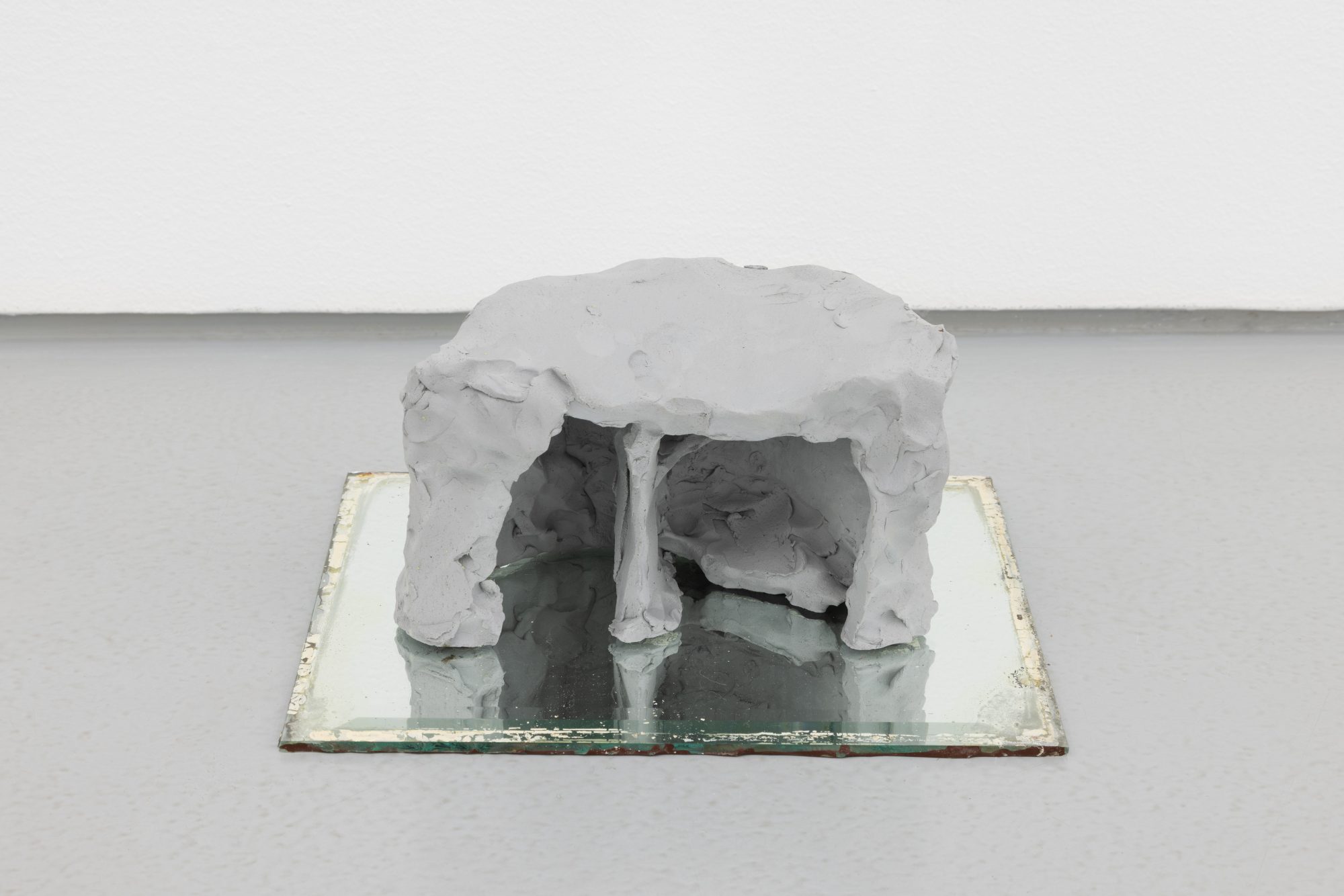
Susanne S. D. Themlitz, Shelter (Rorschach), 2025. Ceramic, mirror with ink. 33 x 27 x 14 cm.
Enquire
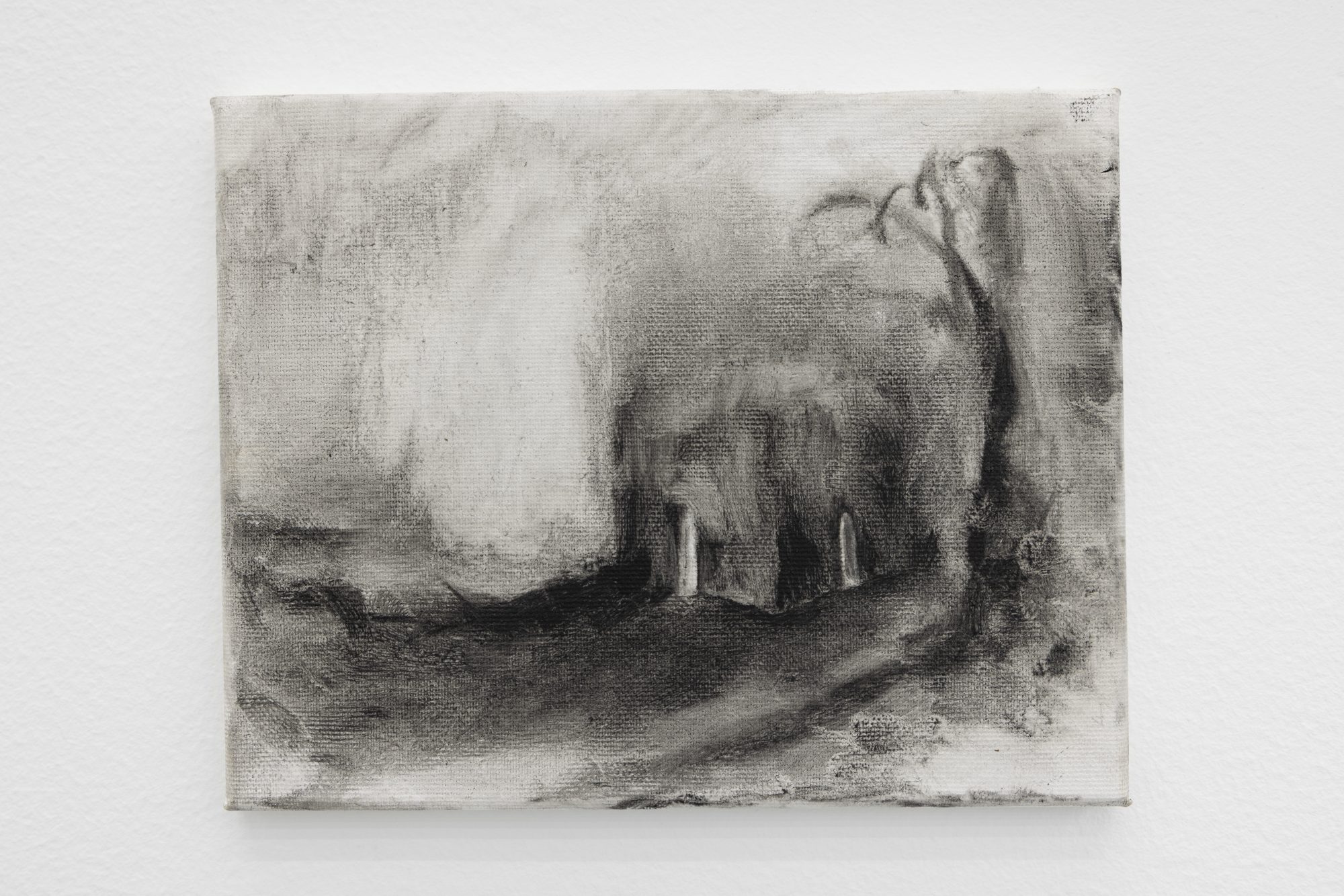
Susanne S. D. Themlitz, Untitled, 2025. Oil on canvas. 19 x 24,5 x 1 cm
Enquire
Exhibition view: Susanne S. D. Themlitz, Natural History, 2025.
Enquire
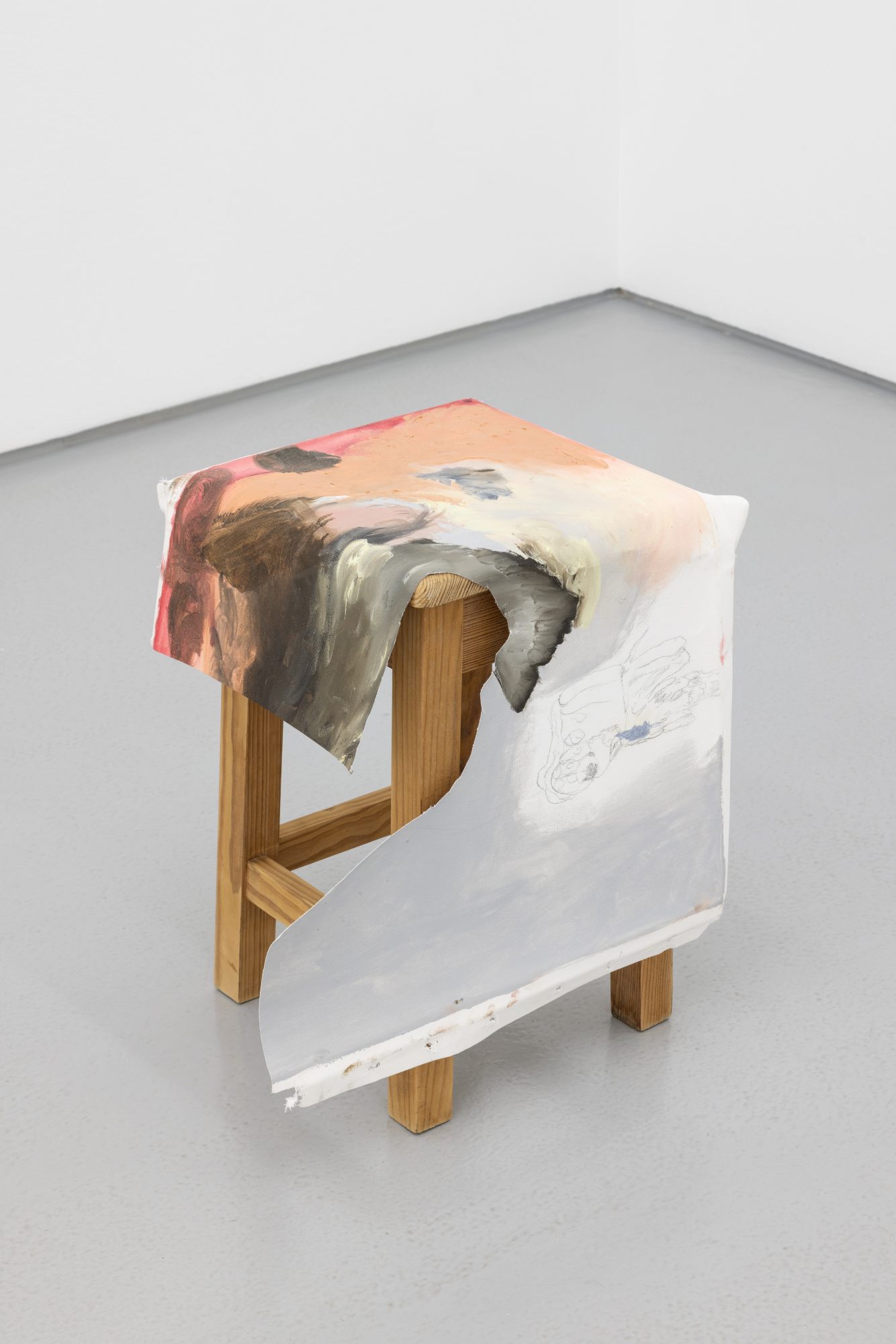
Susanne S. D. Themlitz, The Rest/Descanso, 2025. Oil and acrylic on canvas, wooden stool. 45 x 26 x 42 cm.
Enquire
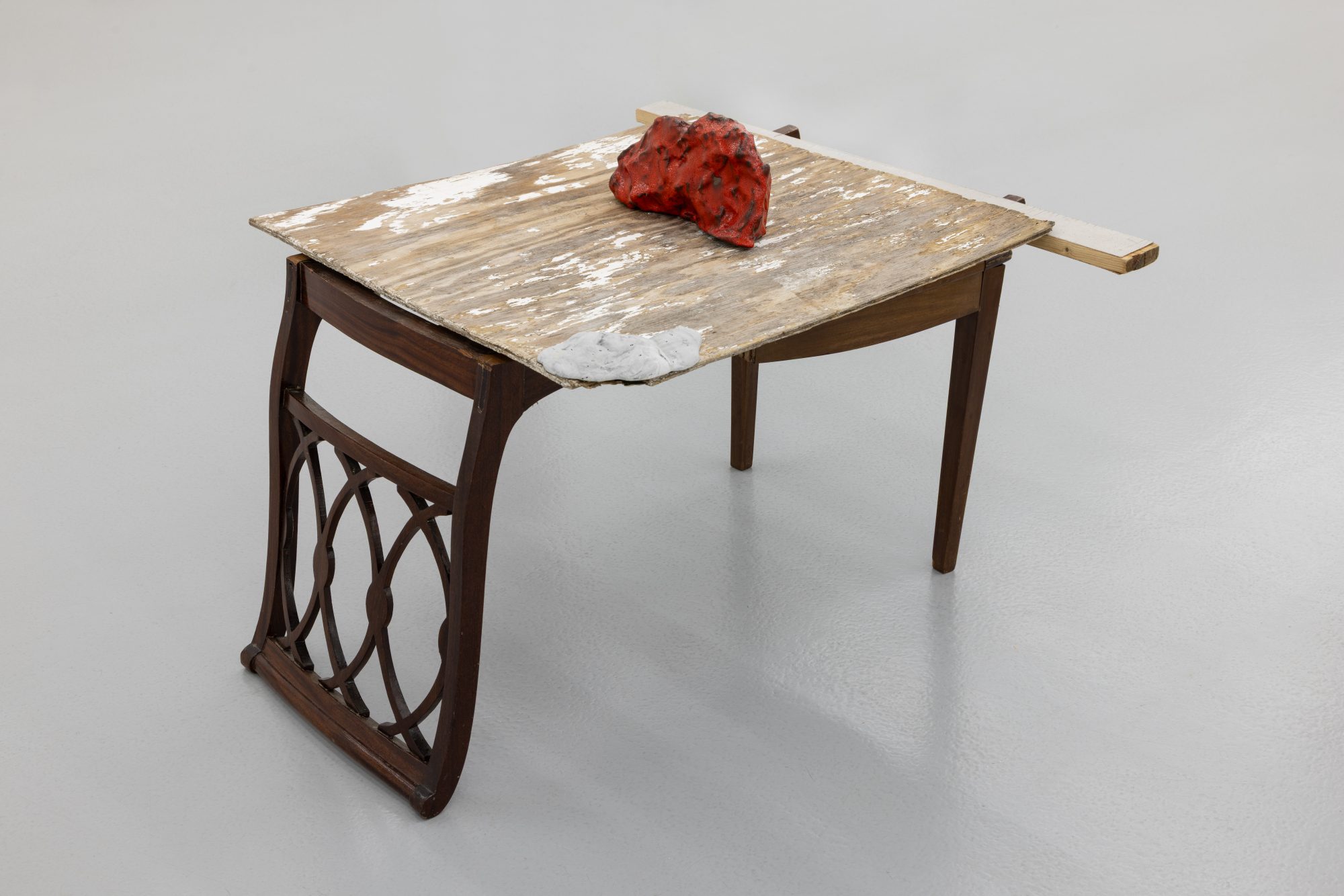
Susanne S. D. Themlitz, Lowlands (Upslope Flow), 2025. Ceramic, plaster, enamel paint, and varnish on wood. 83 x 60 x 82 cm.
Enquire
“We are free, but we don’t know who to be,” said the kangaroo.
EgG shivered and, without breaking, murmured: “Freedom will not tell you your destiny, it only gives you back the mirror.”
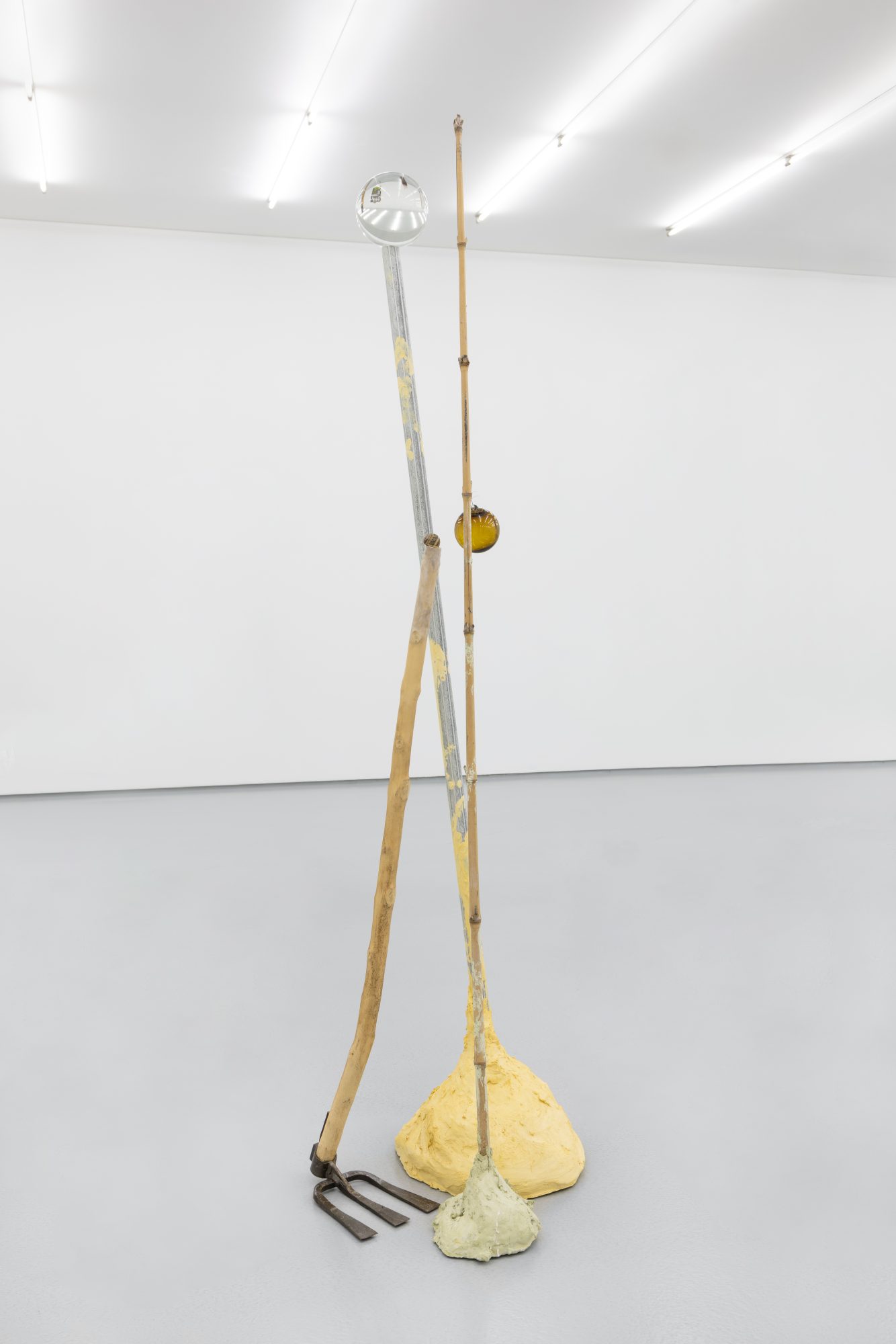
Susanne S. D. Themlitz, Trio (The World Upside Down), 2025. Pigmented plaster, aluminum, iron, wood, bamboo, crystal ball, glass ball, wire, snail shell. 190 x 40 x 50 cm
Enquire
“Somos livres, mas não sabemos quem ser”, disse o canguru.
O OvO tremeu e, sem se quebrar, murmurou: “A liberdade não vos dirá o destino, apenas vos devolve o espelho.”
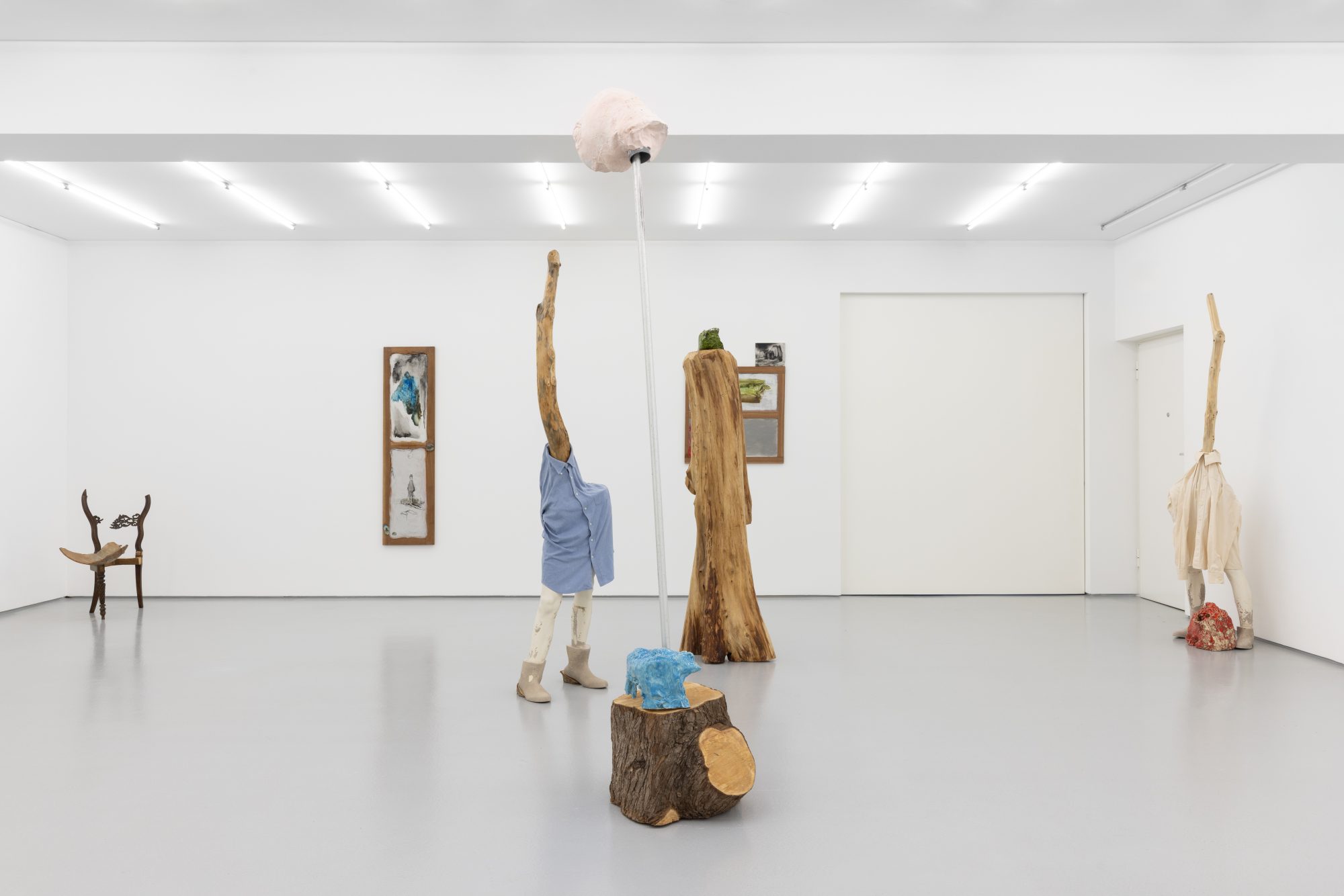
Exhibition view: Susanne S. D. Themlitz, Natural History, 2025.
Enquire
Looking through the entrance to the shelter, the kangaroo and the mollusc realized that the world had begun to spin. The rainbow/headboard rose into the sky, the blue mountain landed upside down on the ground, the flowers dissipated in a spark of light, and the contemplative creature fell dizzyingly into the horizon. They then understood: freeing themselves from what bound them, they saw an upside-down world that was theirs. The wind carried the echo of this discovery up the mountain, where dreams balance, and the kangaroo and the mollusc rushed out of the mushroom, running to share the good news with the friends they had left behind and who were eagerly awaiting news: the chinless rabbit, the pink turtle, and the little dog with head problems.
Olhando pela entrada do abrigo, o canguru e o molusco perceberam que o mundo se tinha posto a girar. O arco-íris/cabeceira de cama elevava-se no céu, a montanha azul pousava de cabeça para baixo no solo, as flores dissipavam-se numa centelha de luz e o ser contemplador caía vertiginosamente para dentro do horizonte. Compreenderam então: libertando-se do que os prendia, viram um mundo ao contrário que era seu. O vento levou o eco dessa descoberta montanha acima, onde os sonhos se equilibram, e o canguru e o molusco precipitaram-se para fora do fungo, correndo para dar a boa nova aos amigos que tinham deixado para trás e aguardavam ansiosos por notícias: o coelho sem queixo, a tartaruga cor-de-rosa e o cãozinho com problemas na cabeça.
Catarina Rosendo, 2025
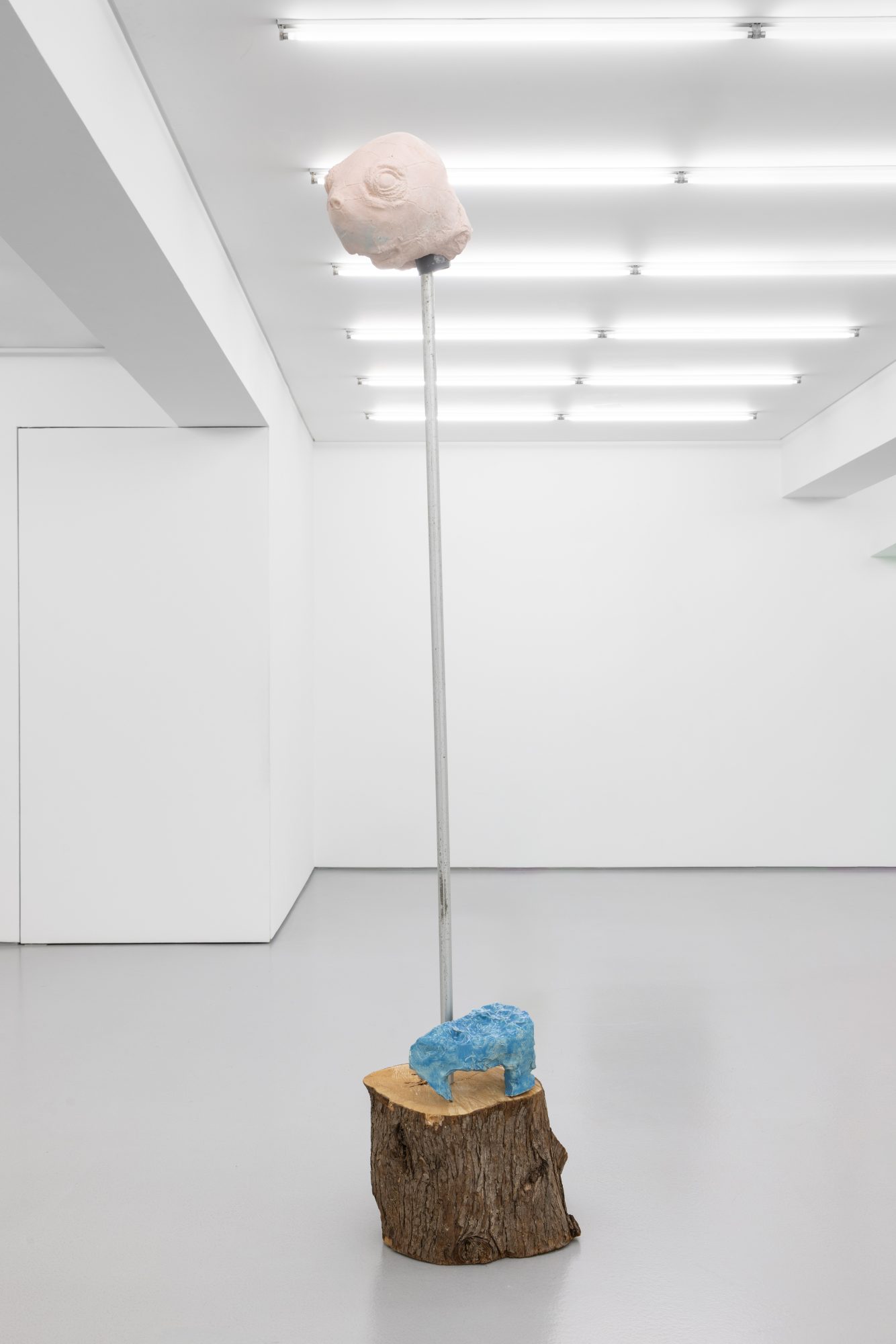
Susanne S. D. Themlitz, Turtle/ Tartagura, 2025. Ceramic plaster with pigment, aluminum, PVC, ceramic, wood. 214 x 50 x 35 cm
Enquire
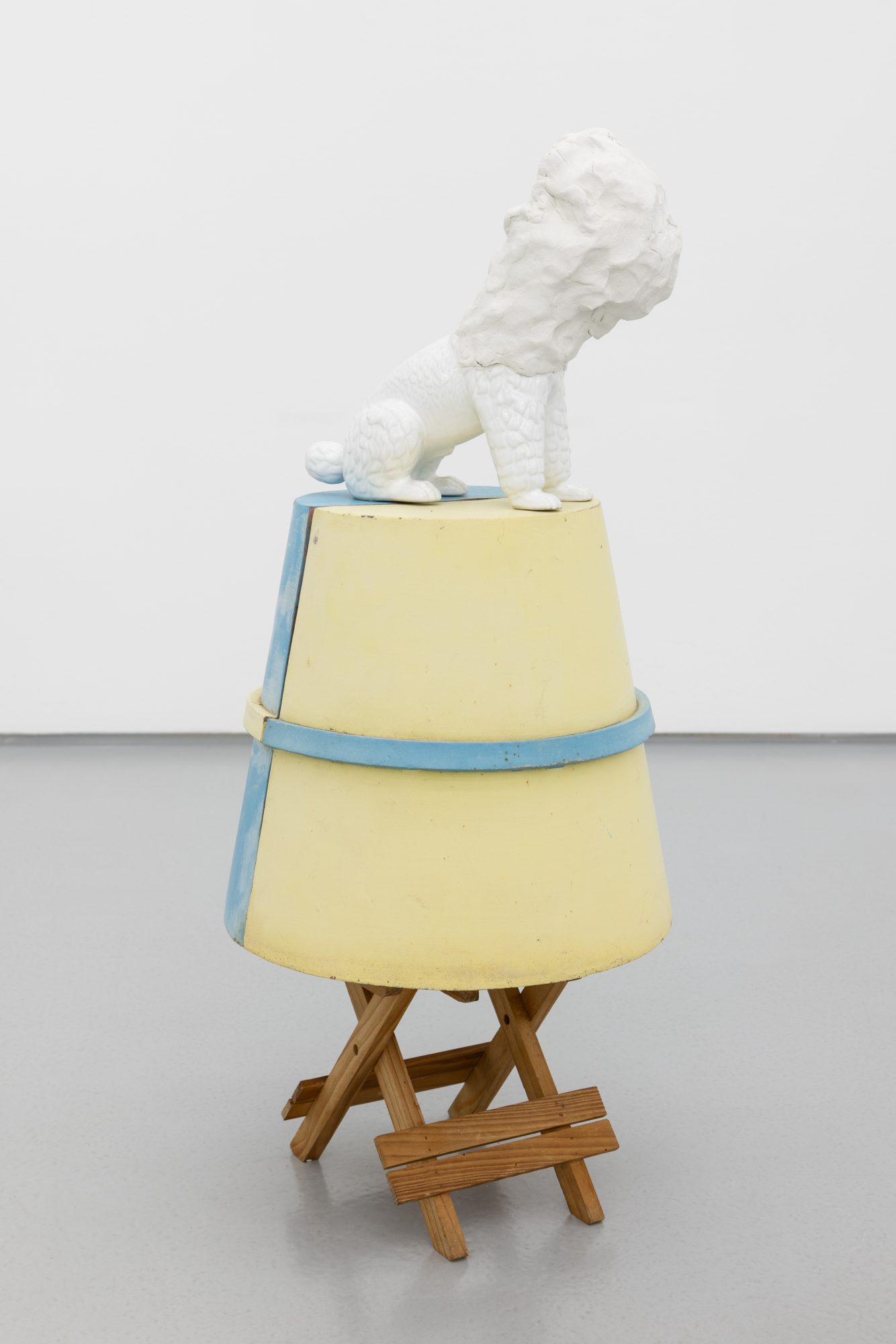
Susanne S. D. Themlitz, Coucou, 2025. Ceramic, modeling clay, wood, painted iron. 82 x 35 x 35 cm
Enquire
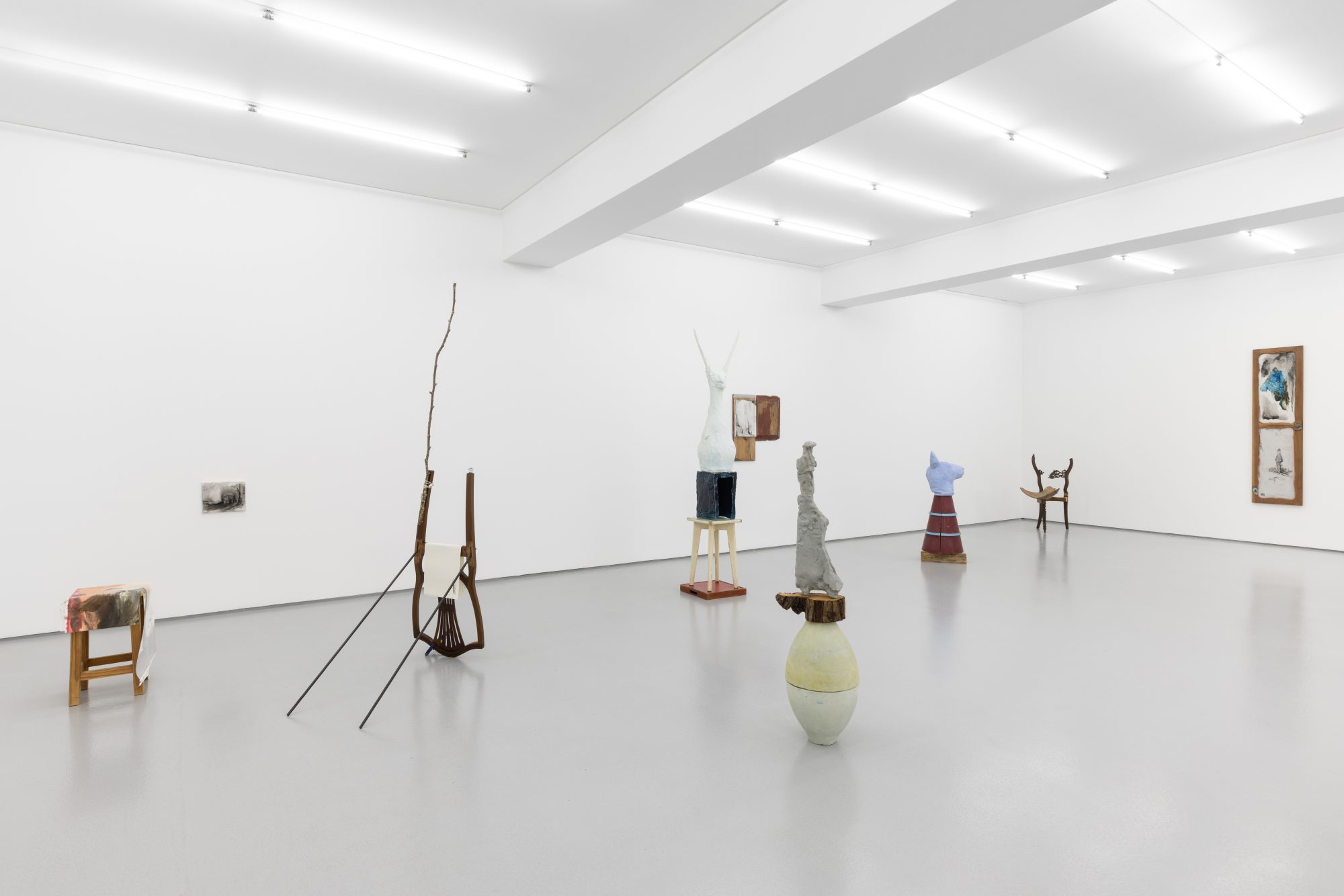
Exhibition view: Susanne S. D. Themlitz, Natural History, 2025.
Enquire
Susanne S. D. Themlitz (Lisbon, 1968) is an artist of Portuguese and German nationality who lives and works in Lisbon, Sintra, and Cologne. Between 1987 and 1995, she studied drawing and sculpture at Ar.Co – Centro de Arte e Comunicação Visual in Lisbon, studied at the Royal College of Art in London, and completed a master’s degree in visual arts at the Kunstakademie Düsseldorf. She has exhibited regularly since 1998 and is represented in several institutional and private collections. Over the years, her work developed into a poetic universe of great symbolism, in constant dialogue with art history, literature, natural sciences, popular traditions, and children’s stories. These references seldom become explicit in the imaginary landscapes and hybrid figures with which Themlitz creates environ-ments of silent theatricality that summon the viewer, turned into an active participant in scenes where the visible and the hinted dialogue and enhance each other in the space of imagination and fiction. The links between reality and the unconscious real, the landscape as a place of human inscription, memo-ry and forgetting, metamorphosis and the passage between states, the borderline zones where things become uncertain and mutually contaminate each other, the interstitial spaces that open the way to dream and fantasy—sometimes to dormancy—are themes cherished by the artist. Her sculptures and installations open towards parallel worlds where domestic or industrial objects are transformed and combined with natural elements, and mutant, introspective and almost always faceless beings, surprisingly plausible in their otherness and singularity, as well as with drawings and paintings that mix the descriptive detail of graffiti, stamped paints and collages of various materials such as news-paper clippings or wallpaper. Photography and video complement Themlitz’s transdisciplinary approach to artistic media, as well as written work sometimes in the form of artist’s books. Through the images and sensations generated in the viewer by her works crosses the unthought and the resistance to verbal codification, to which also contributes the search for unusual ways of occupying spaces, through elevations or suspensions that distort the axes of vision or which allude to the underground and the subterranean world where certain species breathe and thrive; as well as the subversion of propor-tions and scales, deformed and inverted through macrocephaly or the atrophy of bodies and the use of lenses and glass. At the center of Themlitz’s work lies an intention, sometimes humorous, sometimes melancholic, to create images and objects that are all the more effective when viewers allow themselves to be drawn into a suspension of disbelief enabling them to access other modes of perceiving reality.
Susanne S. D. Themlitz (Lisboa, 1968) é uma artista de nacionalidade portuguesa e alemã que vive e trabalha em Lisboa, Sintra e Colónia. Entre 1987 e 1995, estudou desenho e escultura no Ar.Co – Centro de Arte e Comunicação Visual, em Lisboa, fez estudos no Royal College of Art, em Londres, e completou o mestrado em artes visuais da Kunstakademie Düsseldorf. Expõe regularmente desde 1998 e está representada em diversas coleções institucionais e particulares. Ao longo dos anos, a sua obra tem vindo a constituir-se como um universo poético de grande simbolismo e em diálogo constante com a história da arte, a literatura, as ciências naturais, as tradições populares e as estórias infantis. Estes referentes raramente se tornam explícitos nas paisagens imaginárias e nas figuras híbridas com as quais Themlitz cria ambientes de uma teatralidade silenciosa que convocam o espetador, tornado participante ativo de cenas onde o visível e o sugerido dialogam e potenciam-se mutuamente no es-paço da imaginação e da ficção. Os vínculos entre a realidade e o real inconsciente, a paisagem como lugar de inscrição do humano, a memória e o esquecimento, a metamorfose e a passagem entre esta-dos, as zonas limítrofes em que as coisas se tornam incertas e contaminam mutuamente, os espaços intersticiais que abrem caminho ao devaneio e à fantasia – por vezes à dormência –, são temas caros à artista. As suas esculturas e instalações abrem para mundos paralelos onde se acumulam e agregam objetos domésticos ou industriais transformados e combinados com elementos naturais, e seres mu-tantes, introspetivos e quase sempre sem rosto, surpreendentemente plausíveis na sua alteridade e singularidade, bem como desenhos e pinturas que misturam a minúcia descritiva do grafite, as tintas estampadas por calcagem e as colagens de materiais variados como recortes de jornais ou papéis de parede. A fotografia e o vídeo completam a abordagem transdisciplinar de Themlitz aos meios artísti-cos, bem como uma produção escrita que, por vezes, toma a forma de livros de artista. Pelas imagens e sensações geradas no espetador através das suas obras, perpassa o impensado e a resistência à codificação verbal, para os quais contribuem, ainda, a busca por formas incomuns de ocupar os es-paços, através de elevações ou suspensões que distorcem os eixos de visão ou de alusões ao subsolo e ao mundo subterrâneo onde determinadas espécies respiram e prosperam; bem como a subversão das proporções e das escalas, deformadas e invertidas por meio da macrocefalia ou da atrofia dos corpos e do uso de lentes e vidros. No cerne do trabalho de Themlitz reside uma intenção, por vezes humora-da, por vezes melancólica, de criar imagens e objetos tão mais eficazes quanto o espetador se deixa envolver na suspensão da descrença que lhe permite aceder a outros modos de percepção da realidade.
