narrative, space, and metalepsis
In Ana Vieira’s work, narrative is not organized in a linear way, but rather as a condition inscribed within the spatial configuration itself. The works emerge from recognizable situations, often associated with the domestic sphere, creating an initial sense of proximity that guides the gaze and situates the viewer.
narrativa, espaço e metalepse
Na obra de Ana Vieira, a narrativa não se organiza de forma linear, mas como uma condição inscrita na própria configuração espacial. As obras partem de situações reconhecíveis, frequentemente associadas ao universo doméstico, criando uma proximidade inicial que orienta o olhar e situa o observador.
This familiarity is quickly disrupted: the elements appear displaced, fragmented, or removed from their functional context, interrupting the narrative continuity. There is no sequence of events, but rather a set of visual clues held in suspension, where meaning remains open and in the process of construction.
Essa familiaridade é rapidamente perturbada: os elementos surgem deslocados, fragmentados ou retirados do seu contexto funcional, interrompendo a continuidade narrativa. Não há encadeamento de acontecimentos, mas antes um conjunto de indícios visuais em suspensão, onde o sentido permanece aberto e em construção.
In this context, the concept of metalepsis works as a structural operator. By undoing the separation between the represented space and the viewer’s space, Ana Vieira’s work questions categories such as interior and exterior, representation and reality. These no longer operate as stable oppositions, but instead configure zones of transition.
The observer no longer occupies an external position and is integrated into the very structure of the work. The relationship with the visible loses distance and stability, becoming dependent on position, movement, and the duration of the experience. What is observed is not separate from the observer: it is constituted within the very situation of perception.
Neste contexto, o conceito de metalepse funciona como operador estrutural. Ao desfazer a separação entre espaço representado e espaço do observador, o trabalho de Ana Vieira coloca em causa categorias como interior e exterior, representação e realidade. Estas deixam de operar como oposições estáveis, passando a configurar zonas de transição.
O observador deixa de ocupar uma posição exterior e é integrado na própria estrutura da obra. A relação com o visível perde distância e estabilidade, passando a depender da posição, do movimento e da duração da experiência. O que se observa não está separado de quem observa: constitui-se na própria situação de percepção.
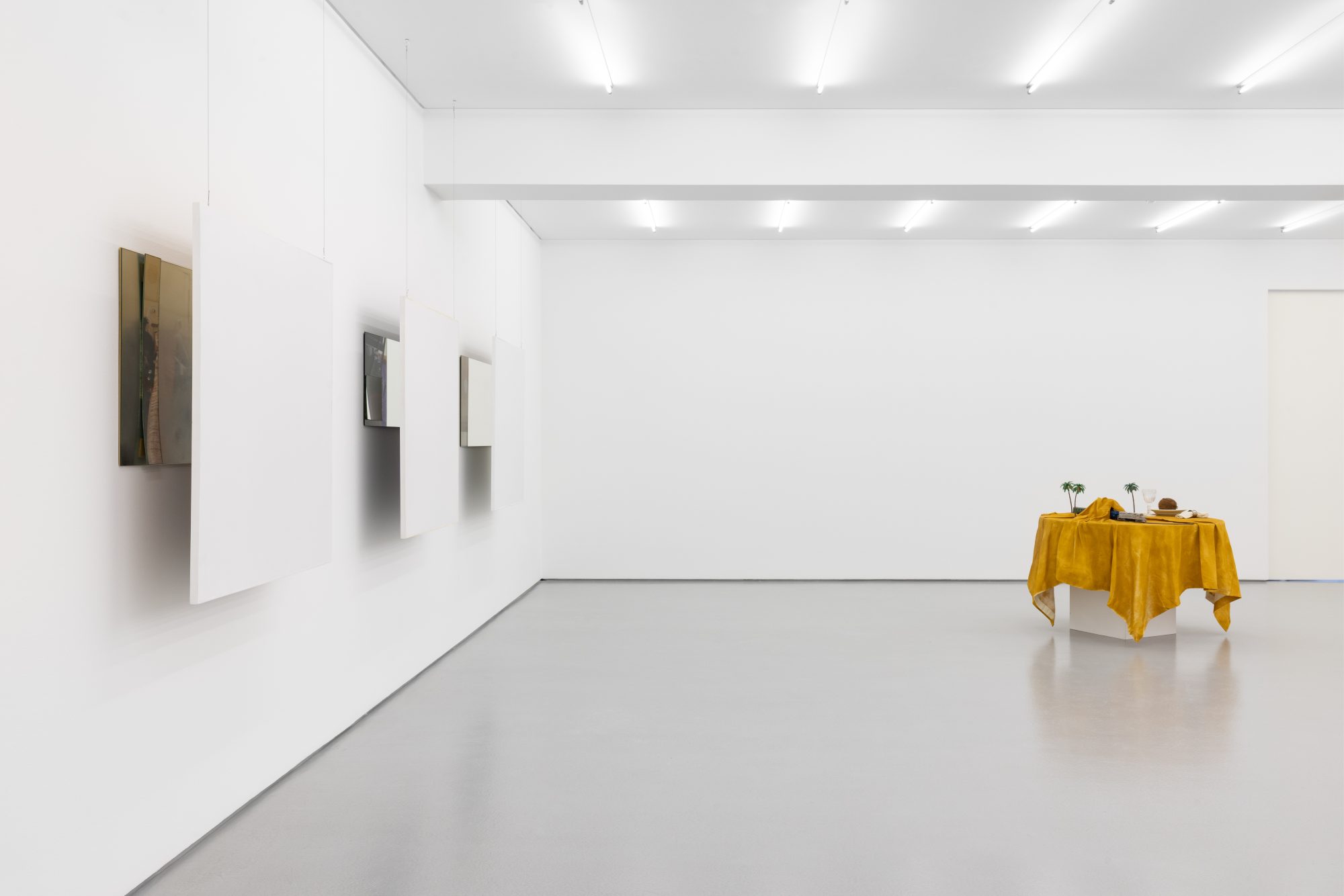
Rather than producing narratives, the work operates upon the conditions under which something may be read as narrative. Meaning is neither presented nor concluded; it is constituted as a relation, always in progress. What is at stake is not the interpretation of what is shown, but the way in which the visible is organized within experience.
Mais do que produzir narrativas, o trabalho opera sobre as condições em que algo pode ser lido como narrativa. O sentido não se apresenta nem se conclui; constitui-se enquanto relação, sempre em curso. O que está em causa não é a interpretação do que é mostrado, mas o modo como o visível se organiza na experiência.
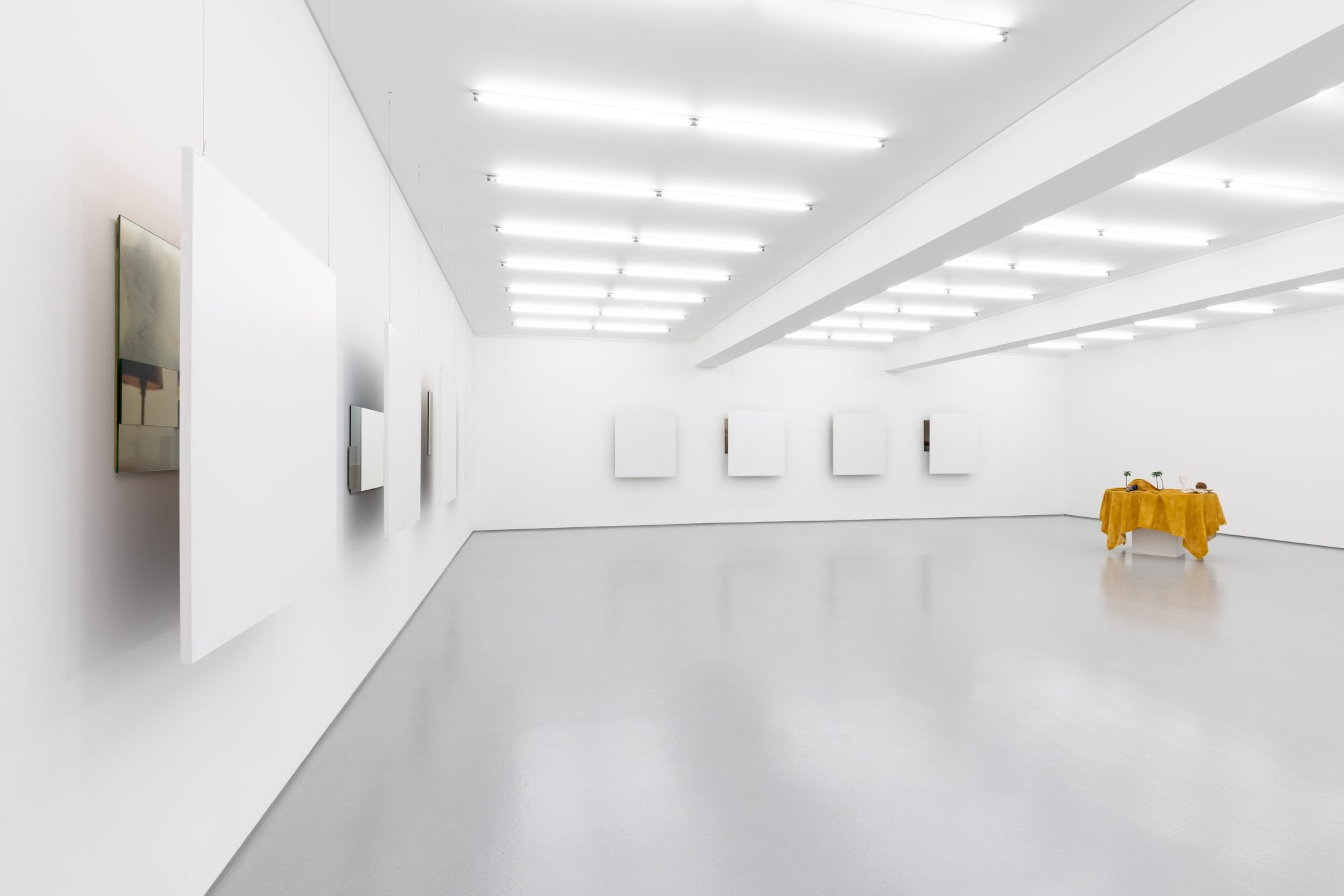
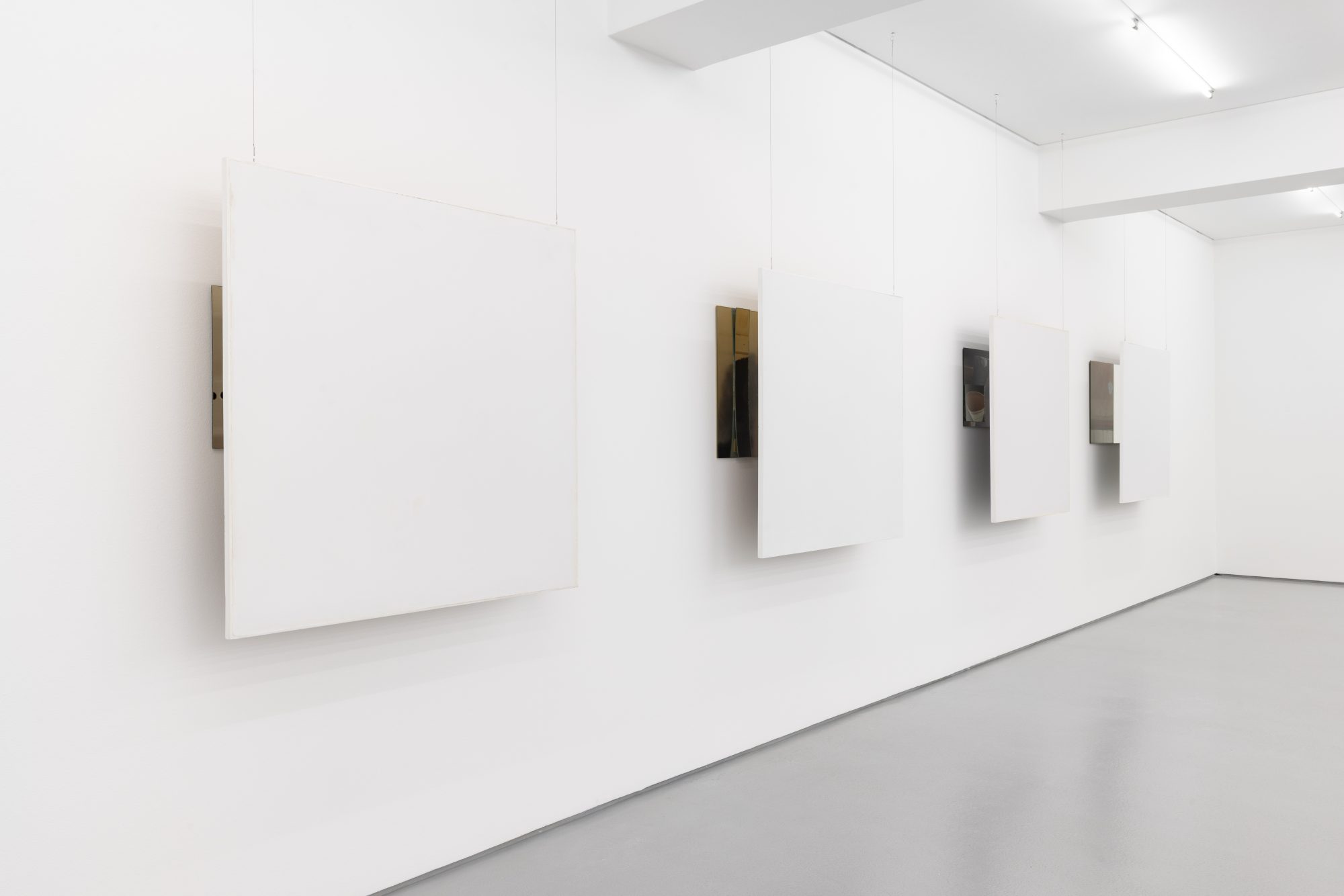
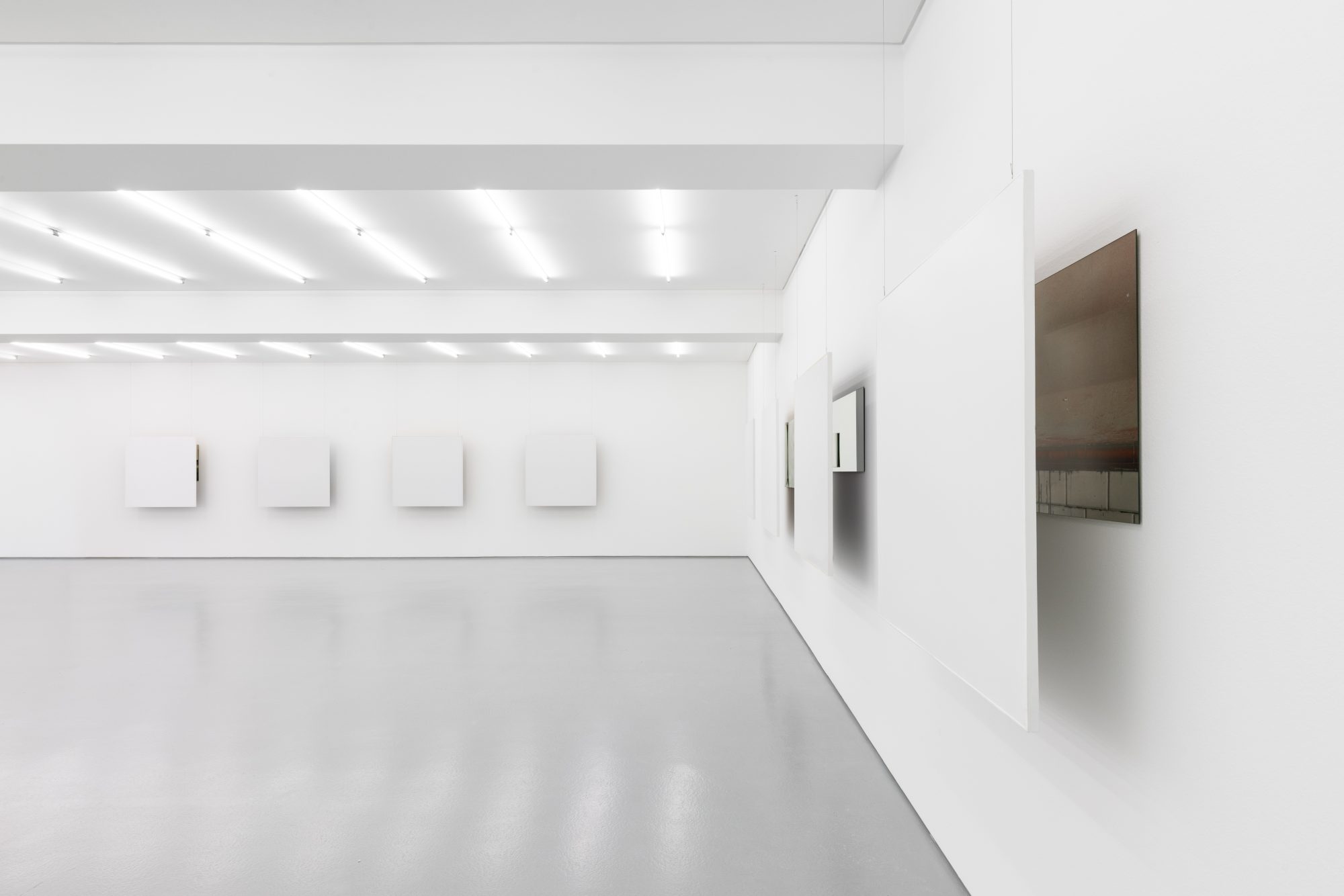
In Close Up, the extreme proximity and optical distortion shift the mode through which the image is read. Detail does not deepen recognition; it alters it. Concave and convex mirrors introduce deformation and discontinuity, intensifying the instability of the visible and preventing the fixation of form as a perceptual totality.
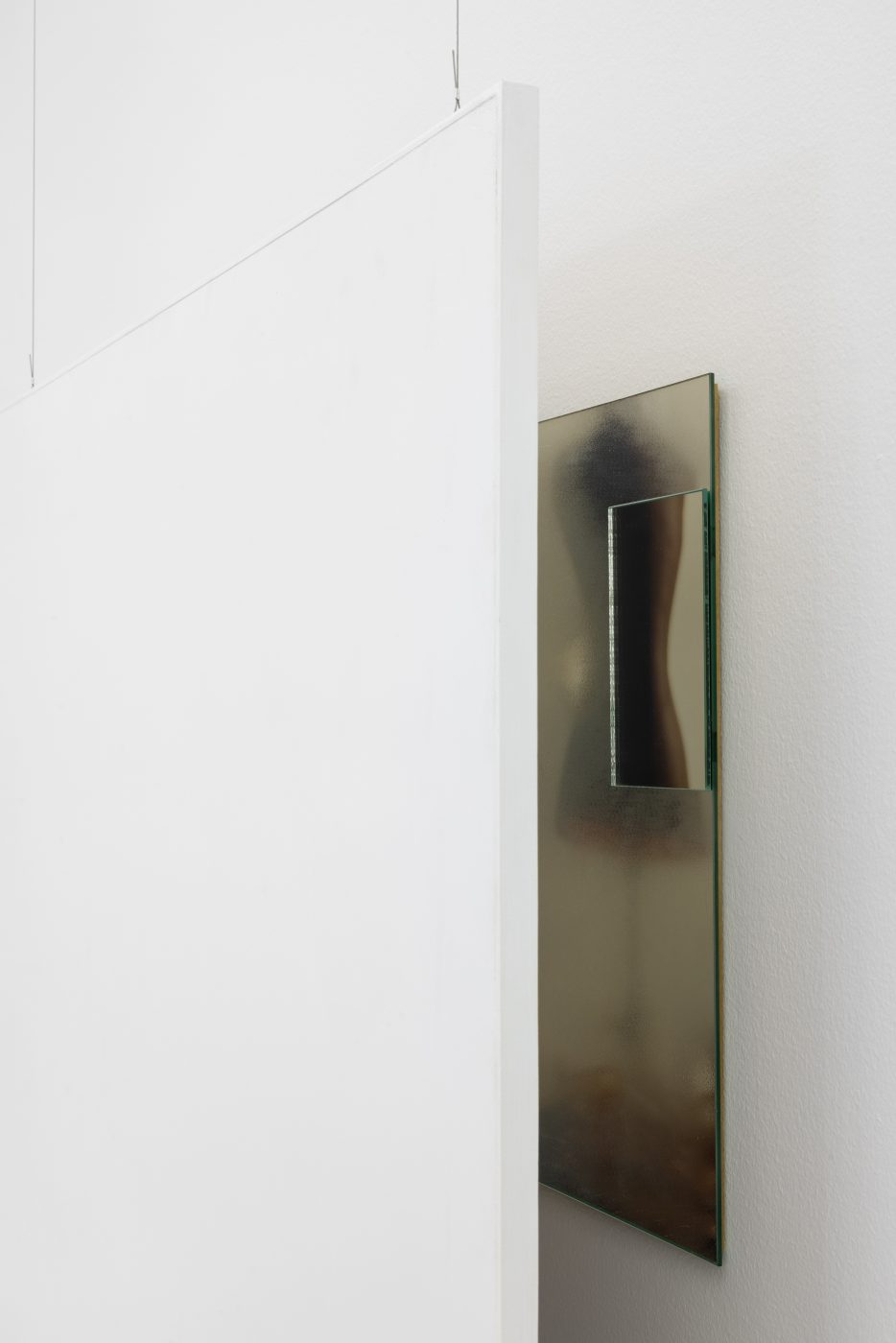
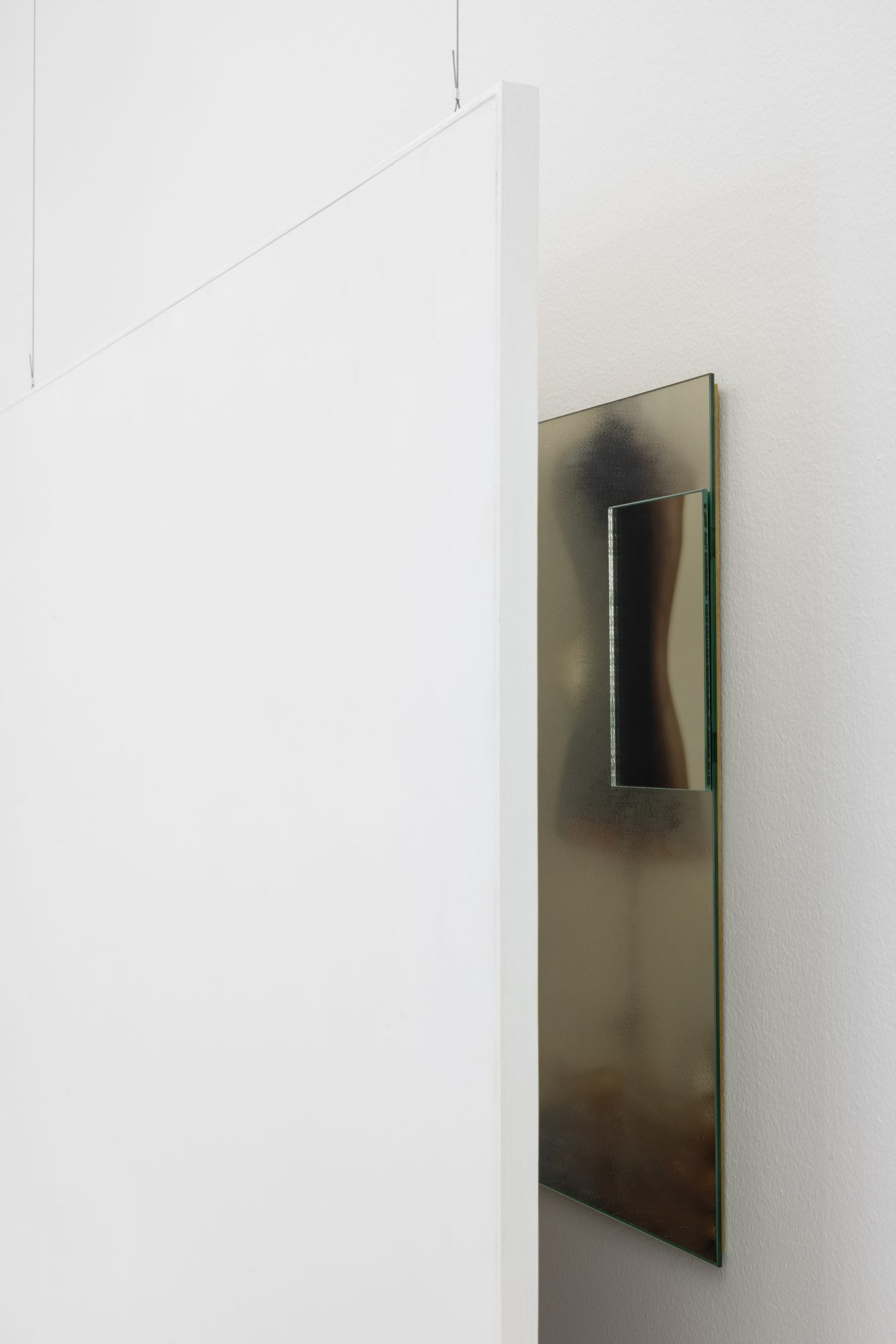
Ana Vieira, Close Up (08), 2004. White panel, photograph, mirrors, and metal cables
Enquire
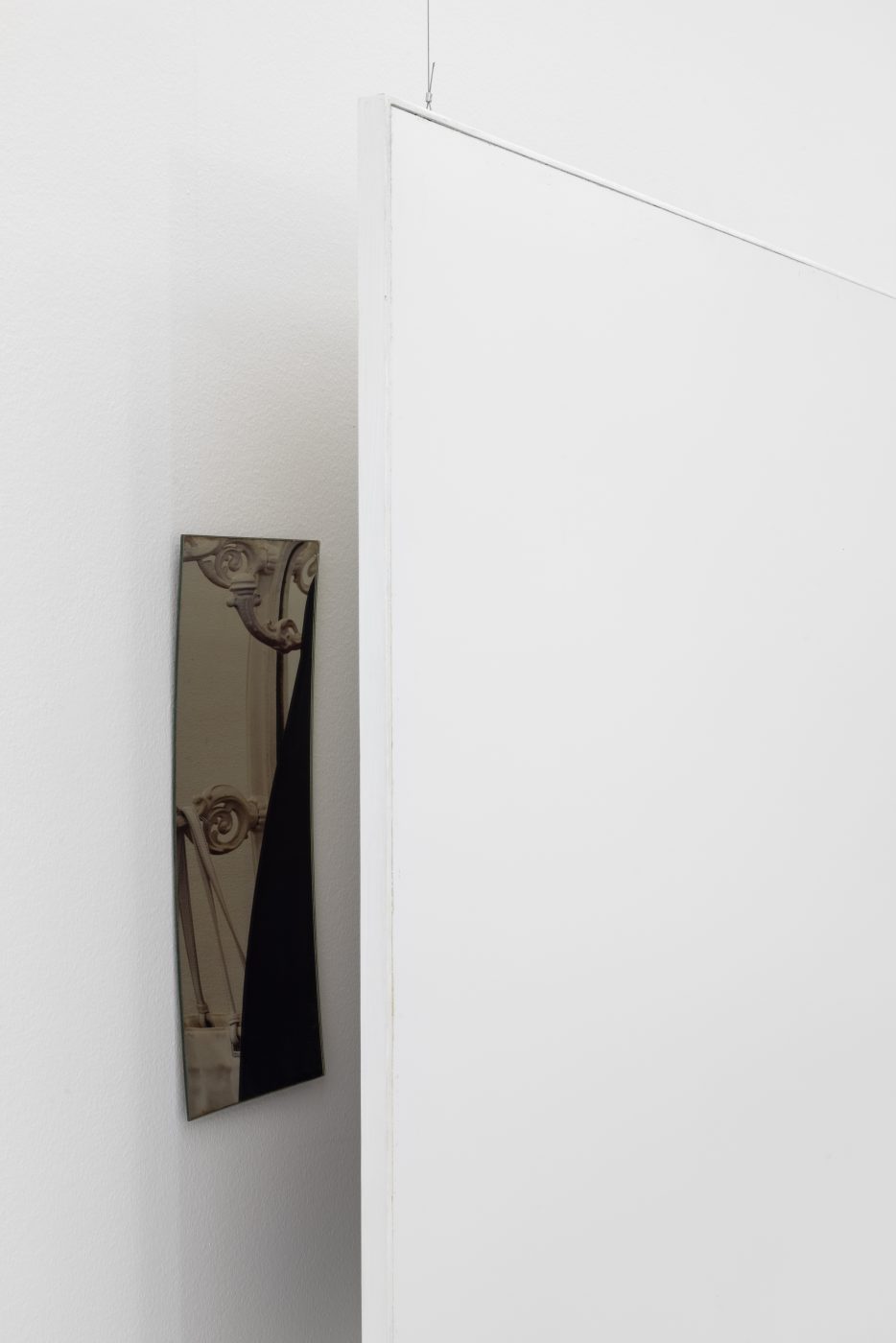
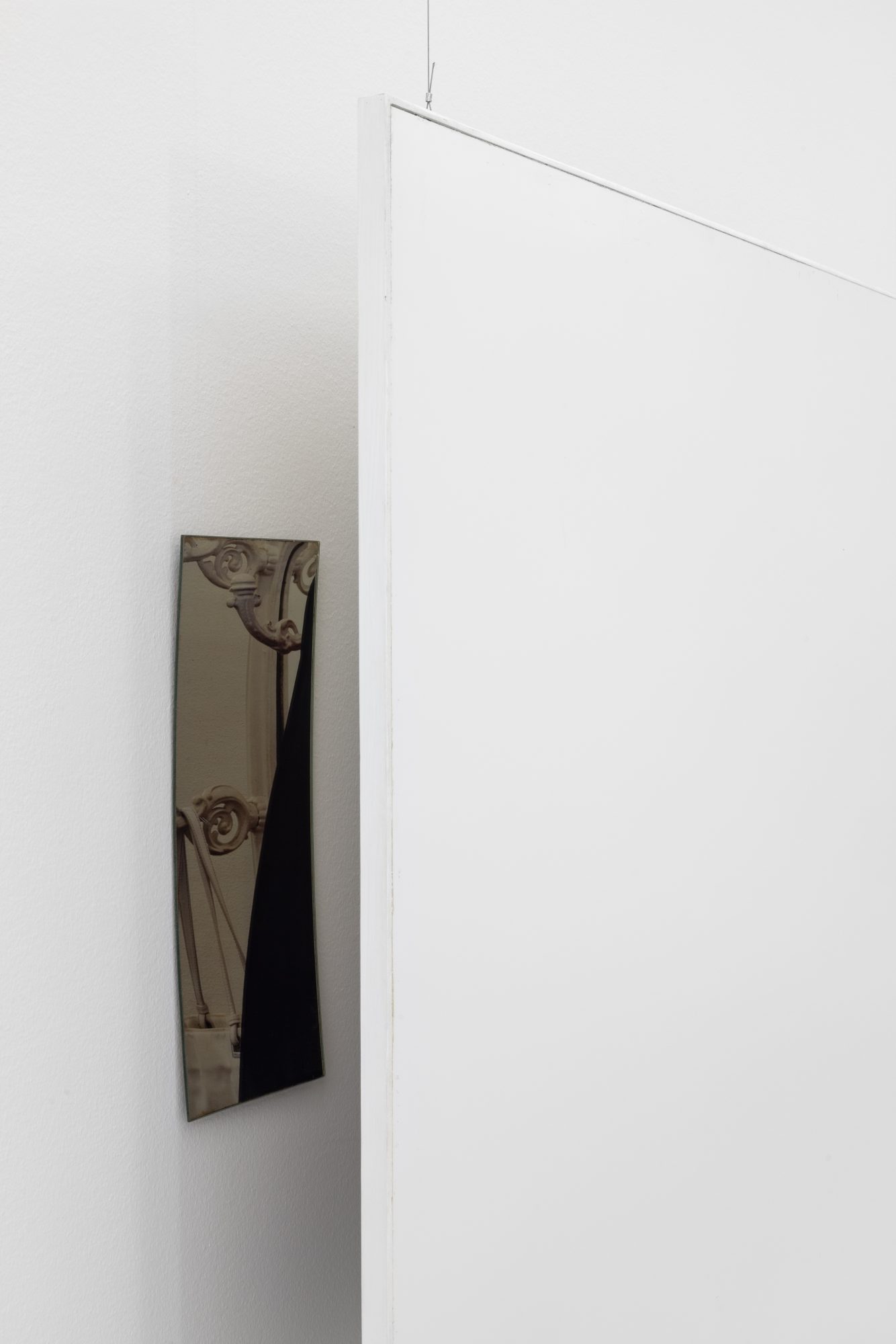
Ana Vieira, Close Up (10), 2004. White panel, photograph, mirrors, and metal cables
Enquire
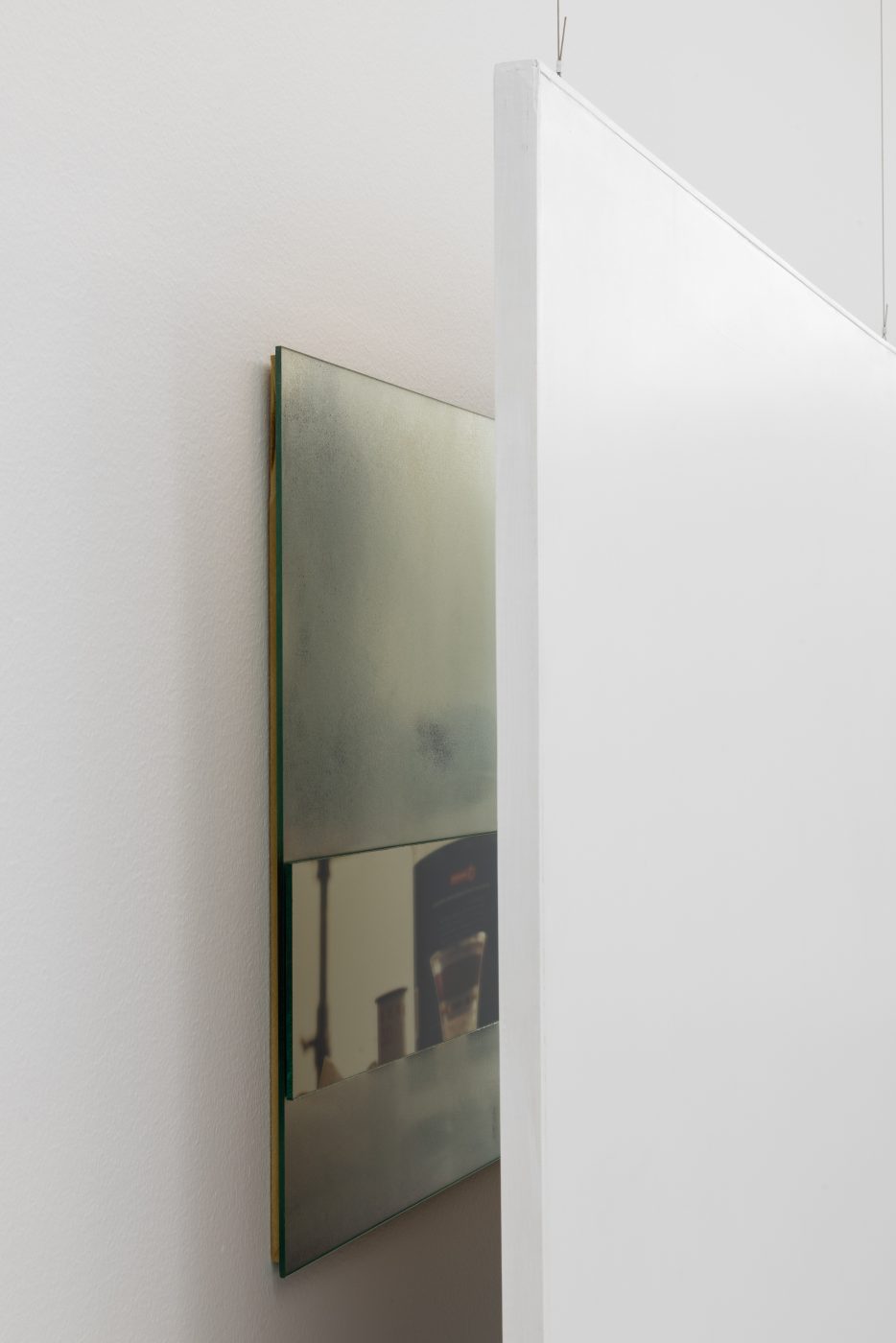
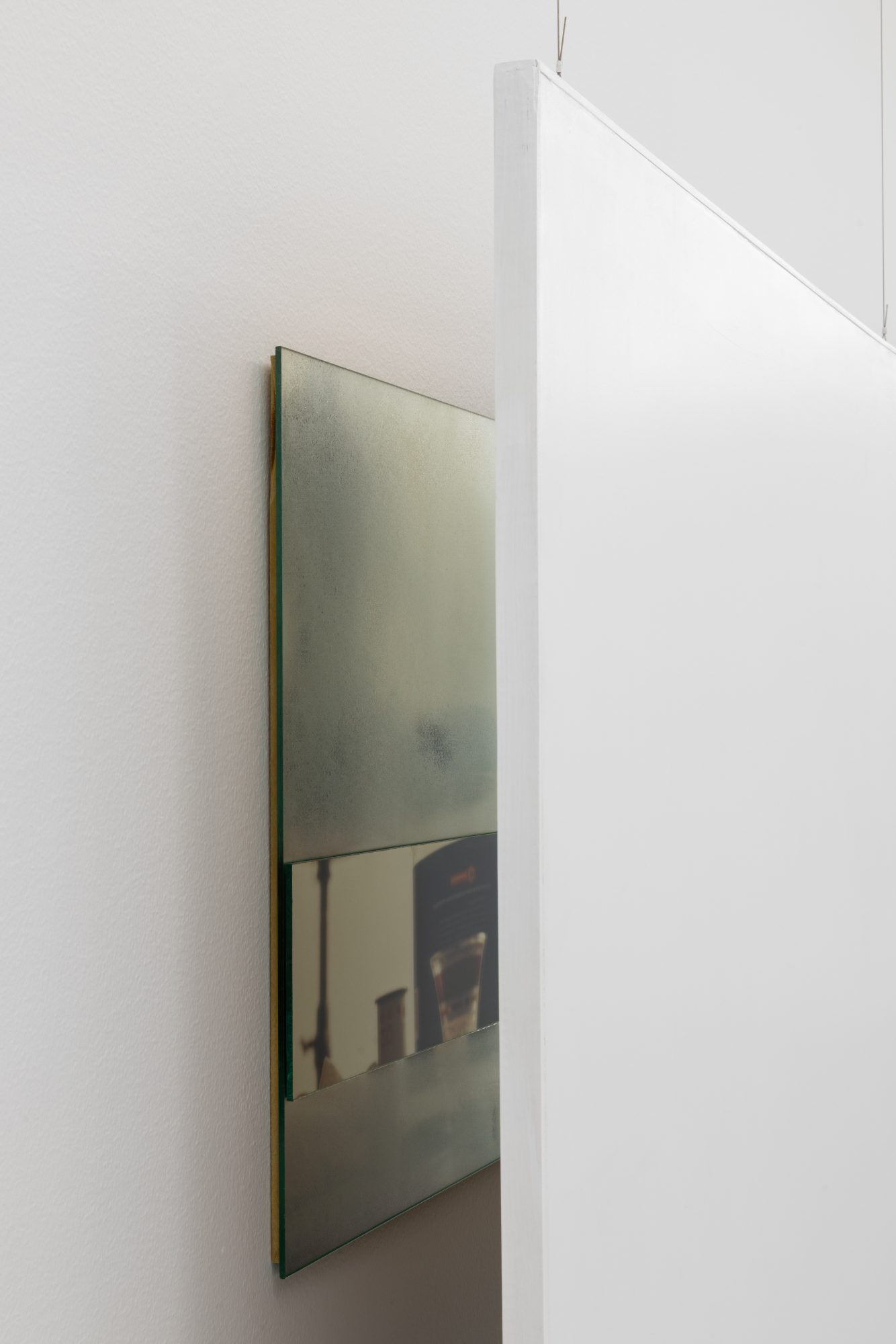
Ana Vieira, Close Up (08), 2004. White panel, photograph, mirrors, and
Enquire
Em Close Up, a aproximação extrema e a distorção óptica deslocam o regime de leitura da imagem. O detalhe não aprofunda o reconhecimento; altera-o. Os espelhos côncavos e convexos introduzem deformação e descontinuidade, intensificando a instabilidade do visível e impedindo a fixação da forma como totalidade perceptiva.
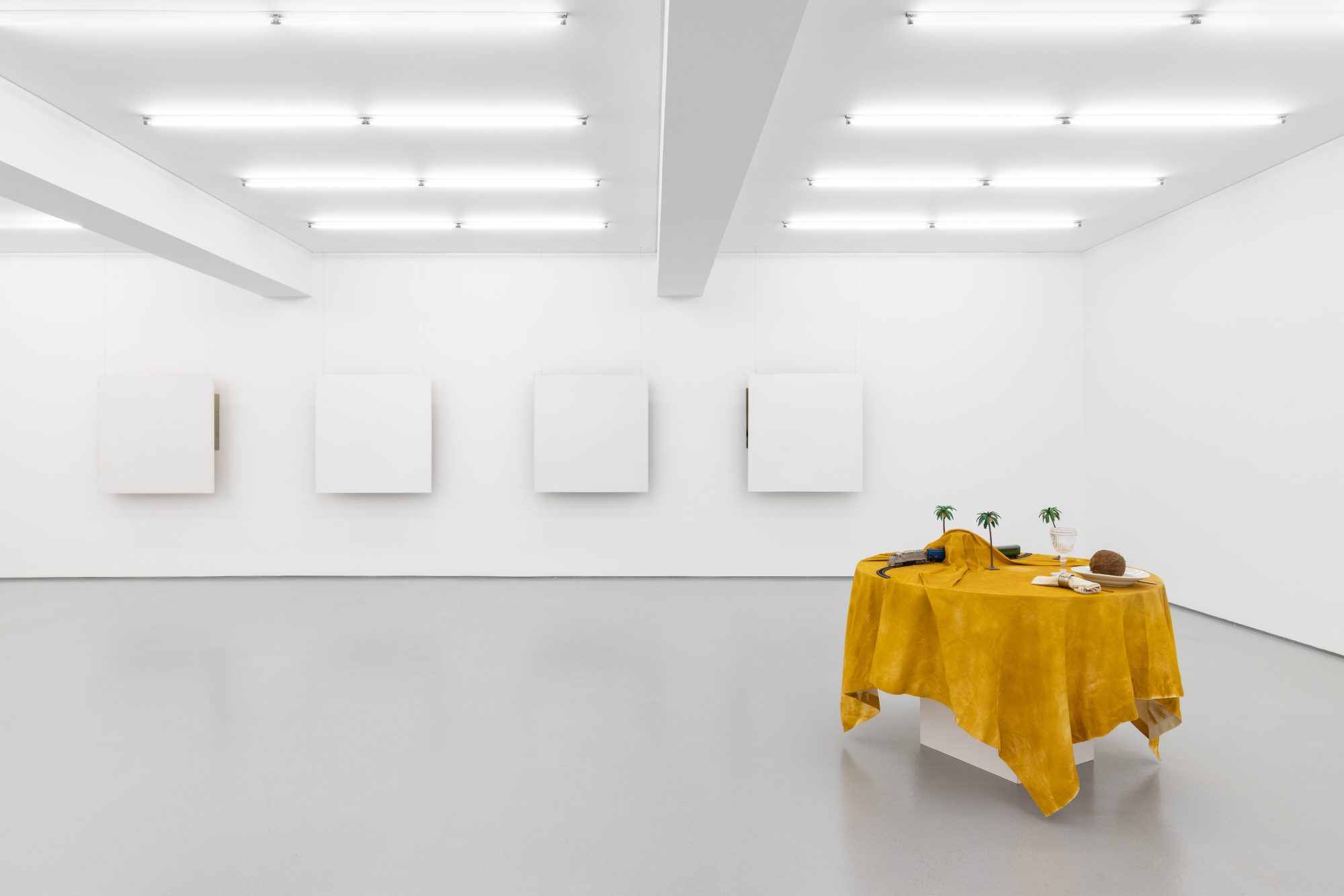
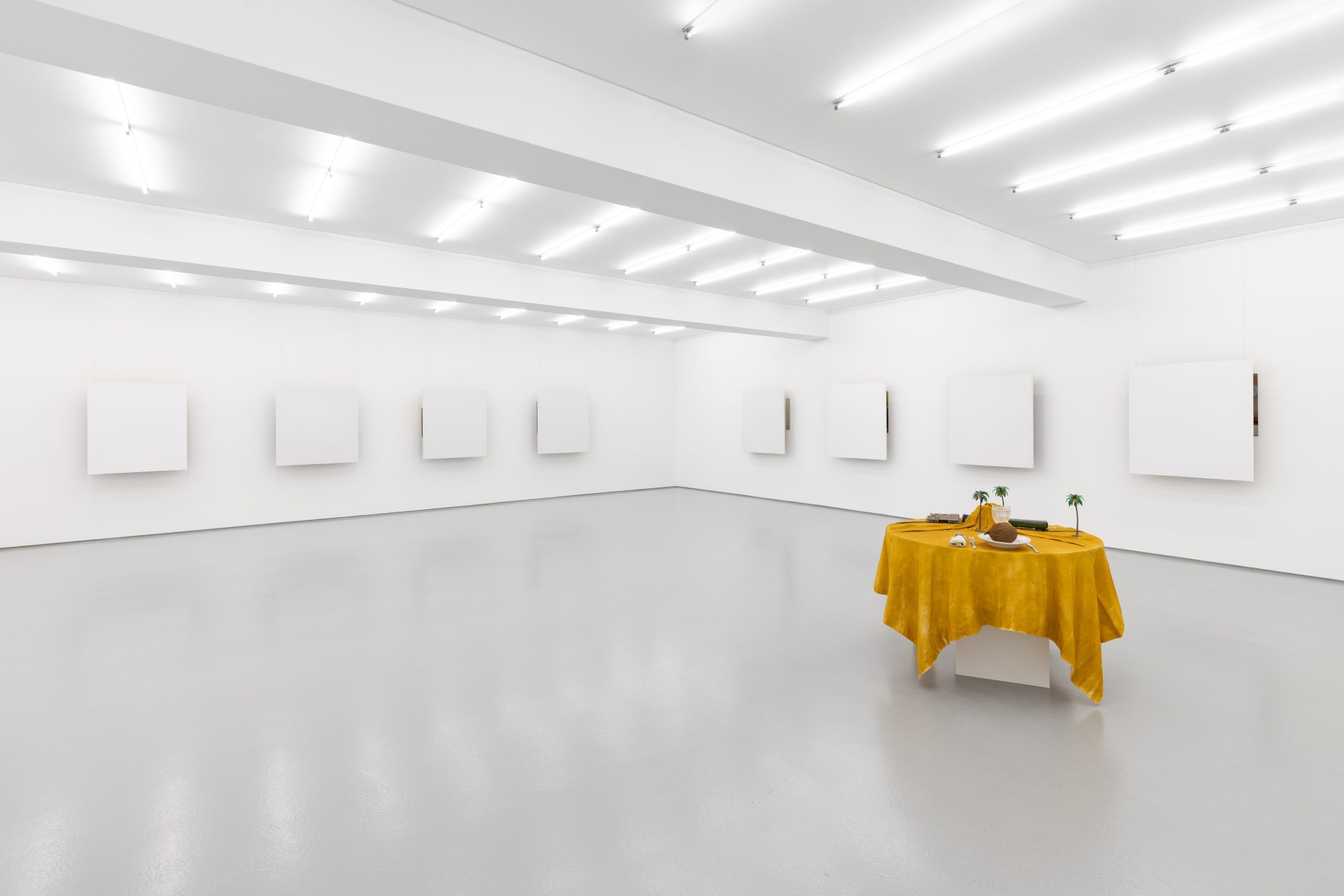
In Mesa-Paisagem, the table ceases to function as a support and instead structures a field of appearance. The landscape is neither represented nor framed: it emerges within the exhibition space itself, without a defined exterior. The distinction between object and environment loses definition, becoming dependent on the position of the body in space.
Em Mesa-Paisagem, a mesa deixa de funcionar como suporte e passa a estruturar um campo de aparecimento. A paisagem não é representada nem enquadrada: emerge no interior do dispositivo expositivo, sem exterior definido. A distinção entre objeto e ambiente perde definição, tornando-se dependente da posição do corpo no espaço.
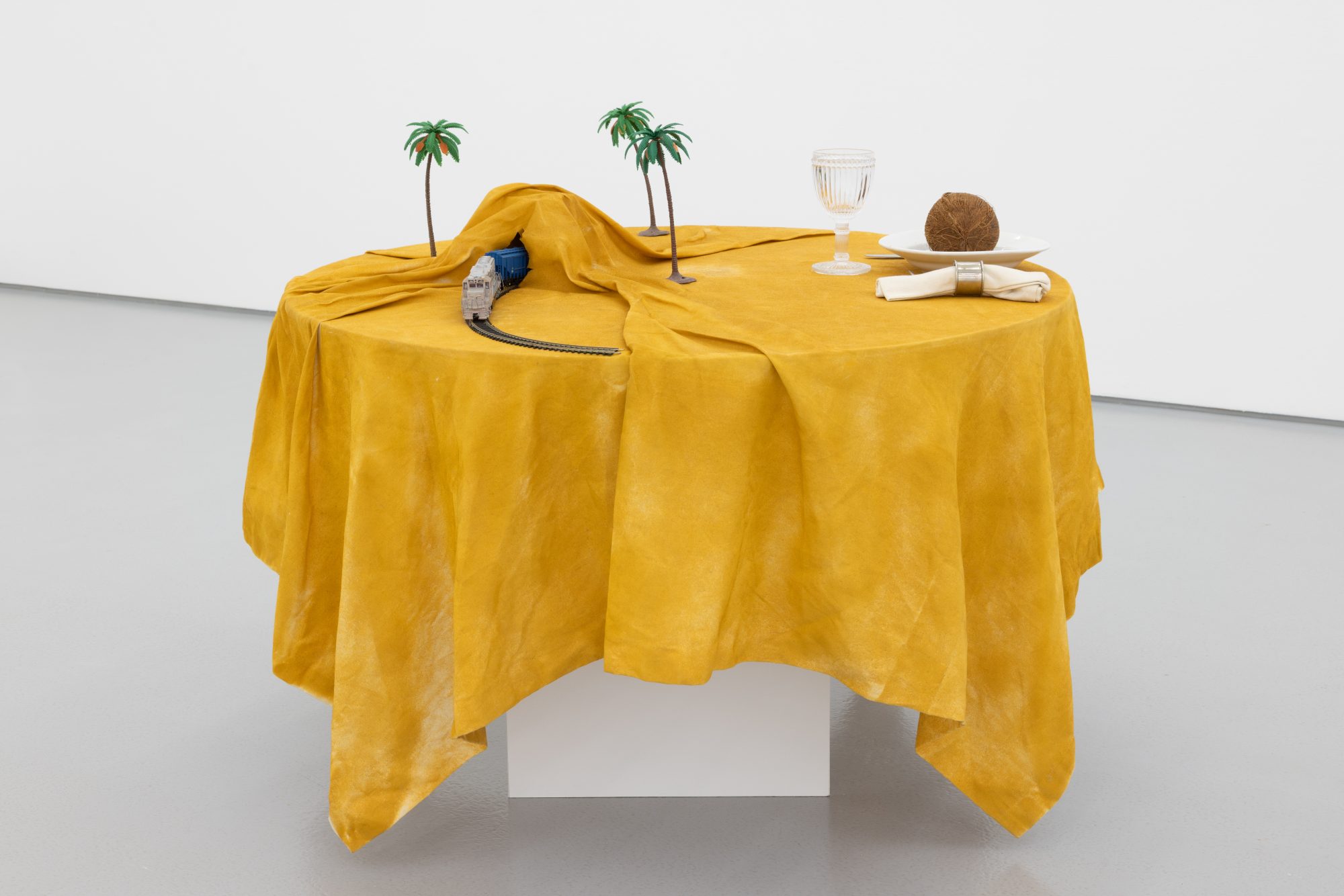
Ana Vieira, Mesa-Paisagem, 1973. Wooden table, fabric, spray paint on fabric, objects (plate, cutlery, napkin ring, napkin, plate, coconut, toy train and plastic palm trees). 94 x Ø110 cm
Enquire
Taken together, the works suspend any stable reading of the image, exposing the processes through which the visible is constituted and destabilized within the very experience of perception.
Antonia Gaeta
No conjunto, as obras suspendem qualquer leitura estabilizada da imagem, expondo os processos através dos quais o visível se constitui e se desestabiliza na própria experiência de percepção.
Antonia Gaeta
Ana Vieira was born in Coimbra in 1940, spent her childhood and early years on the island of São Miguel in the Azores, and lived most of her adult life in Lisbon, where she died in 2016. She graduated in Painting from the School of Fine Arts (1966) and was awarded the AICA Prize in 1991.
Ana Vieira started exhibiting her work regularly in the late 1960s and established herself as a key figure in Portuguese contemporary art in the decades that followed. Anchored in a critical thinking and an artistic language that explores the limits and the traditional supports of art, particularly painting and sculpture, her practice aligns with the conceptual art movement and is markedly influenced by the exploration of everyday objects, spaces, and situations. Often in the form of installations, Vieira plays with representations of passages, half-spaces and transparencies, creating hybrid territories simultaneously visible and inaccessible, welcoming and hostile. These scenic creations allow for different possibilities for the experiencing of objects, freeing them from their function and inscribing them in a poetic dimension that lies between allegory and simulacrum.
Her work has been the subject of two major retrospective exhibitions, at the Serralves Museum in 1998 and at the Calouste Gulbenkian Foundation’s Modern Art Center in 2011, institutions with significant collections of the artist’s work. In 2017, the Graça Morais Art Center presented a major posthumous solo exhibition, and in 2020, the Es Baluard Museum, in Spain, dedicated an important retrospective exhibition to the artist’s work. More recently, the exhibition “Ana Vieira: Cadernos de Montagem” has brought renewed attention to the work of one of the most iconic artists of the 20th century, studying, documenting, and exhibiting a collection of emblematic works.
Her work has been regularly featured in group exhibitions at national and international institutions, including: MAAT – Museum of Art, Architecture and Technology, and EDP Foundation (Lisbon, PT); MNAC – National Museum of Contemporary Art (Lisbon, PT); José de Guimarães Arts Center (Guimarães, PT); Calouste Gulbenkian Foundation (Lisbon, PT); Serralves Museum (Porto, PT); CAV – Visual Arts Center (Coimbra, PT); Berardo Collection Museum (Lisbon, PT); Culturgest (Lisbon, PT); and also MARCO – Vigo Art Museum (Vigo, ES); SESC Pompeia (São Paulo, BR); National Museum of Women in the Arts (Washington, USA); La Monnaie de Paris (Paris, FR); Afro-Brazil Museum (São Paulo, BR), among others.
Ana Vieira’s work is represented not only in the collections of Calouste Gulbenkian Foundation’s Modern Art Center (CAM), Serralves Museum, Culturgest, State Contemporary Art Collection (CACE), Contemporary Art Museum – Belém Cultural Center (MAC/CCB), but also in the EDP Foundation, Carmona e Costa Foundation, and Musée Cantonal de Beaux-Arts, Switzerland.
Scientific Advisory Board for the Study of the Estate of Ana Vieira: Antonia Gaeta, Astrid Suzano and Sofia Gomes.
The artist’s archival collection is on deposit at the BAC (Banco de Arte Contemporânea).
Ana Vieira nasceu em Coimbra em 1940, passou a infância na ilha de S. Miguel, nos Açores e viveu grande parte da sua vida adulta em Lisboa, onde faleceu em 2016. Concluiu o curso de Pintura na Escola Superior de Belas-Artes (1966) e foi distinguida com o Prémio AICA em 1991.
Começa a expor com regularidade no final dos anos 1960, afirmando-se nas décadas seguintes como uma das figuras incontornáveis da arte contemporânea portuguesa, com um pensamento crítico e uma linguagem artística que explora os limites e suportes das disciplinas, em particular da pintura e da escultura. A sua prática, alinhada com os movimentos da arte concetual, é marcadamente influenciada pela exploração dos objetos comuns, pelos espaços e situações do quotidiano, muitas vezes sob a forma de instalações onde jogos de transparências criam territórios híbridos, simultaneamente visíveis e inacessíveis, acolhedores e hostis. Estas criações cénicas oferecem outras hipóteses para a experiência dos objetos, libertando-os da sua função e inscrevendo-os numa dimensão poética que se insinua entre a alegoria e o simulacro.
O seu trabalho foi objeto de duas grandes exposições antológicas, no Museu de Serralves, em 1998, e no Centro de Arte Moderna da Fundação Calouste Gulbenkian, em 2011, instituições com relevante acervo da artista. Em 2017, o Centro de Arte Graça Morais apresenta uma grande exposição individual póstuma, e, em 2020, o Museu Es Baluard, em Espanha, dedica-lhe uma importante exposição retrospetiva. Mais recentemente, a exposição “Ana Vieira: Cadernos de Montagem”, confere renovada atenção à obra de uma das mais icónicas artistas do século XX, estudando, documentando e expondo um conjunto de obras emblemáticas.
A sua obra vem sendo apresentada regularmente em exposições coletivas, em instituições nacionais e internacionais, de entre as quais se destacam: MAAT – Museu de Arte, Arquitetura e Tecnologia e Fundação EDP (Lisboa, PT); Museu Nacional de Arte Contemporânea (Lisboa, PT); Centro de Artes José de Guimarães (Guimarães, PT); Fundação Calouste Gulbenkian (Lisboa, PT); Museu de Serralves (Porto, PT); CAV – Centro de Artes Visuais (Coimbra, PT); Museu Coleção Berardo (Lisboa, PT); Culturgest (Lisboa, PT); e, ainda, MARCO – Museu de Arte de Vigo (Vigo, ES); SESC Pompeia (São Paulo, BR); National Museum of Women in the Arts (Washington, EUA); La Monnaie de Paris (Paris, FR); Museu Afro-Brasil (São Paulo, BR), entre outros.
O trabalho de Ana Vieira está representado não só nas coleções do Centro de Arte Moderna (CAM) – Fundação Calouste Gulbenkian, do Museu de Serralves, da Culturgest, da Coleção de Arte Contemporânea do Estado (CACE), do Museu de Arte Contemporânea do Centro Cultural de Belém (MAC/CCB), como também da Fundação EDP, da Fundação Carmona e Costa e do Musée Cantonal de Beaux-Arts, na Suíça.
Comissão Científica para o estudo do espólio da artista Ana Vieira: Antonia Gaeta, Astrid Suzano e Sofia Gomes.
O espólio documental da artista está em depósito no BAC (Banco de Arte Contemporânea).