
Carlos Bunga, Animism, 2024, furniture, cardboard, textiles, paint and tape. Installation view, Citizen of the World, The New Art Gallery Walsall, 2024. © Jonathan Shaw
Enquire
Carlos Bunga is known for his site-specific process-led installations, which are constructed in response to the spaces they occupy and often involve the use of cardboard and secondhand furniture as building materials. The exhibition opens with an immersive gallery installation composed of common household objects altered by paint and transformed by the architectural cardboard structures rising from them. Some objects are positioned on the floor while others appear in places or configurations that jar with social conventions. The effect is one of disrupting our perception of the Gallery space, of prompting us to pause and adapt to the interior of a strange house that the artist has choreographed for us.
Carlos Bunga é conhecido pelas as suas instalações site-specific, construídas em resposta aos espaços que ocupam e que envolvem frequentemente a utilização de cartão e mobiliário em segunda mão como materiais de construção. A exposição abre com uma instalação imersiva na galeria, composta por objetos domésticos comuns alterados por tinta e transformados pelas estruturas arquitetónicas de cartão que se erguem a partir deles. Alguns objetos são posicionados no chão, enquanto outros aparecem em lugares ou configurações que chocam com as convenções sociais .O efeito é o de perturbar a nossa perceção do espaço da Galeria, de nos levar a fazer uma pausa e a adaptarmo-nos ao interior de uma casa estranha que o artista coreografou para nós.
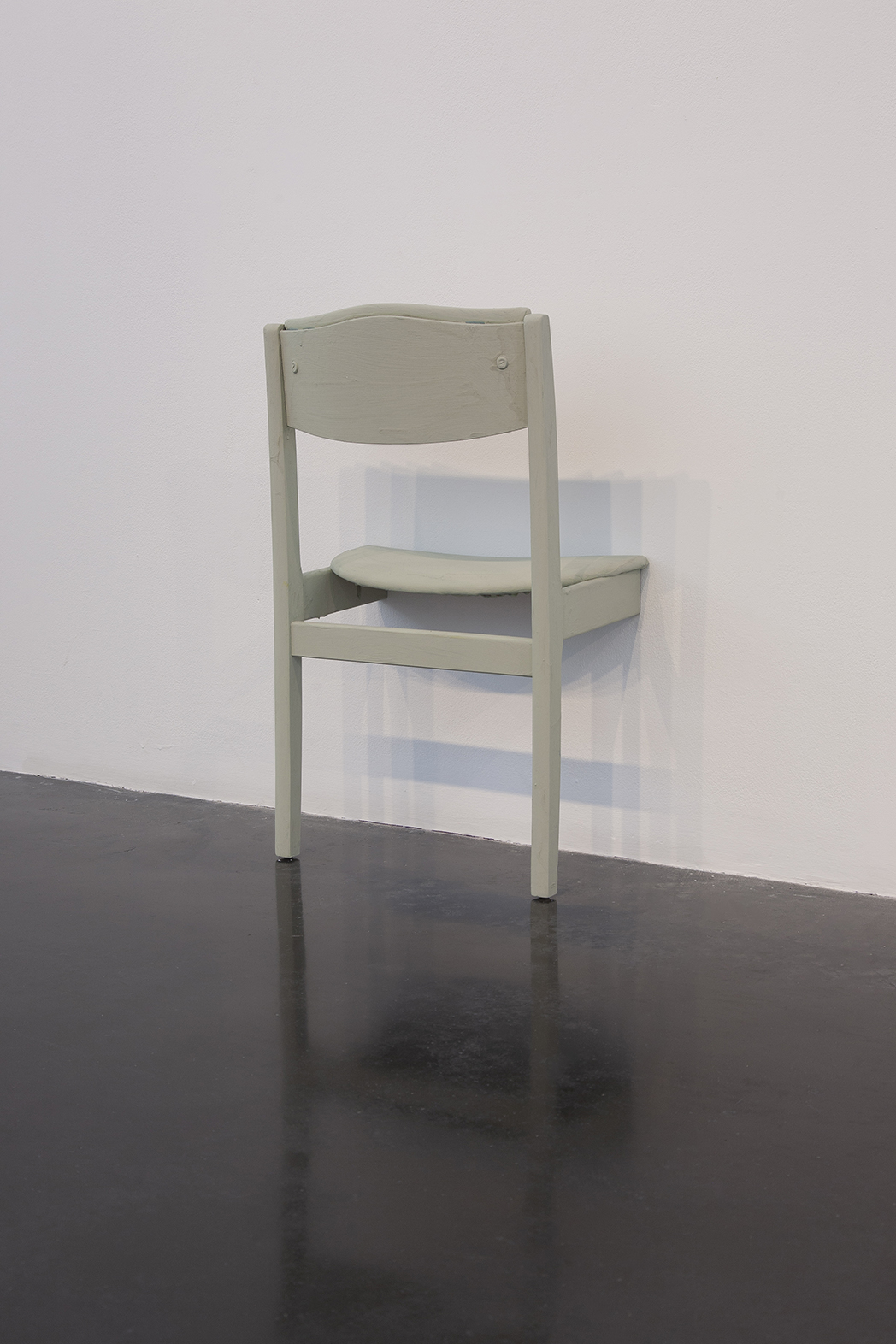

The chair has been a recurring motif in Bunga’s work, appearing in installations, drawings, videos, and performances. Within the installation, a group of early drawings (Chair No.14; Chaise Longue No.313; French Terrace Chair, each 2008) show found images of modernist chair designs onto which the artist has sketched architectural forms. In each drawing Bunga includes handwritten descriptions of the designs, drawing attention to the history and materials of functional objects that define the places we inhabit and call home. Always present in the language we use to describe the chair (legs, back, arms, feet) is a relationship to the body. When we are seated, we take weight off our body and forget about the function of the chair beneath us, turning our attention instead to more mindful activities (reading, working, talking, watching). Further to these bodily associations, the empty chair is suggestive of human presence, and of feelings and memories we attach to objects in a house.


A cadeira tem sido um motivo recorrente na obra de Bunga, aparecendo em instalações, desenhos, vídeos e performances. Dentro da instalação, um grupo de desenhos iniciais (Chair No.14; Chaise Longue No.313; French Terrace Chair, cada um de 2008) mostra imagens de desenhos de cadeiras modernistas sobre as quais o artista desenhou formas arquitectónicas. Em cada desenho, Bunga inclui descrições manuscritas dos desenhos, chamando a atenção para a história e os materiais dos objectos funcionais que definem os lugares que habitamos e a que chamamos casa. Sempre presente na linguagem que usamos para descrever a cadeira (pernas, costas, braços, pés) está uma relação com o corpo. Quando estamos sentados, tiramos o peso do nosso corpo e esquecemos a função da cadeira por baixo de nós, voltando a nossa atenção para atividades mais conscientes (ler, trabalhar, falar, observar). Para além destas associações corporais, a cadeira vazia sugere a presença humana e os sentimentos e memórias que associamos aos objectos de uma casa.

Home is an idea explored elsewhere in the exhibition with a newly commissioned sculpture modelled on a house. The suspended fabric walls are composed from various scrap textiles more commonly used as cleaning and polishing rags in factories, garages, home projects and artists’ studios. This material selection is typical of Bunga’s process-orientated approach, where the ‘background’ materials necessary to prepare, protect or handle artworks (heavy duty furniture moving blankets, cleaning cloths), become integrated into the work itself. The floating walls of the house encourage movement through the structure and are suggestive of temporary and ephemeral forms of dwelling. The malleable quality of the fabric points to the fragility of architecture while the artist’s involvement of natural hair alludes to the idea that the walls of a house act like a second skin. They offer protection, but this house might also be a moving, living organism, in the unstable process of a metamorphosis.


Carlos Bunga, House as a Skin (detail), 2024, fabric, thread and glue. Installation view Citizen of the World, The New Art Gallery Walsall, 2024. © Jonathan Shaw
Enquire
A casa é uma ideia explorada noutra parte da exposição, com uma escultura recentemente comissariada, modelada numa casa. As paredes de tecido suspensas são compostas por vários restos de têxteis mais frequentemente utilizados como panos de limpeza e polimento em fábricas, garagens, projetos domésticos e estúdios de artistas. Esta seleção de materiais é típica da abordagem orientada para o processo de Bunga, em que os materiais de “fundo” necessários para preparar, proteger ou manusear as obras de arte (cobertores para mover móveis pesados, panos de limpeza) são integrados na própria obra. As paredes flutuantes da casa incentivam o movimento através da estrutura e sugerem formas de habitação temporárias e efémeras. A qualidade maleável do tecido aponta para a fragilidade da arquitetura, enquanto o envolvimento do artista com cabelo natural alude à ideia de que as paredes de uma casa funcionam como uma segunda pele. Oferecem proteção, mas esta casa pode também ser um organismo vivo e em movimento, no processo instável de uma metamorfose.


Carlos Bunga, Animism (detail), 2024, furniture, cardboard, textiles, paint and tape. Citizen of the World, The New Art Gallery Walsall, 2024. © Jonathan Shaw
Enquire
Bunga’s longstanding interest in the built environment and ideas of home relate to his childhood experience of moving between temporary dwellings that were often unsafe or vulnerable to collapse owing to the perishable materials involved in their construction. The artist’s family were part of the exodus of refugees caused by the Angolan War of Independence (1961 – 1975), who were taken to Portugal along humanitarian corridors set up by the Red Cross. Bunga’s mother was forced to flee her country, Angola, in 1974 when she was pregnant with him and, after beginning life in a refugee centre and former prison, the artist lived in low-grade prefabricated social housing and a Religious Reception Centre for families at risk.
O interesse de longa data de Bunga pelo ambiente construído e pelas ideias de casa está relacionado com a sua experiência de infância de se deslocar entre habitações temporárias que eram frequentemente inseguras ou vulneráveis ao colapso devido aos materiais perecíveis envolvidos na sua construção. A família do artista fez parte do êxodo de refugiados causado pela Guerra da Independência de Angola (1961 – 1975), que foram levados para Portugal através de corredores humanitários criados pela Cruz Vermelha. A mãe de Bunga foi obrigada a fugir do seu país, Angola, em 1974, quando estava grávida dele e, depois de começar a vida num centro de refugiados e numa antiga prisão, o artista viveu em habitações sociais pré-fabricadas de baixa qualidade e num Centro de Acolhimento Religioso para famílias em risco.

Carlos Bunga, Cocoon no.3, Cocoon no.4, 2024, latex, plaster and glue on papier mâché, and Nomad series 1 – 24, 2018, ink and collage and pencil on tracing paper and paper. Installation view Citizen of the World, The New Art Gallery Walsall, 2024. © Jonathan Shaw
Enquire
Bunga visually explores this part of his life through to 2018 in a large series of drawings (Nomad, 2018) depicting the recurring character of a nomad in different poses with a house for a head. Each drawing represents a place where the artist has lived, beginning with his first home: the womb of his mother.
Bunga explora visualmente esta parte da sua vida até 2018 numa grande série de desenhos (Nomad, 2018) que retratam a personagem recorrente de um nómada em diferentes poses com uma casa por cabeça. Cada desenho representa um local onde o artista viveu, começando pela sua primeira casa: o ventre da mãe.
The final drawing in the series depicts Bunga’s studio in Mataró, Barcelona, the place that, since 2017, is the artist’s home most of the time and the home of his head. As well as being a pictorial journey through the artist’s life in architecture, the drawings record the transformation of Bunga’s identity, from refugee to nomad. A central motif in the artist’s work, the nomad is defined as a character who is always on the move, always trying to adapt and feel at home in any place. In early adulthood, Bunga had the opportunity to affect change in his own life through work and university education. At this moment, he chose the status of nomad, meaning the desire to feel a citizen of the world. As the artist further explains:
“The nomad is neither a coloniser nor a colonised, he is a fruit of it. He is neither a human or an animal, he is a hybrid, he isn’t white or black, he’s a mixture. It is proof that the fusion exists and should also have a place in a polarised world like ours, so we are talking about a citizen of the present and hopefully the future.”
O último desenho da série retrata o estúdio de Bunga em Mataró, Barcelona, o local que, desde 2017, é a casa do artista na maior parte do tempo e a casa da sua cabeça. Para além de serem uma viagem pictórica pela vida do artista na arquitetura, os desenhos registam a transformação da identidade de Bunga, de refugiado a nómada. Motivo central na obra do artista, o nómada é definido como uma personagem que está sempre em movimento, sempre a tentar adaptar-se e sentir-se em casa em qualquer lugar. No início da idade adulta, Bunga teve a oportunidade de mudar a sua própria vida através do trabalho e da educação universitária. Nesse momento, escolheu o estatuto de nómada, o que significa o desejo de se sentir um cidadão do mundo. Como explica o artista:
“O nómada não é um colonizador nem um colonizado, é um fruto disso. Não é um humano nem um animal, é um híbrido, não é branco nem preto, é uma mistura. É a prova de que a fusão existe e deve também ter um lugar num mundo polarizado como o nosso, por isso estamos a falar de um cidadão do presente e, esperemos, do futuro.”


The nomadic figure continues in a sculpture representing the artist as a boy (Nomad, House No.17, 2022), modelled on the physical dimensions of his daughter. The house is a model of a prefabricated dwelling where the artist lived from 1983-1995, one of many houses built by Portugal’s Housing Promotion Fund for the poorest Portuguese families and a small percentage of refugees from former Portuguese colonies. These houses were built with prefabricated materials intended to last a decade. Owing to the perishable materials used, inhabitants experienced increasingly unacceptable living conditions. By 1996, the buildings were 64% degraded, both inside and out. Nineteen years after their construction, the structures were finally demolished to make way for new social housing. Here, the nomad looks outwards through the window, escaping his surroundings in search of new possibilities.
A figura nómada continua numa escultura que representa o artista enquanto rapaz (Nómada, Casa n.º 17, 2022), modelada de acordo com as dimensões físicas da sua filha. A casa é um modelo de uma habitação pré-fabricada onde o artista viveu de 1983 a 1995, uma das muitas casas construídas pelo Fundo de Fomento da Habitação de Portugal para as famílias portuguesas mais pobres e uma pequena percentagem de refugiados das antigas colónias portuguesas. Estas casas foram construídas com materiais pré-fabricados destinados a durar uma década. Devido aos materiais perecíveis utilizados, os habitantes experimentaram condições de vida cada vez mais inaceitáveis. Em 1996, os edifícios estavam 64% degradados, tanto no interior como no exterior. Dezanove anos após a sua construção, as estruturas foram finalmente demolidas para dar lugar a novas habitações sociais. Aqui, o nómada olha para o exterior através da janela, fugindo do seu ambiente em busca de novas possibilidades.


Carlos Bunga, Cocoon no.3, Cocoon no.4, 2024, latex, plaster and glue on papier mâché. Citizen of the World, The New Art Gallery Walsall, 2024. © Jonathan Shaw
Enquire
Elsewhere in the exhibition, the artist connects manmade constructions with the houses that animals build in nature. Two newly commissioned cocoon sculptures refer to themes of metamorphosis and transformation, specifically the complex biological process that the caterpillar undergoes involving the creation of a chrysalis house. Bunga’s pointy bean-shaped forms utilise skin-like latex and human hair, pointing to the interconnectedness of humans and animals who both share a need for a home and protection.
Noutras partes da exposição, o artista relaciona as construções feitas pelo homem com as casas que os animais constroem na natureza. Duas esculturas de casulos recentemente encomendadas referem-se a temas de metamorfose e transformação, especificamente o complexo processo biológico pelo qual a lagarta passa e que envolve a criação de uma casa de crisálida. As formas pontiagudas em forma de feijão de Bunga utilizam látex semelhante à pele e cabelo humano, apontando para a interligação entre humanos e animais, que partilham a necessidade de um lar e de proteção.
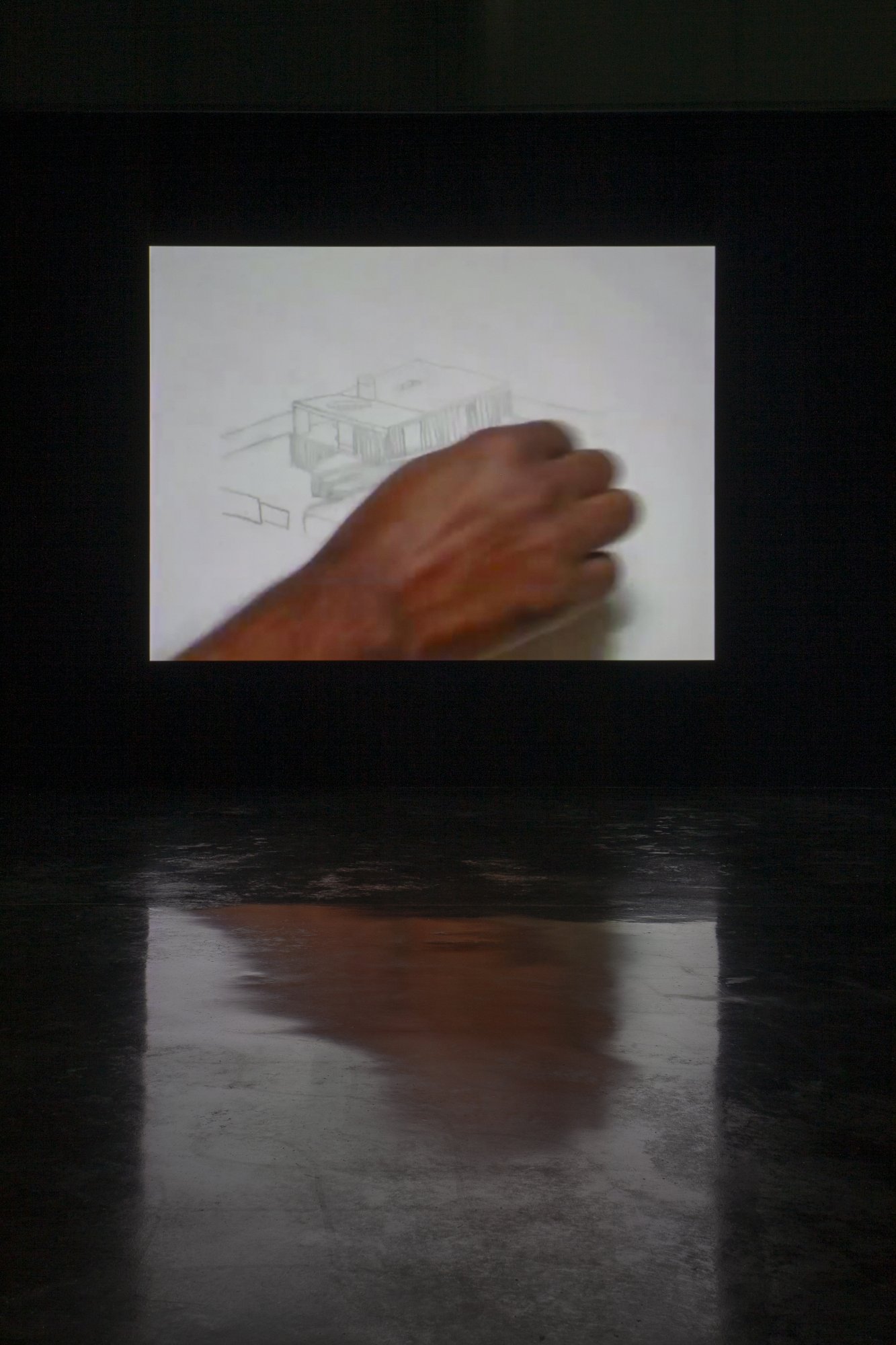

Bunga has likened his approach to that of a bird building a nest, the species he feels closest to. Like the bird, the artist’s work process is led by intuition, the accumulated experience of manipulating materials with his hands, and a direct contact with his surroundings. Like a nest, his sculptures can be simple or carefully engineered structures. Increasingly, since the Covid-19 pandemic, Bunga has involved many of the bird’s nest building materials in his work: sticks, leaves, hair, and plant stems.
Bunga comparou a sua abordagem à de um pássaro a construir um ninho, a espécie de que se sente mais próximo. Tal como o pássaro, o processo de trabalho do artista é conduzido pela intuição, pela experiência acumulada na manipulação de materiais com as mãos e pelo contacto direto com o meio envolvente. Tal como um ninho, as suas esculturas podem ser estruturas simples ou cuidadosamente concebidas. Desde a pandemia de Covid-19, Bunga tem vindo a envolver cada vez mais no seu trabalho muitos dos materiais de construção dos ninhos de pássaros: paus, folhas, cabelos e caules de plantas.
A new large format painting in the Gallery’s ground floor Window Box involves dried organic material foraged from the artist’s neighbourhood entwined in household paint. The painting is at once a still life and a representation of the fusion between man, nature, and the debris of contemporary life.
Uma nova pintura de grande formato na Window Box do rés-do-chão da Galeria envolve material orgânico seco recolhido na vizinhança do artista, entrelaçado com tinta doméstica. A pintura é simultaneamente uma natureza morta e uma representação da fusão entre o homem, a natureza e os detritos da vida contemporânea.


Carlos Bunga, Untitled (The New Art Gallery Walsall) (detail), 2024, leaves, litter, paint, glue and plaster on wood, furniture and others. Citizen of the World, The New Art Gallery Walsall, 2024. © Jonathan Shaw
Enquire
The motif of the bird appears elsewhere in the exhibition, in a selection of drawings from the larger series Freedom (The New Art Gallery Walsall), 2022-24, and in a colouring book by Carlos Bunga showing various birds in flight. The birds are suggestive of freedom, of the possibility of more open futures for humankind. As an animal that is always in movement and always adapting to new surroundings and environmental challenges, the bird inhabits the spirit of the nomad.
O motivo do pássaro aparece noutras partes da exposição, numa seleção de desenhos da série maior Freedom (The New Art Gallery Walsall), 2022-24, e num livro de colorir de Carlos Bunga que mostra vários pássaros em voo. As aves são sugestivas de liberdade, da possibilidade de um futuro mais aberto para a humanidade. Enquanto animal sempre em movimento e sempre a adaptar-se a novos ambientes e aos desafios ambientais, a ave habita o espírito do nómada.
Carlos Bunga, Citizen of the World
Curated by / Curadoria de Zoë Lippett
The New Art Gallery Walsall
5 July – 27 October 2024
Text excerpts by Zoë Lippett in the exhibition guide / Excertos do texto de Zoë Lippett no guia da exposição
BIO
Carlos Bunga (b. 1976 Porto) attended the Escola Superior de Arte e Design in Caldas da Rainha, in Portugal. He currently lives and works near Barcelona.
He creates process-oriented works in various formats: sculptures, paintings, drawings, performances, video, and above all in situ installations, that refer to and intervene in their immediate architectural surroundings. While often using ordinary, unassuming materials such as packing cardboard and adhesive tape, Bunga’s work involves a highly developed degree of aesthetic care and delicacy, as well as a conceptual complexity derived from the inter-relationship between doing and undoing, between unmaking and remaking, between the micro and the macro, between investigation and conclusion.
Straddling the divide between sculpture and painting, Bunga’s deceptively delicate works are characterized by an intense study of the combination of color and materiality, while at the same time emphasize the performative aspect of the creative act. Bunga’s works on paper, which are closely related to his sculptures and installations, often involve overlays, whether of compositional elements in the paintings or sheets of translucent paper in the drawings. The analytic/descriptive result, like a photographic double-exposure, mimics the dual experience of memory and imagination underlying the sculpture.
Carlos Bunga has had solo shows at Museo Helga de Alvear, Cáceres (2024), Sarasota Art Museum, Florida (2023), Bombas Gens, Valencia (2023), Palacio de Cristal – Museo Nacional Centro de Arte Reina Sofía, Madrid (2022); Secession, Wien (2021); Whitechapel Gallery, London (2020); MOCA – Museum of Contemporary Art, Toronto (2020); Centro Internacional das Artes José de Guimarães (2019); MAAT – Museu de Arte, Arquitectura e Tecnologia, Lisbon (2019); Fundação Carmona e Costa, Lisbon (2019); Museum of Contemporary Art Detroit (2018); MACBA – Museu d’Art Contemporani de Barcelona (2015); Museo de la Universidad Nacional de Colombia (Bogota, 2015); Museum Haus Konstruktiv, Zurich (2015): Museo Amparo, Puebla, México (2014); MUAC – Museo Universitario de Arte Contemporáneo, Mexico D.F. (2013); Pinacoteca do Estado de São Paulo (2012); Fundação Serralves, Oporto (2012); Hammer Museum, Los Angeles (2011); Miami Art Museum (2009) and MARCO – Museo de Arte Contemporánea de Vigo (2009).
Bunga participated in the 35th Bienal de São Paulo (2023), the Chicago Architecture Biennial (2015), the 29th Bienal de São Paulo (2010), the Trienal de Arquitectura de Lisboa (2010), the 14th Biennale Internazionale di Scultura di Carrara (2010) and Manifesta 5, San Sebastian (2004). Bunga was awarded the International Art Prize at Grand Rapids, Michigan (2013) and was short-listed for Artes Mundi 6 Prize, Cardiff (2015).
Carlos Bunga (Porto, 1976) frequentou a Escola Superior de Arte e Design em Caldas da Rainha, Portugal. Atualmente vive e trabalha perto de Barcelona.
As suas obras, orientadas para o processo, são criadas em vários formatos: esculturas, pinturas, desenhos, performances, vídeo, e, principalmente, instalações in situ, que se referem e intervêm na sua envolvente arquitectónica imediata. Embora utilizando frequentemente materiais simples e despretensiosos, tais como cartão de embalagem e fita adesiva, o trabalho de Bunga envolve um grau altamente desenvolvido de preocupação estética e delicadeza, bem como uma complexidade conceptual derivada da inter-relação entre fazer e desfazer, entre não fazer e refazer, entre o micro e o macro, entre investigação e conclusão.
Ultrapassando a divisão entre escultura e pintura, os trabalhos enganosamente delicados de Bunga caracterizam-se por um estudo intenso da combinação da cor e da materialidade, ao mesmo tempo que enfatizam o aspecto performativo do acto criativo. As obras de Bunga sobre papel, que estão intimamente relacionadas com as suas esculturas e instalações, envolvem frequentemente sobreposições, quer de elementos de composição nas pinturas, quer de folhas de papel translúcido nos desenhos. O resultado analítico/descritivo, como uma dupla exposição fotográfica, imita a dupla experiência da memória e da imaginação subjacente à escultura.
Carlos Bunga expôs individualmente no Museo Helga de Alvear, Cáceres (2024), Sarasota Art Museum, Florida (2023), Bombas Gens, Valência (2023), Palácio de Cristal – Museo Nacional Centro de Arte Reina Sofía, Madrid (2022); Secession, Viena (2021); Whitechapel Gallery, Londres (2020); MOCA – Museu de Arte Contemporânea, Toronto (2020); Centro Internacional das Artes José de Guimarães (2019); MAAT – Museu de Arte, Arquitectura e Tecnologia, Lisboa (2019); Fundação Carmona e Costa, Lisboa (2019); Museu de Arte Contemporânea de Detroit (2018); MACBA – Museu d’Art Contemporani de Barcelona (2015); Museo de la Universidad Nacional de Colombia (Bogotá, 2015); Museum Haus Konstruktiv, Zurique (2015); Museo Amparo, Puebla, México (2014); MUAC – Museo Universitario de Arte Contemporáneo, México D. F. (2013); Pinacoteca do Estado de São Paulo (2012); Fundação Serralves, Porto (2012); Hammer Museum, Los Angeles (2011); Miami Art Museum (2009) e MARCO – Museo de Arte Contemporánea de Vigo (2009), entre outros.
Bunga, foi artista convidado da 35ª Bienal de São Paulo, na Bienal de Arquitectura de Chicago (2015), na 29ª Bienal de São Paulo (2010), Trienal de Arquitectura de Lisboa (2010), 14ª Bienal Internazionale di Scultura di Carrara (2010) e Manifesta 5, San Sebastian (2004). Bunga recebeu o Prémio Internacional de Arte em Grand Rapids, Michigan (2013) e foi pré-seleccionado para o Prémio Artes Mundi 6, Cardiff (2015).


