[…]
Where the wave of moonlight glosses The dim gray sands with light,
Far off by furthest Rosses
We foot it all the night,
Weaving olden dances
Mingling hands and mingling glances Till the moon has taken flight;
To and fro we leap
And chase the frothy bubbles,
While the world is full of troubles And anxious in its sleep.
[…]
William Butler Yeats
André Romão continues to explore sculpture as a field of hybridity, between bodies, disciplines, and emotional states. The artist blurs the lines between poetry and matter, inhabiting a mysterious place between melancholy and vitality. The show presents a series of new sculptures: eerie, nocturnal, and moody. A set of strange bodies inhabiting strange times.
André Romão continua a explorar a escultura como um território de hibridez, onde corpos, disciplinas e estados emocionais se entrelaçam. O artista dilui as fronteiras entre poesia e matéria, habitando
um território misterioso, entre a melancolia e a vitalidade. A exposição apresenta uma nova série de esculturas envoltas numa atmosfera inquietante e noturna: um conjunto de corpos estranhos a habitar tempos estranhos.
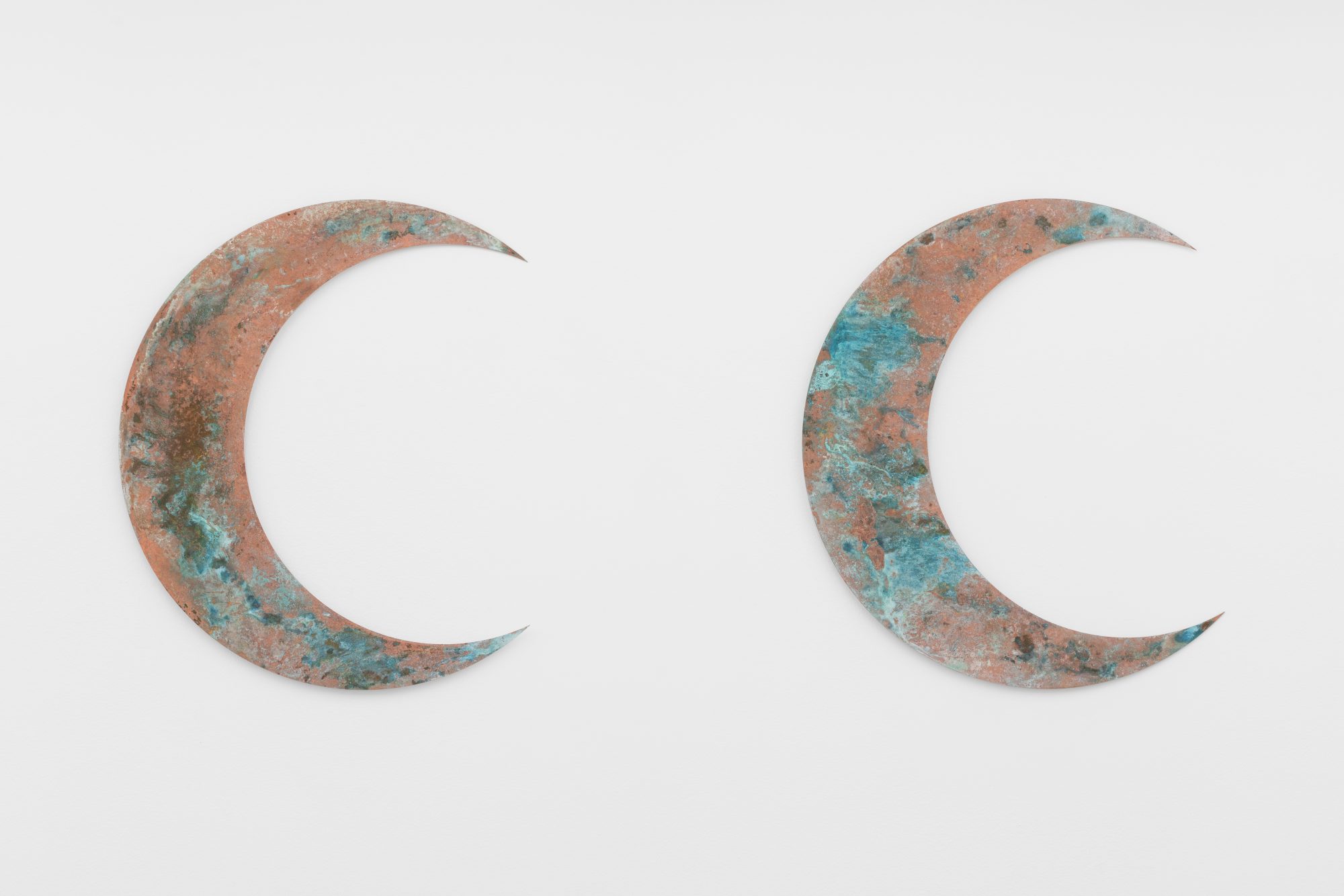
André Romão, Doppelmond, 2026. Brass, oxidizing agents, varnish. 2x (90 x 90 cm)
Enquire
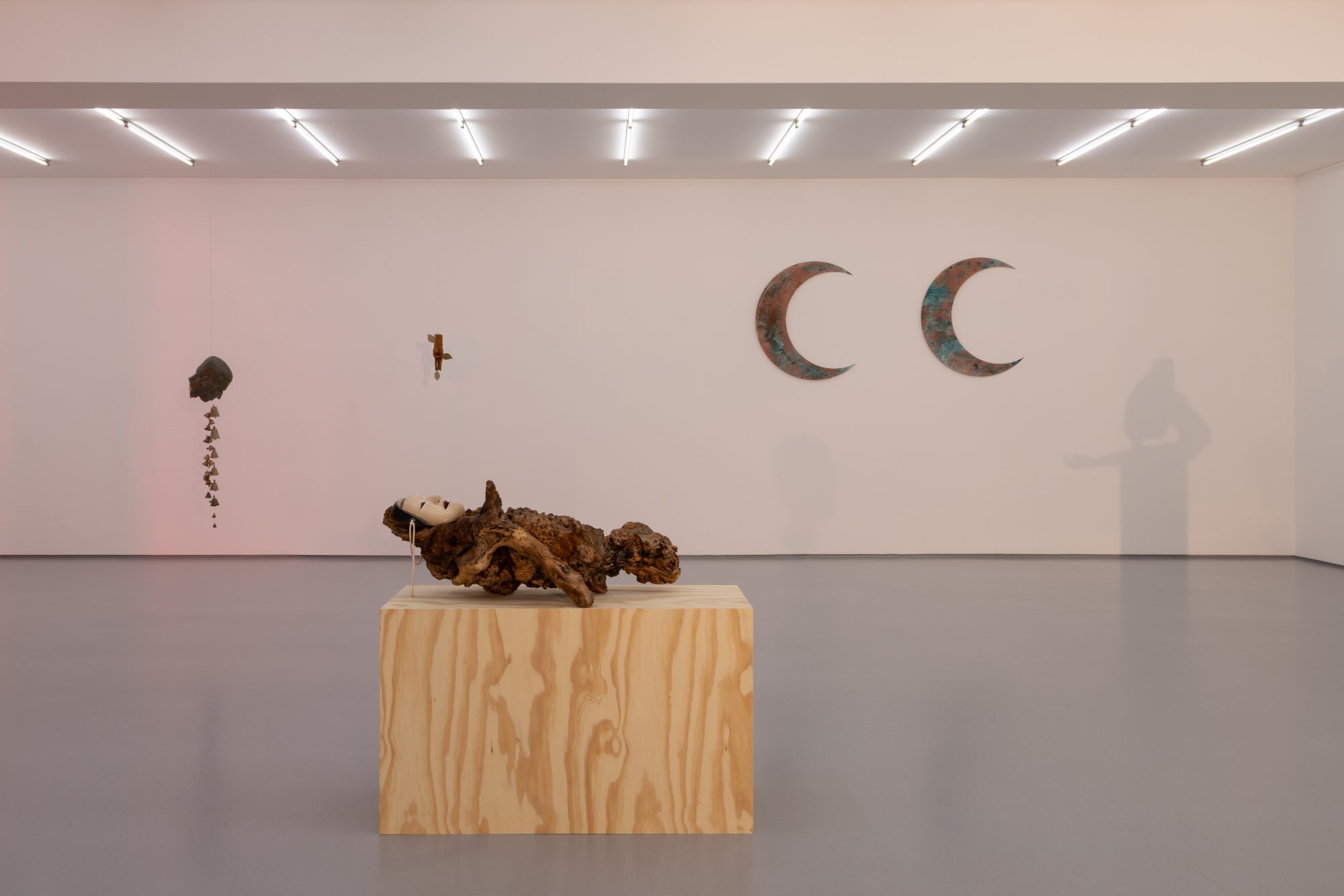
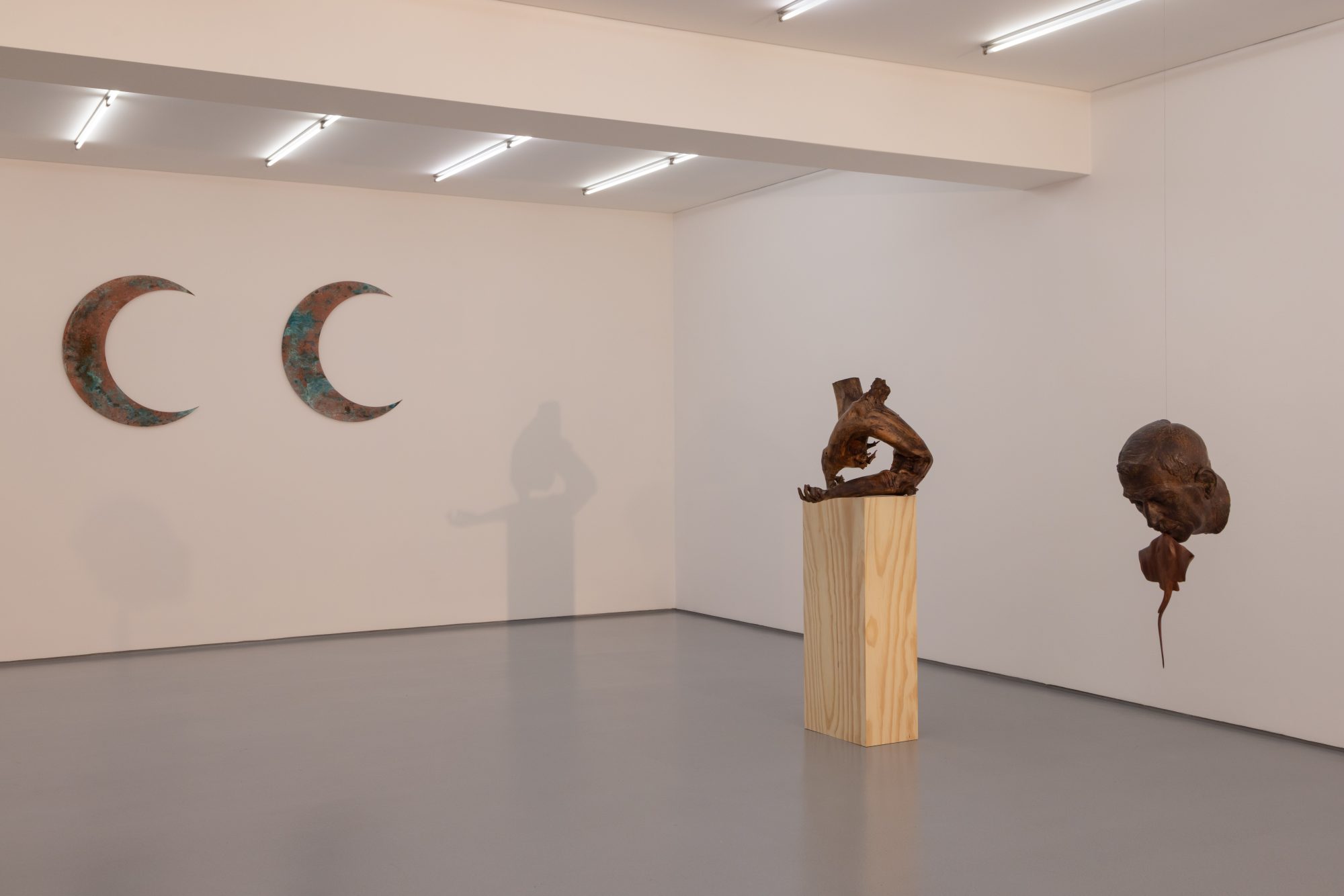
“Dopplemond” presides over the gallery space, two waning moons announcing that the rules of the outside world are now suspended: two moons decreasing in presence towards invisibility, emphasizing decay, but at the same time on the path towards the new moon and rebirth.
A peça “Doppelmond” preside ao espaço expositivo e anuncia que as regras do mundo exterior estão suspensas. Duas luas minguantes, diminuindo gradualmente até à invisibilidade, enfatizando ao mesmo tempo um declínio, e um percurso em direção à lua nova e ao renascimento.
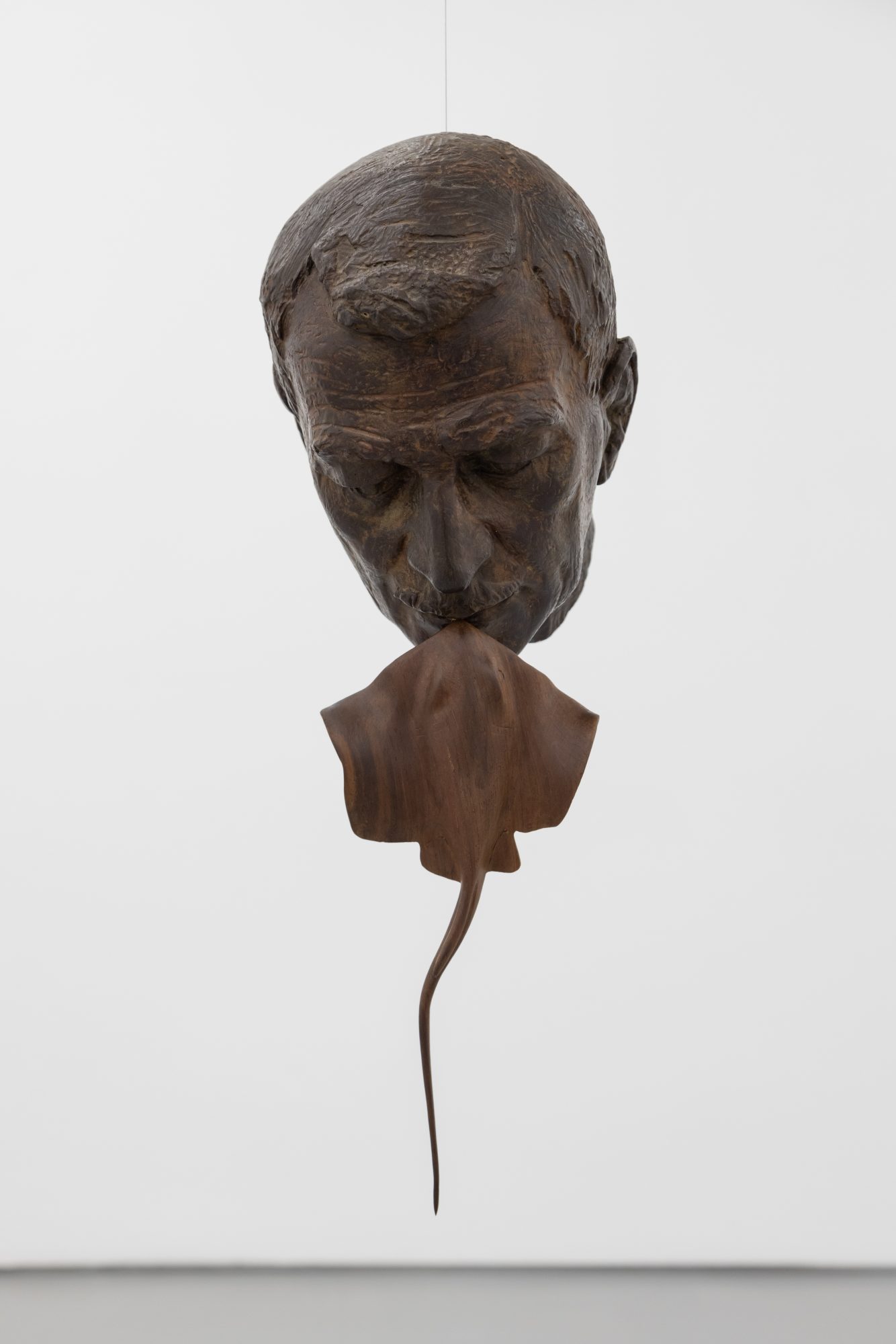
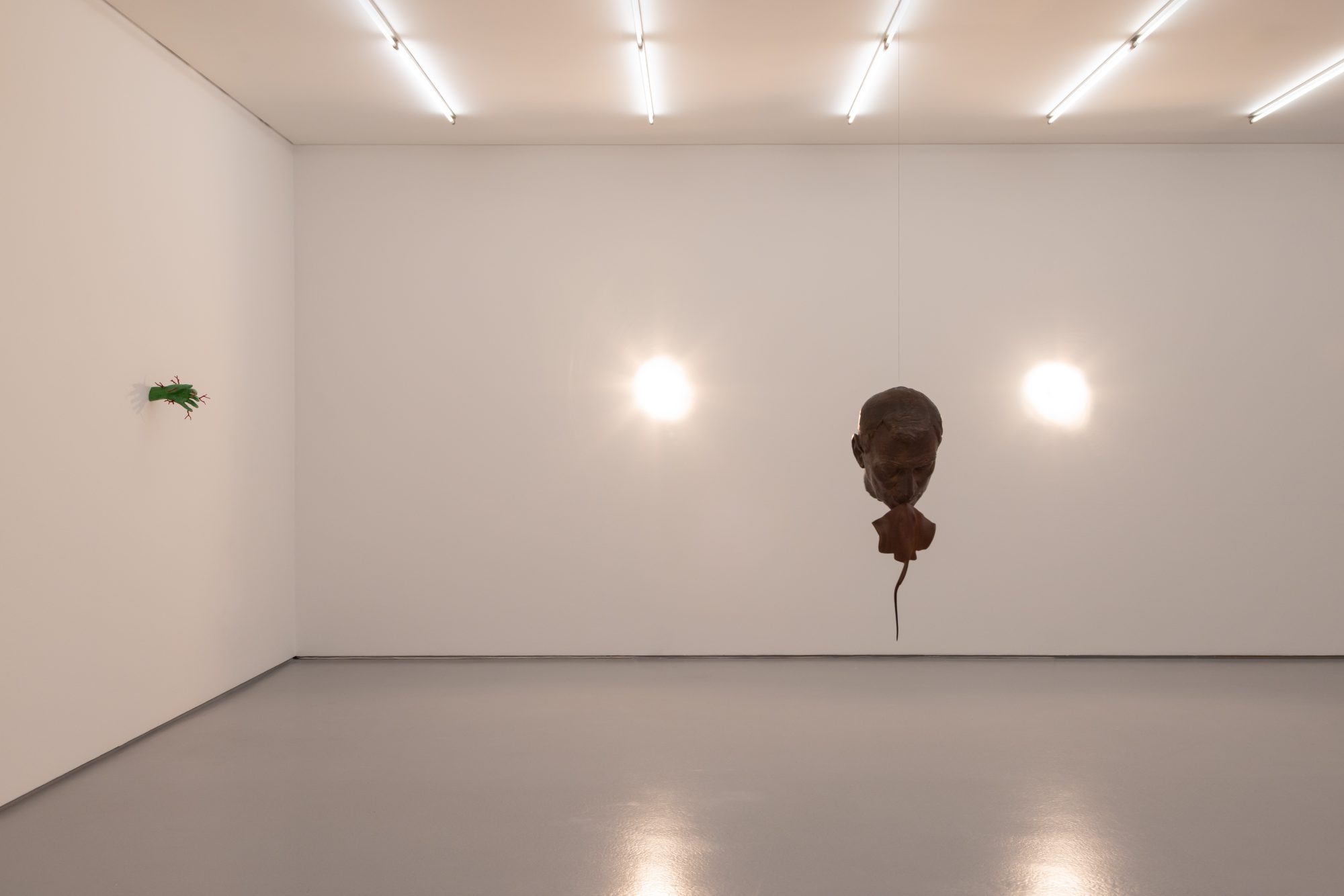
André Romão, Beijo / Kiss, 2026. Sculptural fragment (bronze, France, 1950’s), sculptural fragment (wood, place unknown, 20th century). 50 x 18 x 22 cm
Enquire

André Romão, Via Lactea, 2026. Sculptural fragment (patinated terracotta, Italy ,1930’s), bells. 93 x 17 x 20 cm
Enquire
Among the entities suspended in the gallery space, one finds “Kiss”, a tale of love and encounters, “Via Lactea,” as a non-verbal utterance, and “L.C.”, in which small camphor tree leaves from Lourdes Castro’s Garden appear to sprout from a sculpture.
Entre as entidades suspensas no espaço da galeria encontram-se “Beijo”, um conto de amor e de encontros, “Via Lactea” como uma enunciação não-verbal e “L.C” em que pequenas folhas de uma canforeira do jardim de Lourdes Castro aparentam brotar de uma escultura.

André Romão, L.C., 2026. Reworked sculptural fragment (wood, unknown, c. 1970), Camphor tree leafs from Lourdes Castro’s garden 31,5 x 18 x 11 cm
Enquire
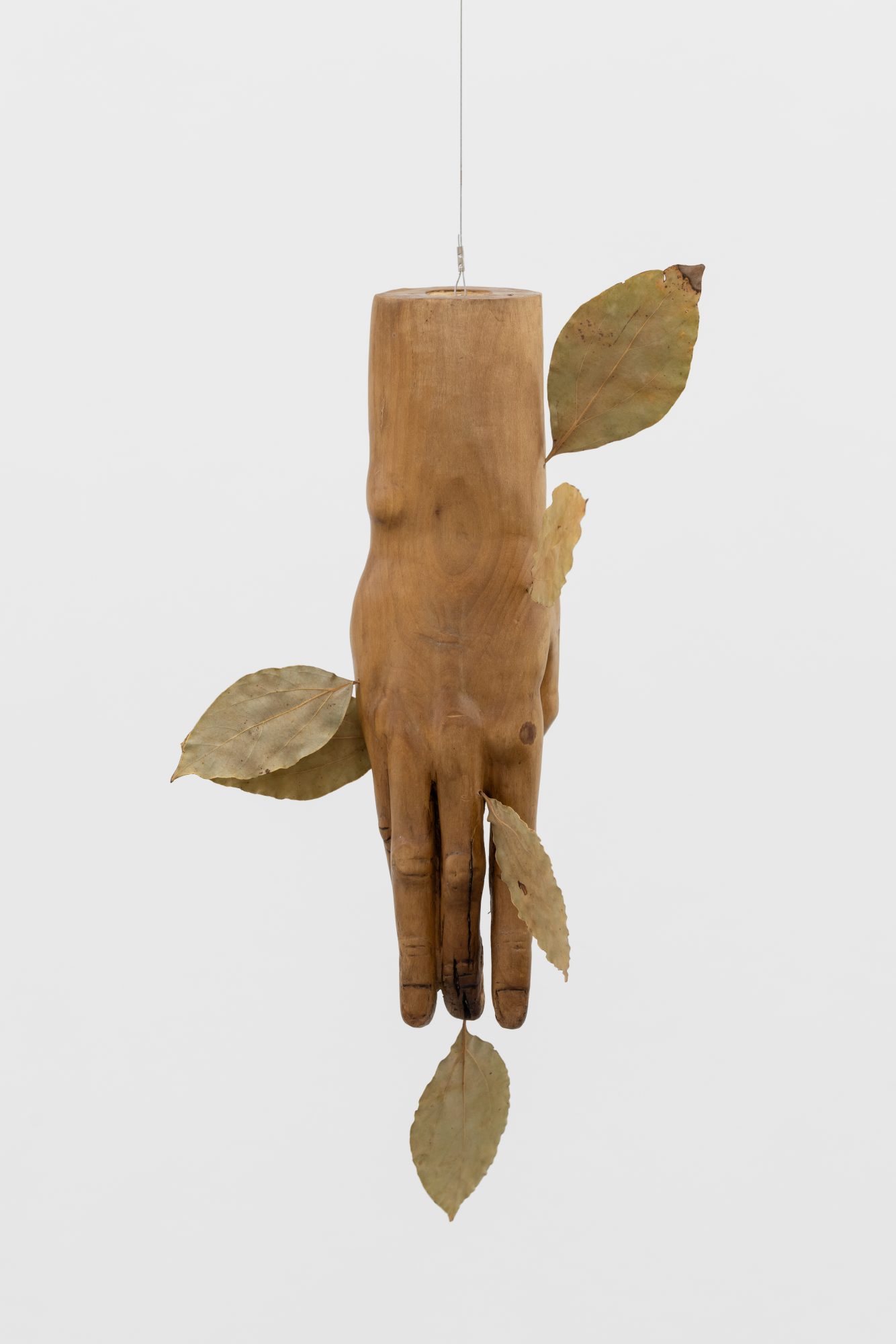
André Romão, L.C., 2026. Reworked sculptural fragment (wood, unknown, c. 1970), Camphor tree leafs from Lourdes Castro’s garden 31,5 x 18 x 11 cm
Enquire
In “Stargazer,” hierarchies are suspended. A Japanese wooden Noh theatre mask of Zo-onna is carefully placed on the exposed roots of a tree, as if the tree were trying to assume a human form and connect to the vast universe above.
Em “Stargazer”, as hierarquias são suspensas. Uma máscara de madeira de Zo-onna – figura do teatro Noh japonês – repousa cuidadosamente sobre as raízes expostas de uma árvore, como se estas tentassem assumir a forma humana e estabelecer uma ligação com o vasto universo acima.
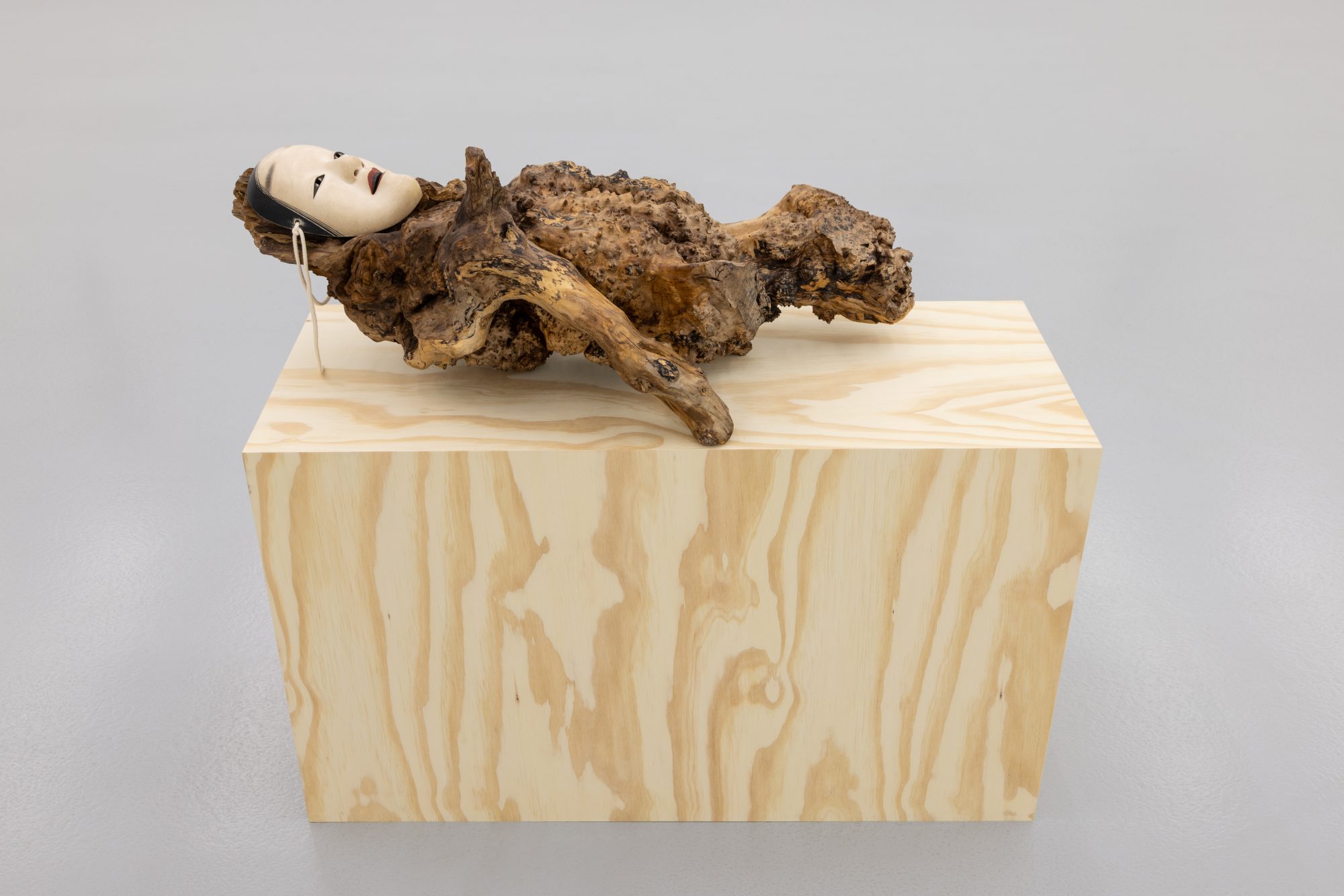
André Romão, Stargazer, 2026. “Zo-onna” mask (polychrome wood, Japan, Edo period), root. 94 x 100 x 42 cm
Enquire
Meanwhile, “Root” twists and turns in its vegetal-animal hybridity.
Já “Raiz” contorce-se na sua hibridez vegetal-animal.

André Romão, Raiz / Root, 2026.Root, epoxi clay, PVC, acrylic paint, wax
150 x 50 x 70 cm
Enquire

André Romão, Raiz / Root, 2026. Root, epoxi clay, PVC, acrylic paint, wax.
150 x 50 x 70 cm
Enquire

André Romão, Ferida Fóssil / Fossil Wound, 2026. Sculptural fragment (glazed ceramic, France, c. 1960), mediterranean red coral. 16 x 22 x 14 cm
Enquire
Departing from the myth of Medusa, “Fossil Wound” weaves a relation between materials: blood and coral, ceramics and flesh, a permanent mirror between narrative and physicality.
Partindo do mito de Medusa, “Ferida Fóssil” vive da relação entre matérias: sangue e coral, carne e cerâmica, criando um espelho permanente entre interior e exterior.
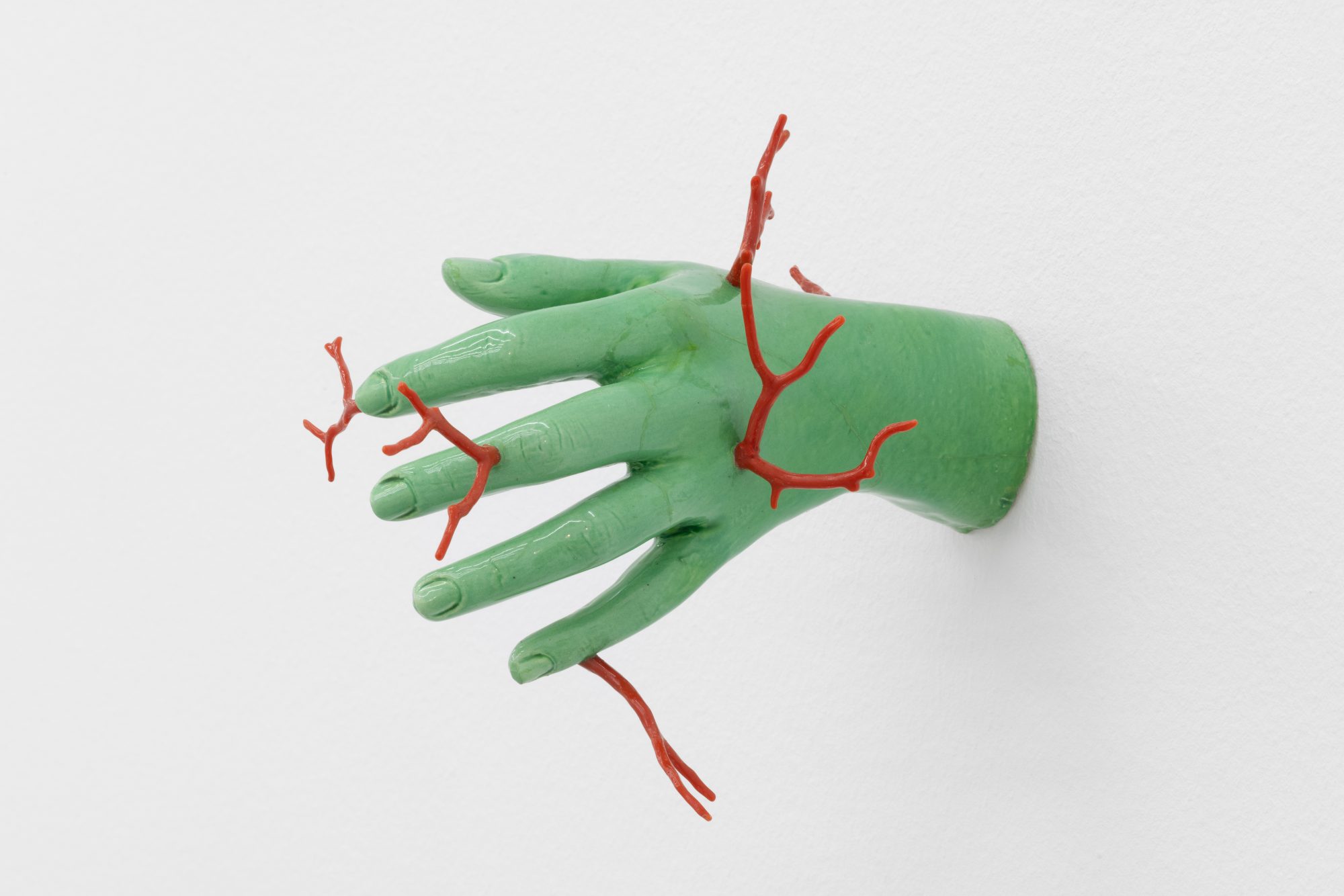
André Romão, Ferida Fóssil / Fossil Wound, 2026. Sculptural fragment (glazed ceramic, France, c. 1960), mediterranean red coral. 16 x 22 x 14 cm
Enquire
“Capsule” presents itself as a dystopian body. Blood-coloured and mimicking vital functions. Its heat is external, powered by an infrared light bulb, a device with diverse uses, from thermotherapy, to keeping food warm or incubating eggs, replacing the heat of another body.


André Romão, Capsule, 2026.
Plexiglas, petroleum jelly, infrared light Dimensões variáveis / Variable dimensions
Enquire
Em “Capsule”, da cor do sangue, manifesta-se como um corpo distópico que mimetiza funções vitais. O calor que o anima é externo, gerado por uma lâmpada de infravermelhos — dispositivo de usos diversos, da termoterapia à manutenção de alimentos quentes ou à incubação de ovos — substituindo o calor de outro corpo.
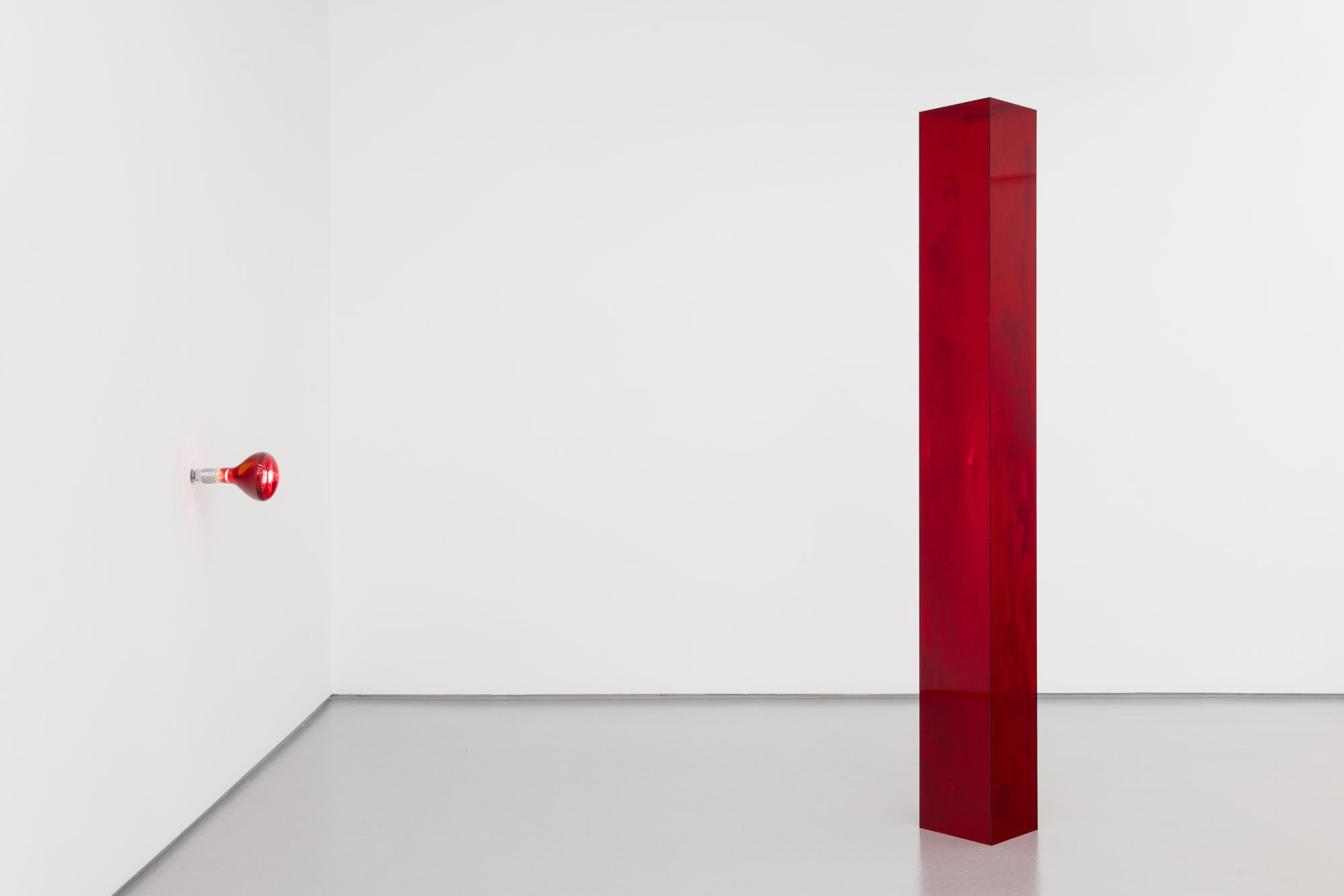
André Romão, Capsule, 2026.
Plexiglas, petroleum jelly, infrared light Dimensões variáveis / Variable dimensions
Enquire
André Romão was born in Lisbon in 1984, where he lives and works. He completed his foundational training at the Faculdade de Belas-Artes of the University of Lisbon and at the Accademia di Brera in Milan between 2002 and 2007. Since then, he has regularly taken part in artist residencies as a way of expanding his discursive lexicon, including at institutions such as Künstlerhaus Bethanien (Berlin), MACRO (Rome), and Gasworks (London), among others. He was the recipient of the awards: EDP Novos Artistas in 2007 and BES Revelação in 2013.
Romão’s work is grounded in emotion and intuition, using them as the foundation for his dream-like figures and landscapes, which often hover in a liminal space between the literary and the natural. His artistic practice, primarily expressed through sculpture and poetry, investigates themes of transformation, mutation, and fluidity. In his approach, sculpture becomes a site of hybridity, where bodies and mise-en-scène, material presence and emotional resonance, imagination, exoticism, and organic matter converge, forming a distinctive and singular visual lexicon.
Romão’s work has been featured in institutions such as the Serralves Museum (Porto), the Centre d’Art Contemporain Genève, the 2021 Liverpool Biennial, MAAT (Lisbon), the Berardo Collection Museum (Lis- bon), Futura (Prague), The Green Parrot (Barcelona), MACRO (Rome), the Astrup Fearnley Museet (Oslo), CAPC Musée d’Art Contemporain de Bordeaux, Spike Island (Bristol), and Kunsthalle Lissabon, among others.
His work is represented in several public and private collections, notably Calouste Gulbenkian, Ser- ralves Foundation, Contemporary Art Collection – Lisboa Cultura, PLMJ, EDP Foundation, MACAM, Figueiredo Ribeiro Collection – Quartel das Artes, Norlinda and José Lima Collection, Leal Rios Founda- tion, Vasco Collection, CV Colletion and FRAC Franche-Comté.
André Romão nasceu em Lisboa, em 1984, cidade onde vive e trabalha. Realizou a sua formação de base na Faculdade de Belas-Artes da Universidade de Lisboa e na Accademia di Brera, em Milão, entre 2002 e 2007. Desde então, tem participado regularmente em residências artísticas como forma de expandir o seu léxico discursivo, tendo passado por instituições como a Künstlerhaus Bethanien, em Berlim, o MACRO, em Roma, e a Gasworks, em Londres, e outras. Recebeu o Prémio EDP Novos Artistas, em 2007, BES Revelação2013.
A sua prática artística assume-se sobretudo através da escultura e da poesia, explorando ideias de transformação, mutação e fluidez. Tomando a emoção e a intuição como alicerces fundamentais, as suas figuras e paisagens oníricas habitam frequentemente um território difuso entre os domínios literário e natural. André Romão ensaia a escultura como um lugar de hibridismo entre diferentes eixos, onde corpos e paisagens, presença material e ressonâncias emocionais, imaginação, exotismo e matéria orgânica se entrecruzam, inscrevendo um léxico singular.
A obra de Romão tem sido apresentada em instituições como o Museu Serralves (Porto), o Centre d’Art Contemporain Genève, a Bienal de Liverpool 2021, o MAAT (Lisboa), o Museu Coleção Berardo (Lisboa), Futura (Praga), The Green Parrot (Barcelona), MACRO (Roma), Astrup Fearnley Museet (Oslo), CAPC Musée d’Art Contemporain de Bordeaux, Spike Island (Bristol) e Kunsthalle Lissabon, entre outras.
O seu trabalho integra diversas coleções do domínio públicas e privadas, entre as quais se destacam a Coleção Calouste Gulbenkian, Coleção da Fundação de Serralves, Coleção de Arte Contemporânea – Lisboa Cultura, Coleção PLMJ, Coleção Fundação EDP, MACAM, a Coleção Figueiredo Ribeiro – Quartel das Artes, a Coleção Norlinda e José Lima, a Coleção Fundação Leal Rios, Vasco Collection, CV Colletion e o FRAC Franche-Comté.